

IT’S THE BERRIES!
There is so much colour in the garden now… it’s the berries!
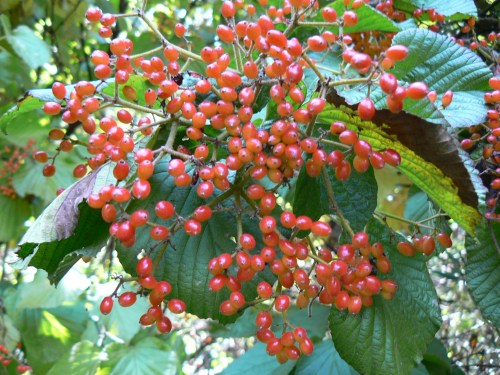
Viburnum dilatatum ‘Erie’ Orange red berries

Viburnum dilatatum ‘Mt. Airy’ more what I call ‘Christmas Red’
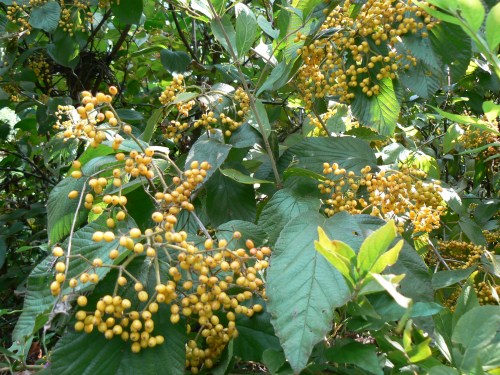
Viburnum dilatatum ‘Michael Dodge’ yellow berries
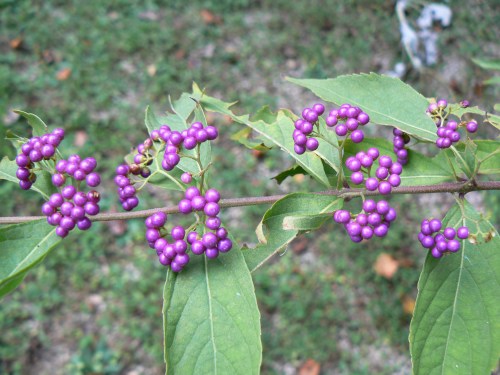
Purple Beautyberry (Callicarpa dichotoma ‘Issai’)
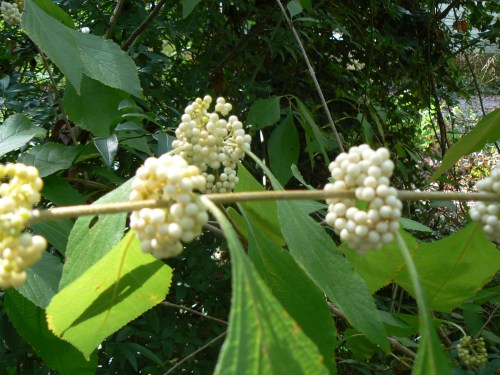
American Beautyberry, the white form. (Callicarpa americana’Lactea‘) There is a more common purple variety which I do not have ….yet.
All of the above shrubs are exhibiting their second season of beauty. The viburnums will add to their show with fabulously coloured foliage, all the while retaining their berries. Viburnum berries require several frosts to make them palatable for the birds, so they have a long season. Between the flowering & berry show, they serve as supports for clematis.
FABULOUS FALL FRAGRANCE
It’s blooming…. As soon as I walked out the door I caught the fragrance. Osmanthus fragrans, known in the south as ‘ ‘Tea Olive’.
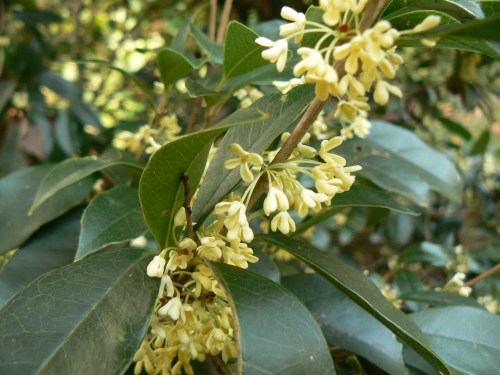
Tiny but abundant cream coloured blossoms emit the most remarkable and penetrating fragrance.
This is a beautiful, pest free, evergreen shrub that matures at 10 to 15 feet, and blooms TWICE a year; fall & spring.
To quote Dirr* “to not try the plant is to cheat one’s garden.” I so agree, and cannot recall a garden design where this plant was not included. It also makes a remarkable evergreen hedge.
This spring, at the suggestion of my friend Marsha, I acquired a new selection (Osmanthus aurantiacus) that blooms only once in the autumn, and the flowers are ‘pale orange’. 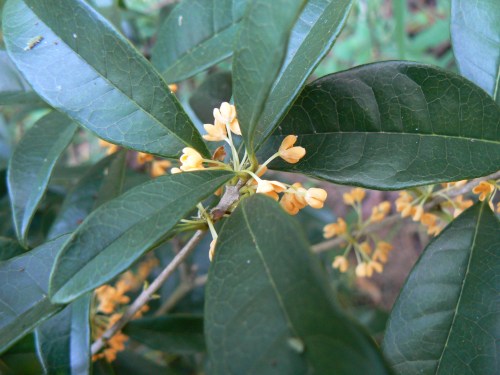
It’s hard to say how fragrant it is because I have Osmanthus fragrans planted much like Margaret Moseley* advised with gardenias, every 25-30 feet or so ,where an evergreen was required and the conditions are favorable, so the entire garden is permeated with the fragrance. I have followed her advice on this with almost every fragrant shrub in the garden. Something you might want to try if there is a fragrance you are particularly fond of.
I don’t take lightly any advice given by a 95-year-old gardener. Clearly she has much more experience than I.
*Dirr, Michael, Renowned woody plant expert. Author of the textbook A MANUAL OF WOODY LANDSCAPE PLANTS.
*Margaret Moseley, famous Atlanta Gardener.
CHANGE OF HYDRANGEA
In a recent post I bemoaned the fact that my “interesting hydrangeas’ had no impact in the July landscape. Today, however, the ‘ interesting hydrangeas’…

are still interesting…

whereas the July impact hydrangea… not so much.

So, I will stay with the interesting ones in the circle of friends & plant the babies that I propagated, in the cutting garden next spring. One cannot have too many fresh hydrangea stems.
My Mother always said.. ” If a little bit is good, a lot is MUCH better.” That certainly rings true when assembling a bouquet. Too little plant material can look so stingy, and I don’t mean a single blossom or stem in an appropriate vessel.

The July impact hydrangea (above) was fabulous in fresh bouquets with lilies (and Lily below) earlier in the season. The flower has substance and lasts a while in a vase.
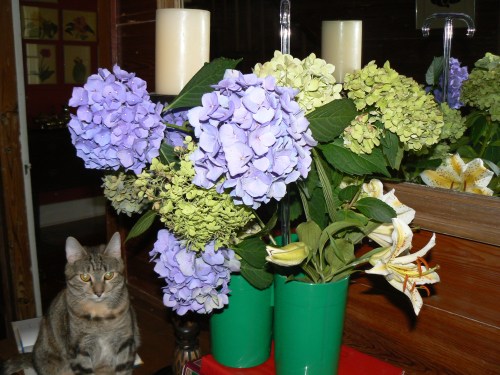
The Annabelles are still looking superb … I cannot imagine my garden without them.
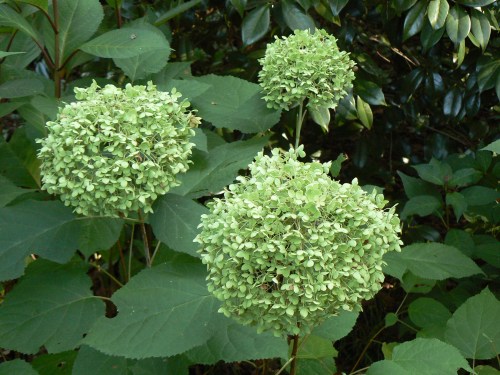
That Chartreuse is divine! Cut now & dried, they will probably retain their colour into the new year.
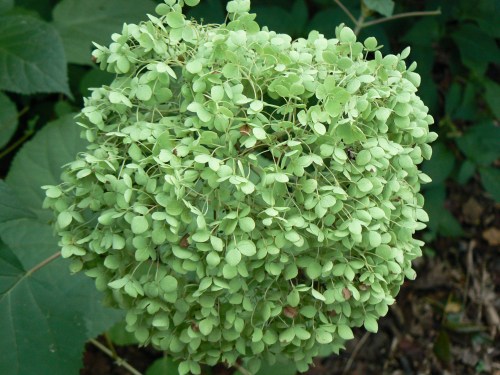
These are also great if you are one of those crafty people inclined to spray paint.
ELECTRIC POKE
I love the electric poke weed! How can I cut it down?
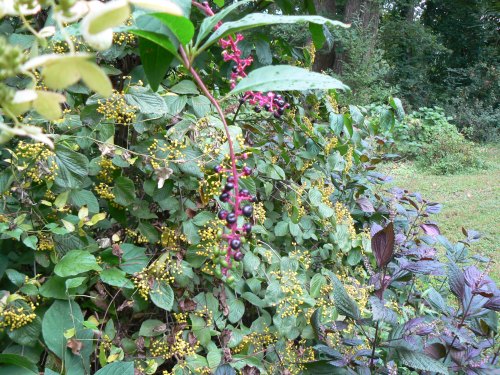
How can I leave it?!
How can I cut it down?!
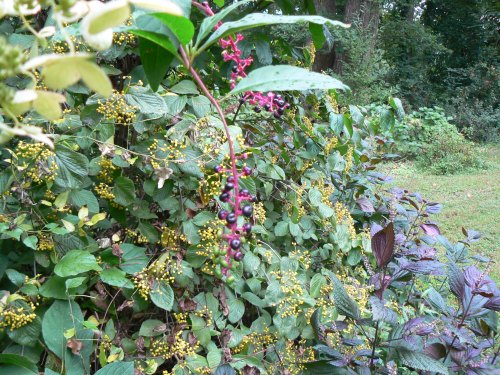
It is brilliant with the yellow berries of Viburnum dilatatum ‘Michael Dodge’. I’ll deal with it when I deal with the Purple Perilla… Both are thugs!
The No- show at this party…the purple clematis.
SURPRISE CLEMATIS!
Just as I thought the garden was winding down, look what I found…
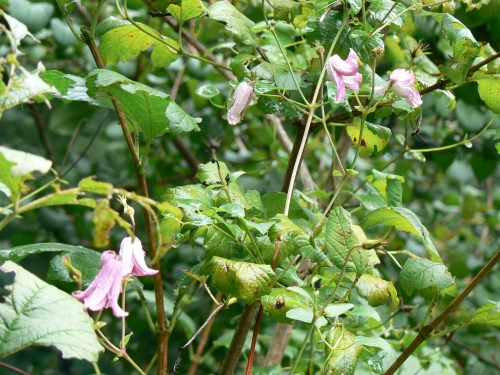
two surprise clematis!
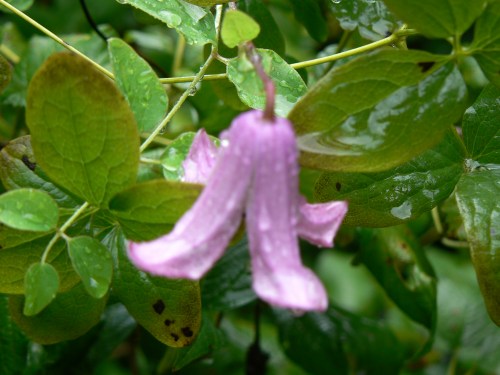
This little darling above is Clematis odoriba … below, Clematis texensis ‘Catherine Clanwilliam’.
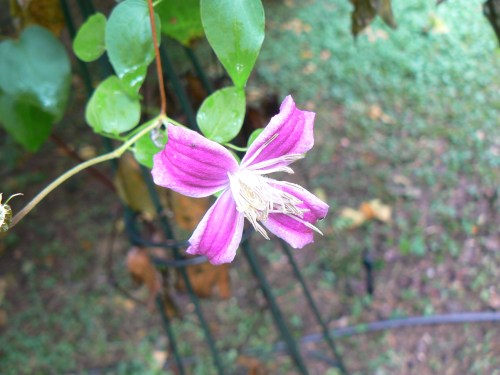
What joy!!
Clematis odoriba, is not covered in any of my books (and I have many). Enter my super knowledgeable friend Lyndy Broder… (the Clematis Queen). She informed me that this plant was bred by the late Mr Ozawa in the 1990’s in Japan. It was only introduced in the early 2000’s.
Mr. Ozawa crossed two native American clematis, Clematis viorna and Clematis crispa and created this beauty.
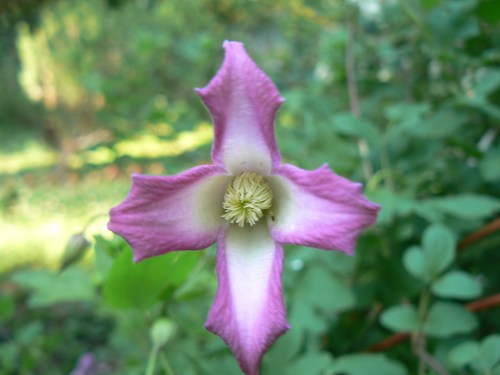
In Japan, these are grown extensively for the cut flower industry as they are favored in flower arrangements for the Tea Ceremony.
That got me thinking… I have a small collection of miniature, museum reproduction, Japanese porcelain vases. They are the perfect size for a small sprig of flowers… so..
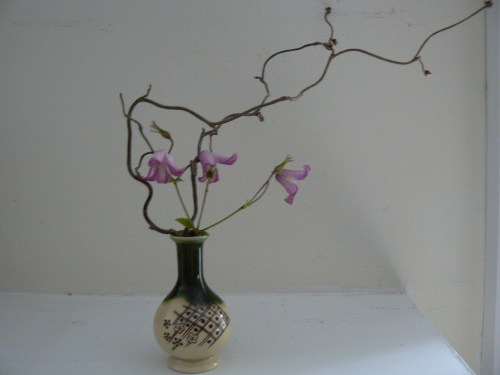
Love the shadows, below…
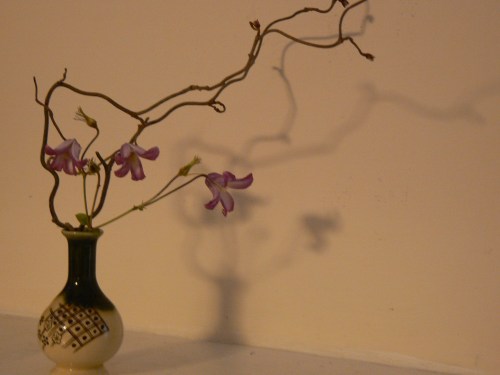
She is wonderful close-up.
The other Clematis that is blooming now, is Clematis texensis ‘Countess Catherine Clanwilliam’.
I have posted about her several times (see categories), including an anecdote about being contacted by an employee of THE Countess Catherine Clanwilliam.
In my garden she is one of the all time winners,
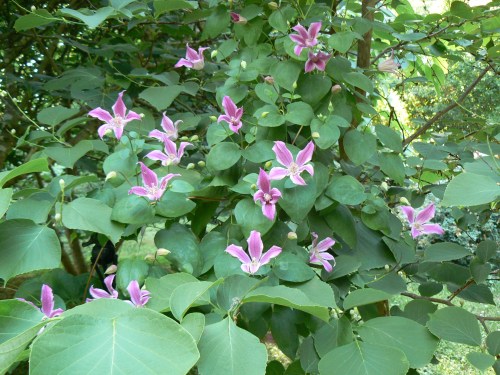
blooming throughout the summer, and now she is blooming again. Not a big show but so appreciated this time of year.
Guess it comes as no surprise that both these super-acheivers are natives.
A GARDENER’S DIARY
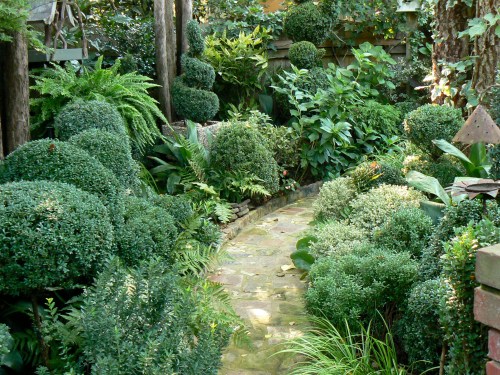
If you, like me,watched every episode of A GARDENER’S DIARY on HGTV (taped and TiVo them for future viewing) and lament the fact that it is no longer; you will be pleased to know that the blog GARDEN PHOTO OF THE DAY is written by Martha Tate, the creator /producer of the series.
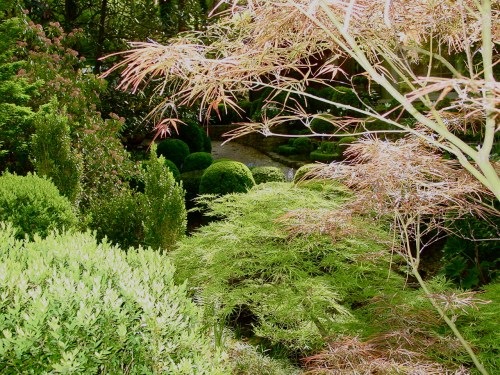
Martha features an incredible photo of a plant or garden with a delightful narrative.
The above photos are from her blog, so tune in, you will not be disappointed.
CLEMATIS, HYDRANGEAS & BURNT SUGAR
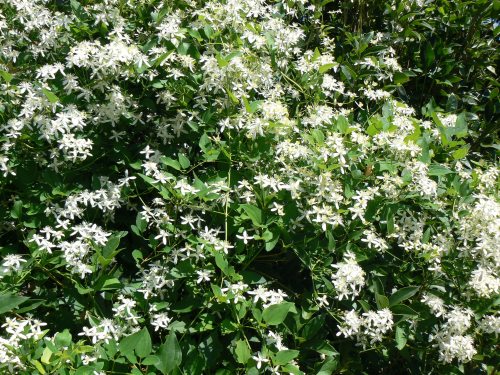
Nothing signals the end of summer like Sweet Autumn Clematis (Clematis terniflora) and hydrangeas cut for drying.


The hydrangeas are cut with some ‘old wood’ I find they hold their shape better that way. Later, when I arrange them, I will cut the stem to whatever length required.

Sometimes, when cut on the tender green stems, the flowers tend to curl up. These looks really luscious…
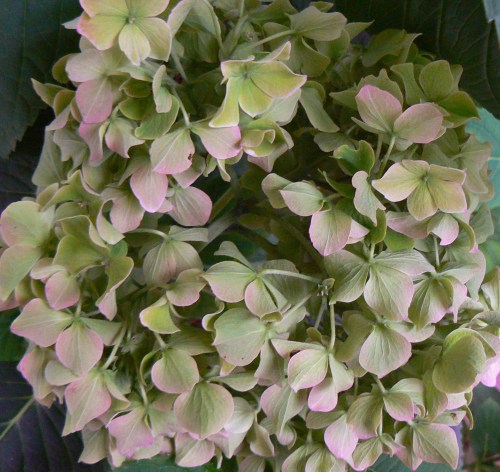
I hope they stay that way.
The fragrance of Sweet Autumn Clematis is one of my favorites; perhaps, because for me, it elicits nostalgia. When I went to cut a few sprigs, I caught the aroma of burnt sugar… Creme Caramel? I sniffed my way to the Katsuratree (Cercidiphyllum japonicum). Typically, when the leaves start to colour to a buttery yellow in fall, it emits a scent some have likened to cinnamon or cotton candy.
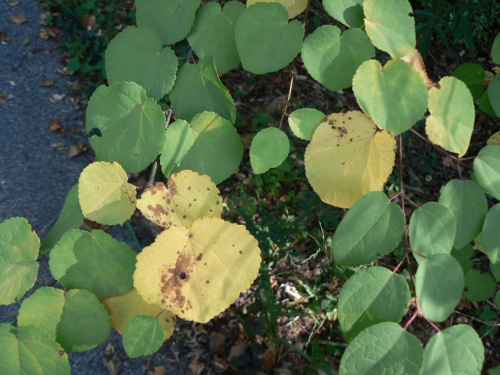
Mine, is definitely Creme Brulee!
With the temps consistently in the 90’s since May, I cannot say I am sorry to see this summer wind down. And…

the camellias are already showing their buds. I welcome another gardening season.
I posted about this clematis here, please read it if you plan on planting one.
CIRCLE OF FRIENDS
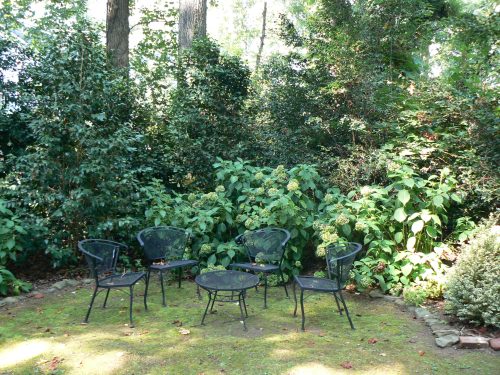
Earlier this summer, as I sat in the Circle of Friends, I realized that after the first major flush of bloom my ‘interesting hydrangeas’ really had no impact at all. What was needed was more of the strong blue mopheads.
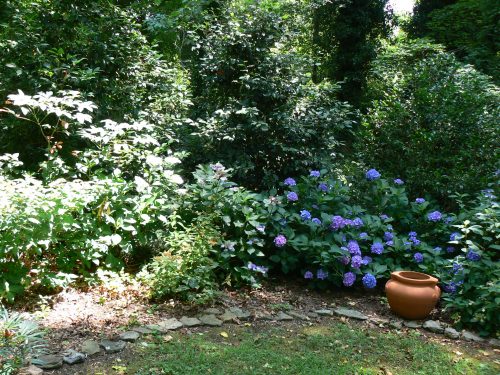

So cuttings it was, since that particular hydrangea is an unknown variety and I have no idea how to locate more.

Good plan? Yes, untill I saw them today; this is what they look like now.

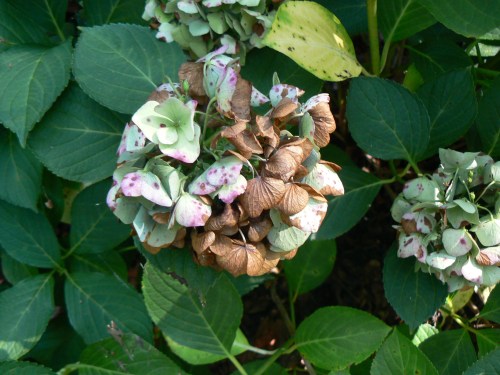
Yet, on the other side …
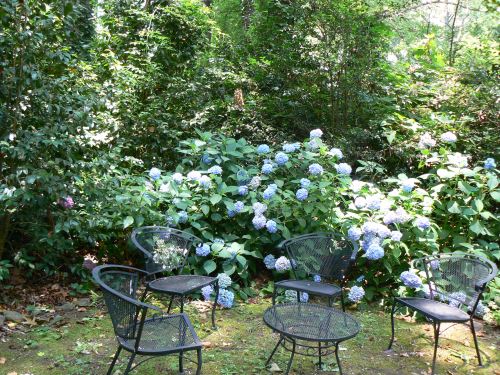
the less spectacular blue mopheads dry beautifully.
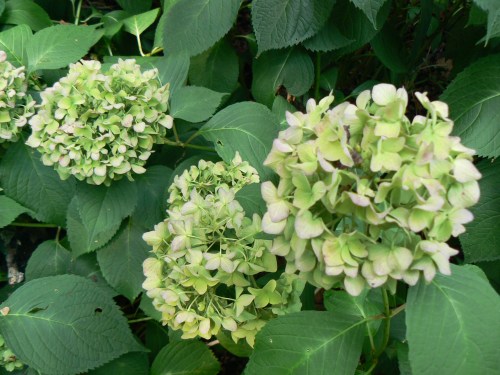
What a terrific problem to have!
FINIALS – IN – WAITING
“At each end of this lovely little wall were two brick pillars. They stood there, perfectly poised, exactly the right height, exactly the right width. But in spite of their architectural rightness they were wrong, or rather, they were incomplete. They had obviously been built to hold something – carved pineapples, or stone balls, or…or…or Urns.
It was when the word Urns came into my head that the garden was born” – Beverly Nichols
Lacking a lovely wall or even just the brick pillars…. I have finials, two sets. One, a basket of flowers….
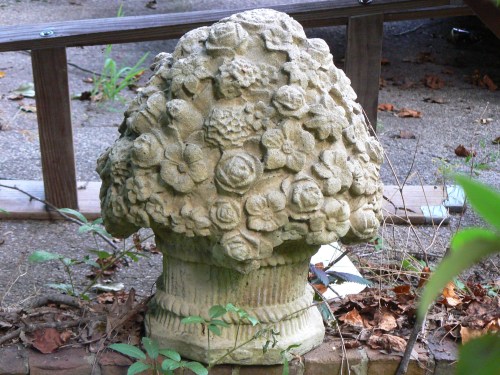
The other of fruit. 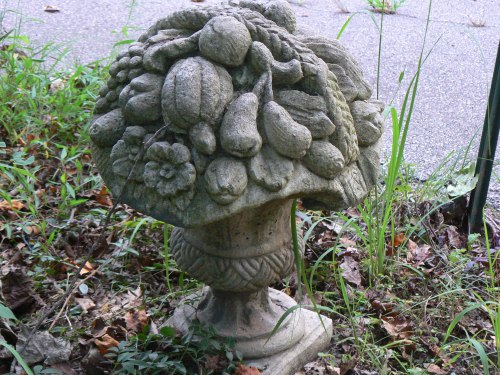
FINIALS – IN – WAITING!
“Surely – in all matters appertaining to elegance – the most important thing to do first is the last thing?” – Beverly Nichols
We think alike.
A GARDENER’S DILEMMA
Some areas of my garden are incomplete. The bones are all there, but the planting is far from ‘done’. For example, the lilies I have recently featured …
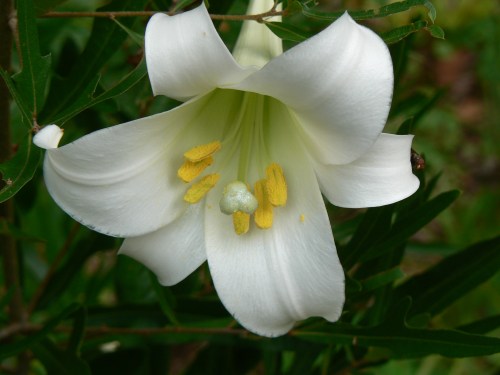
are a perfect companion to Hydrangea paniculata …
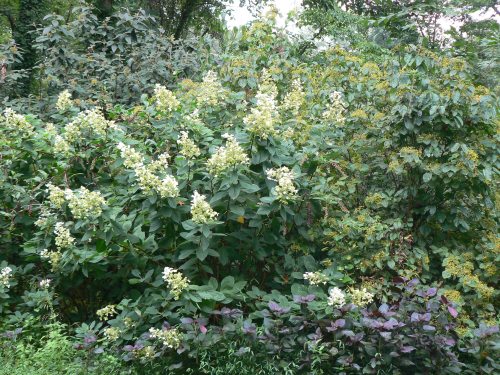
however, they are planted on either side of the bench in my cutting garden and not together.
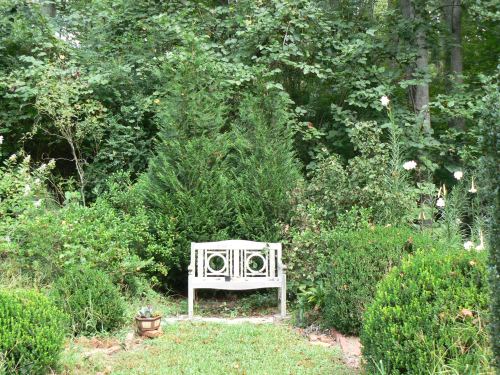
So here is this gardener’s dilemma…do I dig up the lilies and plant them with the hydrangea or transplant the hydrangea? That’s a young gardener’s thought process.
At my age I am thinking the easiest way to achieve what I would like, would be to strike cuttings of the hydrangea and plant them with the lilies. MUCH EASIER, the caveat being TIME. It will take a few years to get the effect I am looking for.
Why isn’t life simpler? The young have both the time and energy…. need I say more?
SPECIAL BIRTHDAY
Next week is my mother’s 90th birthday and I am looking for a gift. Due to my recent shoulder surgery and inability to travel, our celebration will be a few weeks late. Still, I would like it to be a very special day. If we lived closer, I would bring her huge bouquet from my garden, but that is not possible. I’m in Georgia, she is in Canada. So I visited my favorite site for gift inspiration…
http://www.intrflora.co.uk/category/birthday-gifts
Wow!! Having a hard time choosing. She loves chocolate so, handcrafted chocolates from Lily O’Brians is one possibility…

then again personalized biscuits sound like fun.
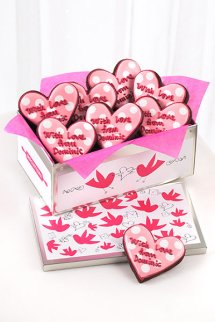
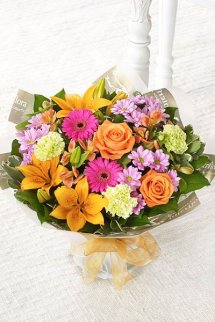
Flowers of course, are a given. She prefers the hot sunset colours so I think this may be the bouquet for her.
Deciding on a gift for mom has always been difficult, and although it is not getting any easier, I hope I am faced with this challenge for many more years.
HAPPY BIRTHDAY MOM!!
MORE!!!
Glorious in the garden….
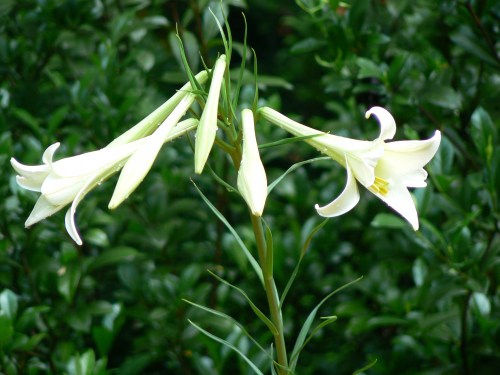
better in a vase to be enjoyed whenever I pass.
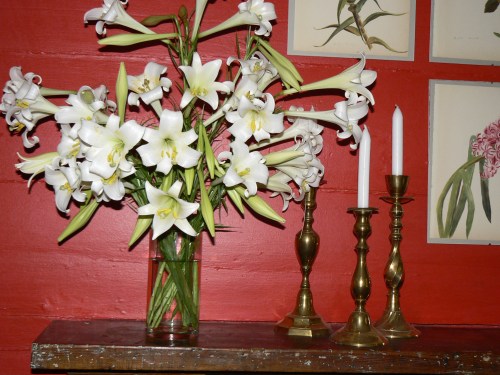
With the temps here in the 90’s the lilies will last longer indoors and I can spend more time marveling at their loveliness.
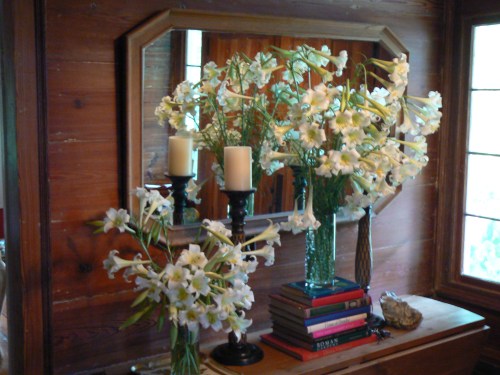
When they are this perfect… one can only ask for MORE!!!
LILY LUST!!! or LE GRANDE SPECTACLE!!
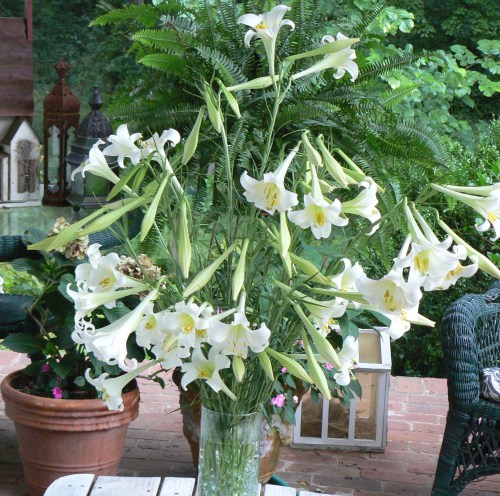
“But whatever the people may see, they cannot help seeing the lilies. They are all over the house, like groups of dancers, poised and waiting; those that stand near mirrors seem to take on a silver sheen,and those that catch the glow of the candles are lit with gold; in the full light they sparkle like sunlit snow, in the shadows they are luminous…and always, upstairs, downstairs, in every nook and cranny, there is fragrance.” – Beverly Nichols
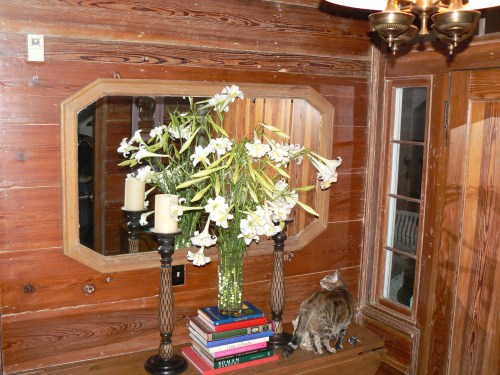
Above, Rosemary examines the bouquet. This lily is the last to bloom and marks the season’s end.
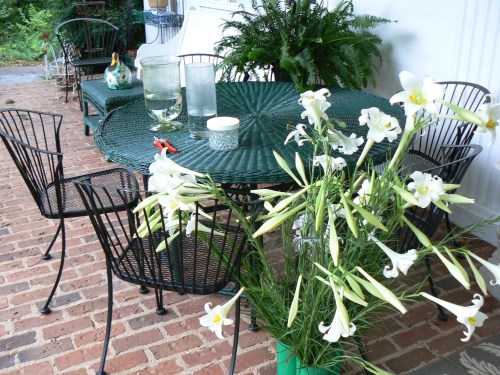
Oh the luxury of working with so many stems! MORE is definitely MORE!!
Lilium formosanum all grown from seed. By me.
MEANWHILE, BACK IN THE GARDEN…
I have mentioned often, how I find the large mophead hydrangeas very effective in the landscape, but when they start to look like this…
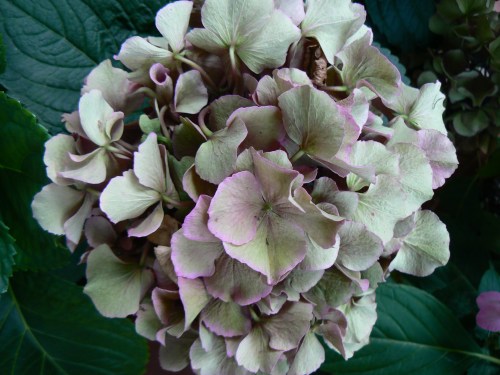
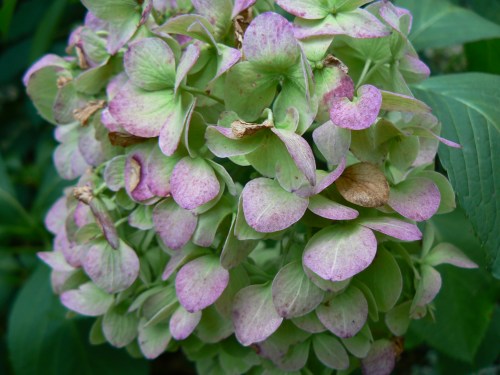
They have my heart!
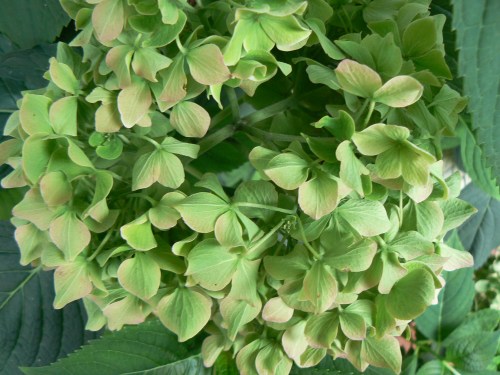
In my mind’s eye I can see my grandmother’s garden, and smell the rich fragrance of old roses.
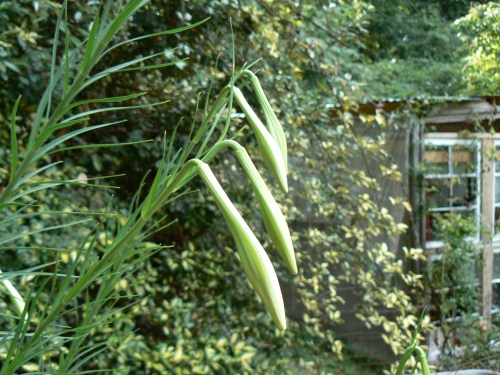
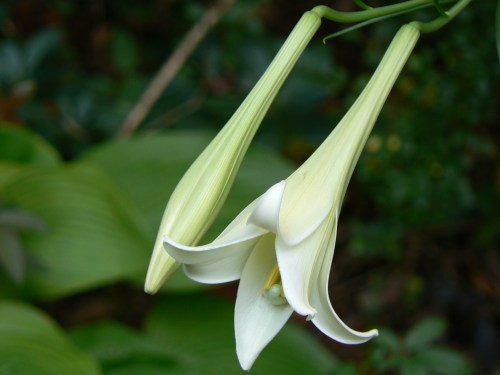
The last lily of the season is starting to bloom. More on her later…
 Recreating Eden Landscape Blog