THE CONTINUING SAGA OF…

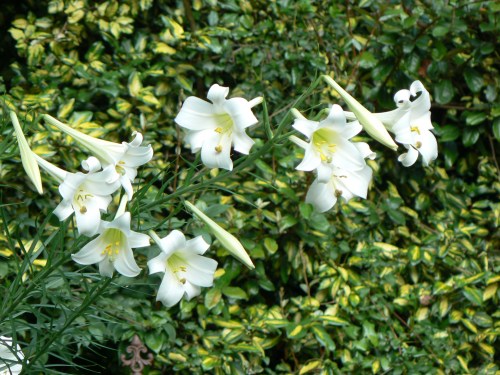
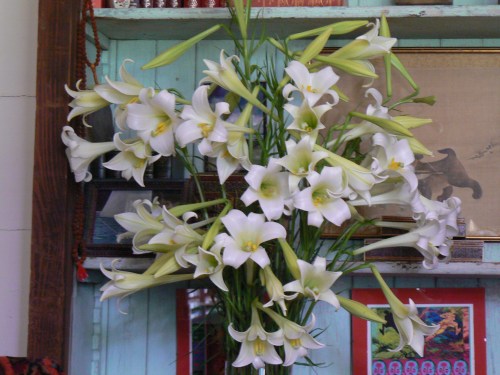
Here is what I have learned about Lilium formosanum, The Formosa Lily.
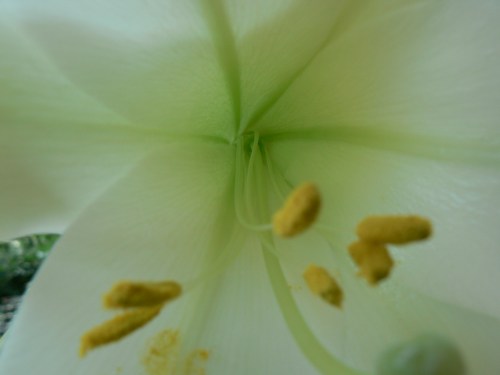
                                                                      

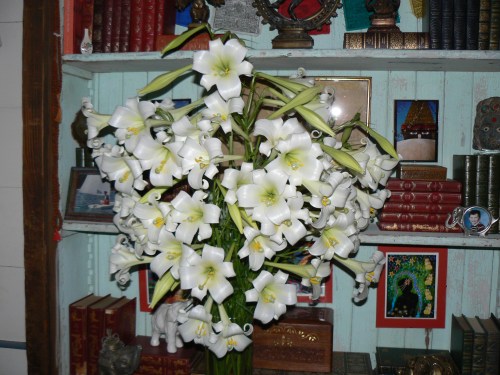
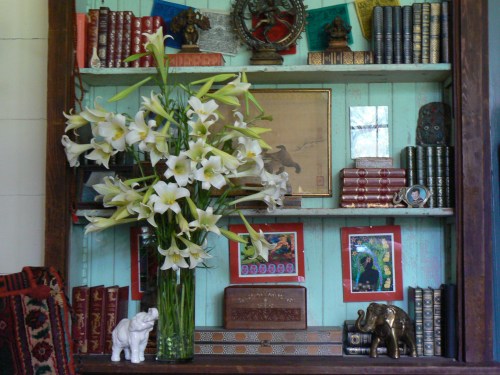
It DOES have a fragrance… at night, not as sweet or strong as ‘Casablanca’ lilies, but potent none the less. They last perfectly for exactly three days  in the vase before starting to decline. With judicious grooming the bouquet can last 4-5 days. I had to remove it from the house as both my husband and I experienced symptoms of allergy. Still we endured another 24 hours  before relegating it to the veranda.
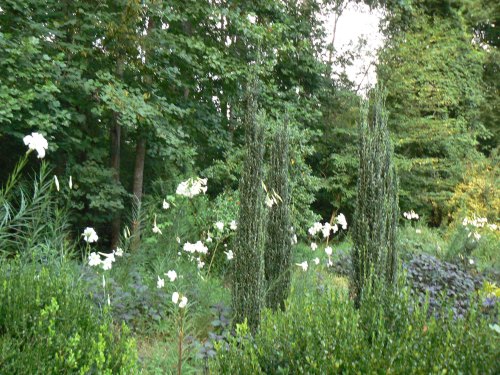
                                                                     

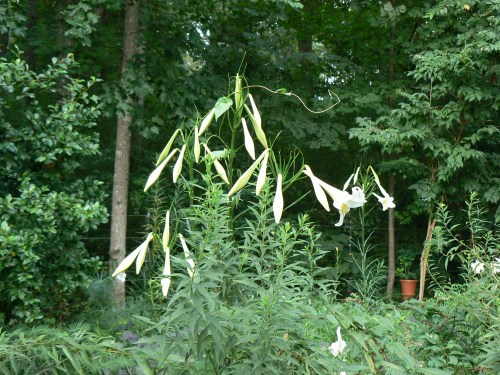
In the garden they are still going strong. 
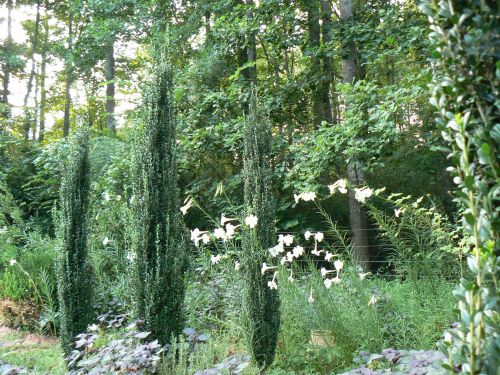
                                                                     

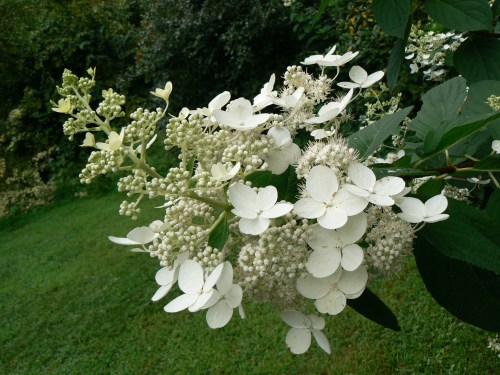
 In the cutting garden their tall and lanky habit is exposed. BUT in my mind’s eye I have combined them with the Hydrangea  paniculata blooming at the same time.
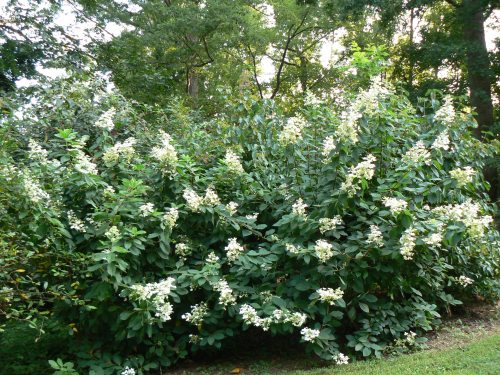
                                                                     

I think that would be a lovely plant marriage. The H. paniculata will provide the camouflage the gawky lily stems require, and the white flowers, one lacy…
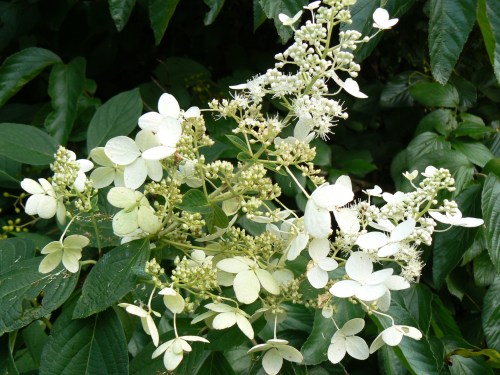
                                                                     

 the other bold …
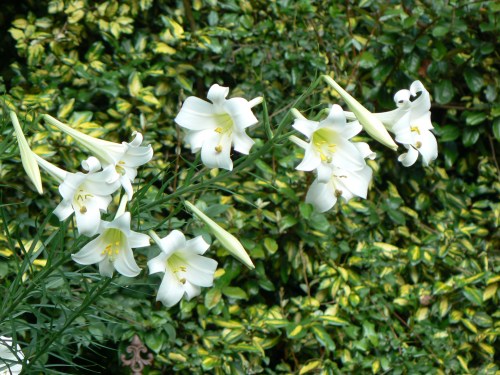
                                                                       

will be a fabulous combination. (as is the one above) See this post on combining plants.

All in all the adventures with lilies comes to a close…for now, the seed heads are very interesting and I expect PLENTY of seed to share.

I wonder if the clematis buried in all that foliage could be persuaded to climb the lily stem…???

© All photos & text 2010
WORDLESS WEDNESDAY


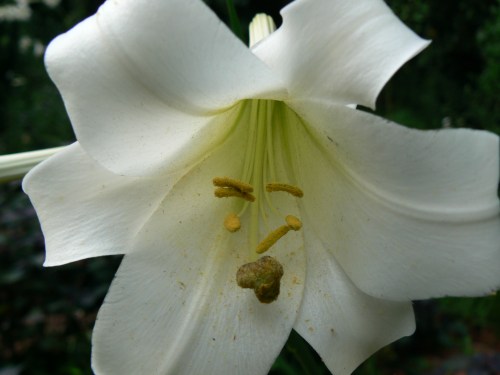
Lilium formosanum

©All photos & text 2010

LILIES

  I cannot describe my elation when I came in with this bouquet gathered this morning.


Lilium formosanum. Stunning, but no fragrance.  Okay, I’ll forgive that, very easy to grow, comes readily from seed & blooms the first year.  In fact most all of these seeded themselves.


Late blooming with fabulous seed capsules that are choice if one does dry flowers for the winter BUT… knowing I would  post about them today, I looked them up in Armitage*.

“Unfortunately bulbs are susceptible to virus diseases, particularly lily mosaic. The virus causes rapid decline of the bulb and increases the potential of infection to other bulb species in the garden. To avoid infection, it is not advisable to plant Formosa lilies among other lilies.”

Deflated!!  Well I’ll think about that tomorrow, right now I am going to enjoy my Beverly Nichols* moment!

* Allan Armitage  is THE acknowledged expert in herbaceous perennials & is professor in the department of Horticulture, University of Georgia. Author of Herbaceous Perennial Plants. A Treatise on their Identification, Culture and Garden Attributes. (a must for every garden library)

*Beverly Nichols (1898-1983) writer, best remembered for his gardening trilogy Merry Hall, Laughter on the stairs & Sunlight on the Lawn. He loved lilies and grew masses of them in his garden. More on Beverly Nichols here. (Another must for a garden library.)

© All photos & text 2010

WORDLESS WEDNESDAY


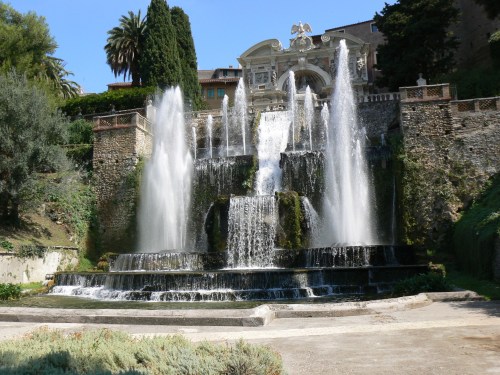
Have we cooled off yet?

© All photos & text 2010
GARDEN & HYDRANGEA UPDATE

It was my relationship with Penny McHenry* that instilled in me the love of hydrangeas.

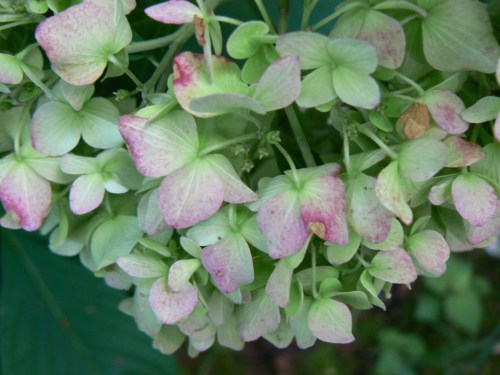
I have to confess I always found the blue mopheads rather  flashy, I much prefered the delicate lacecaps. Working over a period of time with Penny on reinventing her garden, I had the opportunity to observe the plants closely in all their stages of growth. When they began to fade and look like this…


  and this …     


I was hooked!  Suddenly I appreciated the versatility of this shrub and how many months of beauty it contributes to the garden.


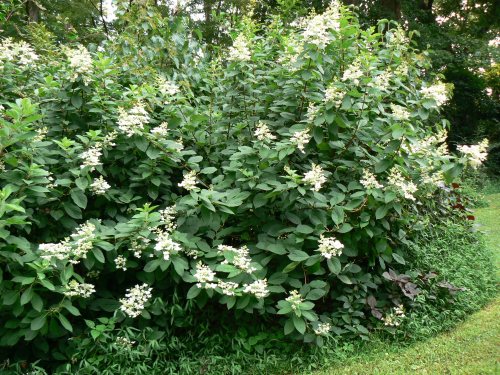
The paniculatas are late blooming, above & below, Pink Diamond (Hydrangea paniculata ‘Pink Diamond’)


Right now this is a magnet for butterflies and several species of bees. When the sun shines here, the area is all a flutter.

AND THE REST…


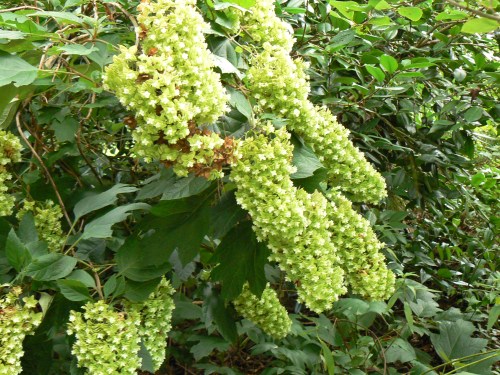
The oak Leaf hydrangea turns amethyst, true to its name. (Hydrangea quercifolia ‘Amethyst’)


Annabelle hydrangea (Hydrangea arborescens ‘Annabelle’) is that lovely Chartreuse colour, blends beautifully with the hosta. Notice there is no foliage left on Annabelle. The deer love her. 

                                                                         Hydrangea ‘Snowflake’ is still flowering..

                                                                     but starting to show some browning.


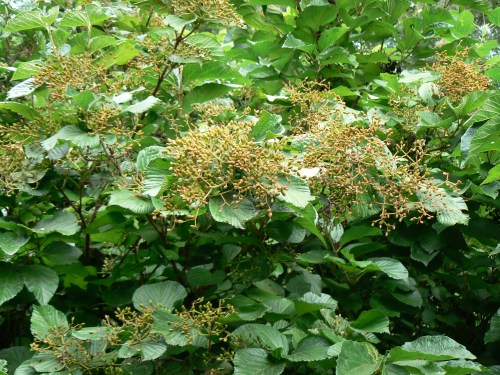
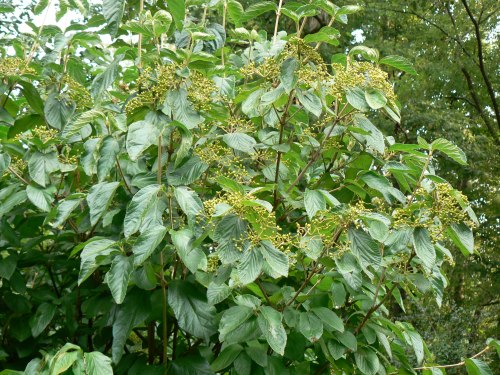
The berries on the viburnums are ripening, these above  will be red…


and these are the yellow berries of Viburnum ‘Michael Dodge’ starting to colour up.


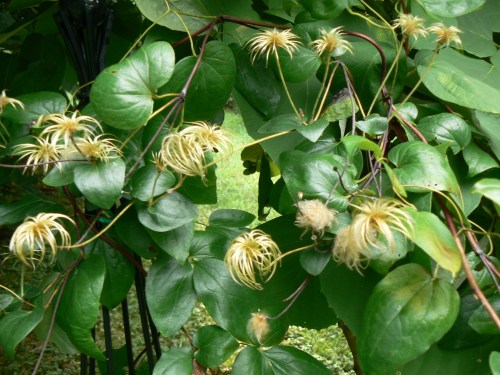
More delights, the seed heads of Clematis. Once described as curled up little terriers.


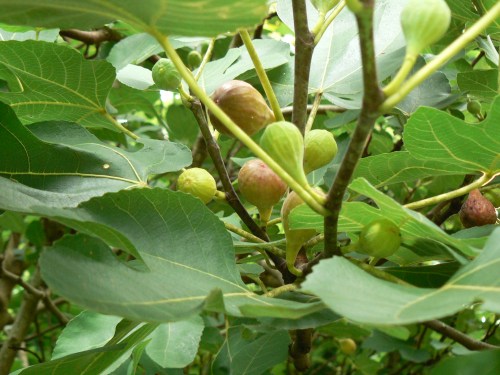
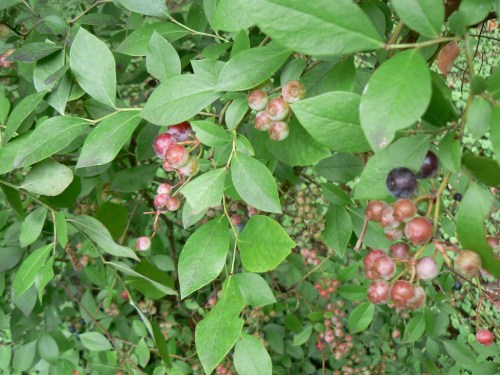
Figs are starting (above)… and below, ongoing blueberry harvest.


with more to come. The late blueberries are just starting. 


Ah, summertime!

* Penny McHenry dear friend and founder of the American Hydrangea Society.

© All photos & text 2010

HAVE A SEAT

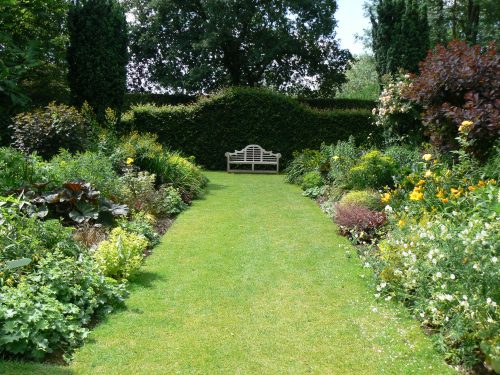
One essential element needed in a garden is a place to rest, both the eye and the body.

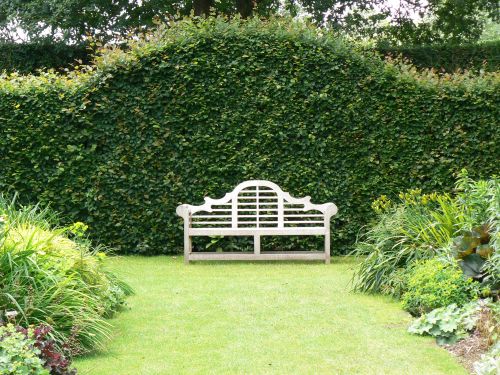
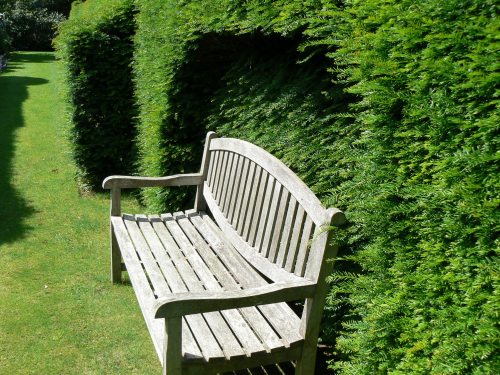
Above, Luytens’ bench ‘Breaking Wave’  as focal point at the end of this axis. The strong rectilinear design draws the eye immediately to the bench.                                                              

Notice that the hedge has been clipped to mimic the shape of the back, thus reinforcing the design and creating unity. Superb!

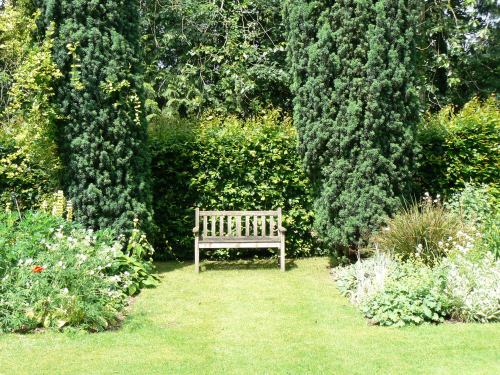
This rectangular bench fits perfectly into this space. See the straight hedge behind ( needs some pruning) and the upright plants on either side . Notice too, that the beds  between which it sits, are also rectilinear.                                                                   

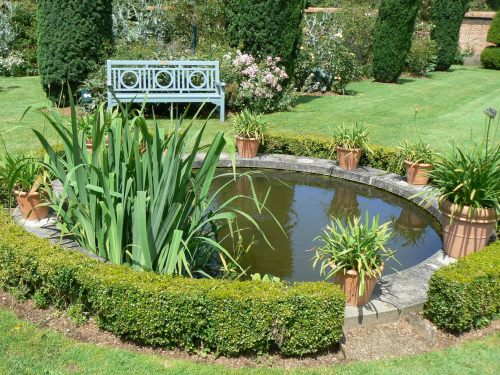
Another example of a bench perfectly suited to its enviornment. The repetition of shapes in several elements creates harmony. Circles in bench, pond & surrounding pots. The upright shrubs are also pruned into circular shapes.

A perfect fit! The niche is pruned in the shape of the bench.

So HARMONY is just as important as CONTRAST in landscape design.

(Benches are mostly used by visitors. Gardeners are much too busy.)

© All photos & text 2010

What I wanted… what I got.

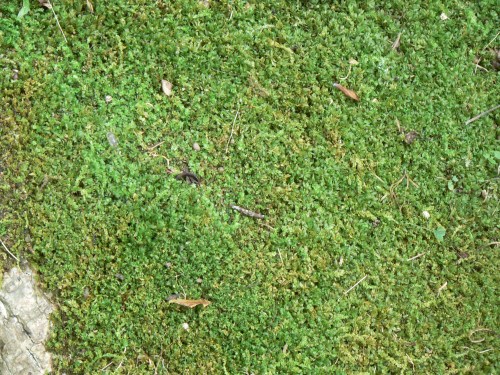
I envisioned a soft carpet of moss beneath my feet as I walked through the garden…                                                                           

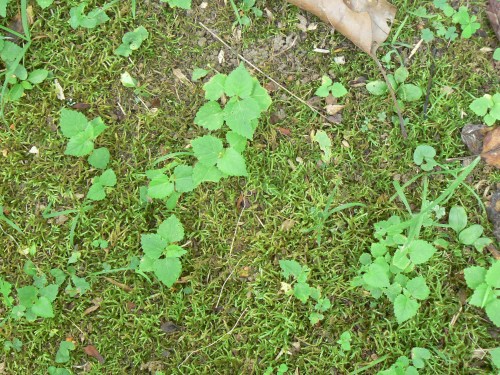
and then the weeds came.


So now not only do the beds require weeding, so do the paths! YIKES!

I have been resisting the pea gravel alternative. When I am alone in the garden the crunch of the gravel is delightful but when accompanied, it is so distracting it is difficult to have a conversation.

FAUX GARDEN


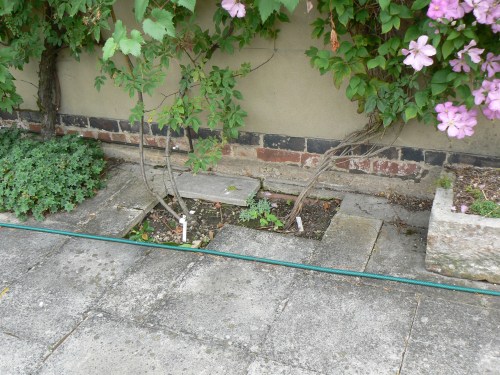
Delightful little courtyard garden? No. Just all the ‘driveway plants.’  Every plantaholic  has these. The plants that are unloaded from the car waiting in the drive to be planted.

This vignette was put together by our British host just before we  arrived for a tour.

© All photos & text 2010

Challenge

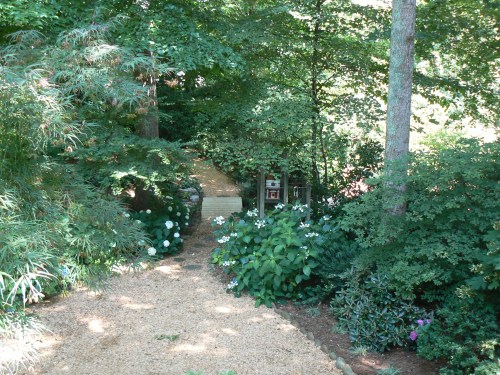
Some sites are not conducive to gardenmaking. It takes great skill and determination to build a garden under such challenging circumstances…… such is the case with the garden that a friend created.


In front, she created a wonderful perennial border with enough evergreen shrubs  & small trees to give structure and interest in winter.

The huge challenge was the back. Like so many homes in the Piedmont, it was built on a slope. A very steep slope.

Here is what she did.

A gracious, inviting entrance abuts a seating area …

Supported by terraced stone walls…

the lowest of which houses a small pond.  (below)

Below, looking DOWN into the garden.

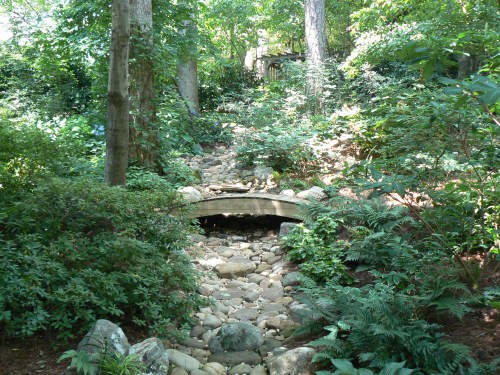
To compound the problem, her house was downhill from her neighbour. Drainage was a nightmare. So…she incorporated  a dry steam into her design to channel the water.

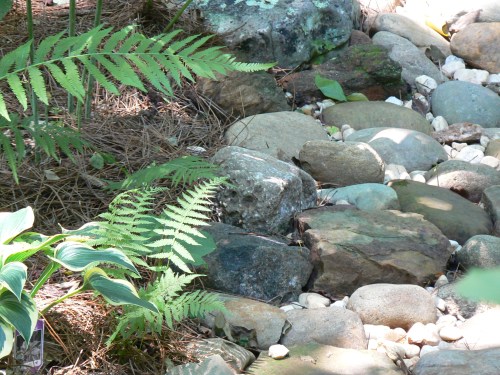
She used river rock for the most natural appearance and the stones are substantial enough not to be moved by the rushing water.

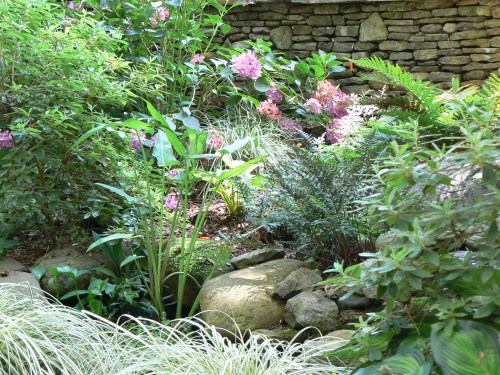
Stepping stones lead the way through inspired plantings …

with touches of whimsy and surprises tucked in when least expected.

She also has some very good ideas for planting pots…

But that is another post. Thanks for the lovely visit.

© All photos & text 2010
THE POTAGER…PRODUCES!

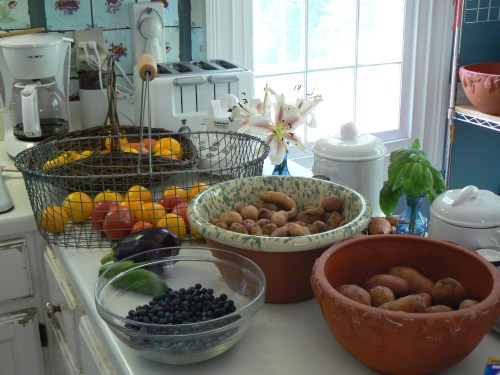
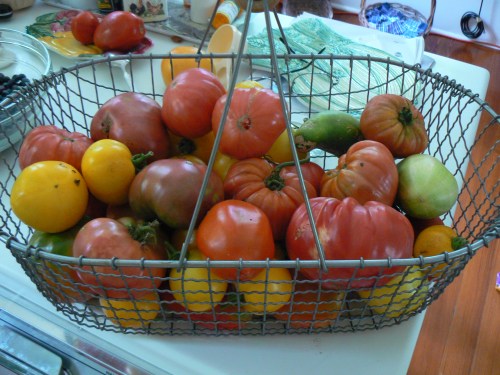
I really don’t mean  to complain, but I cannot get out of the kitchen! Look what comes in from the potager…


everyday!


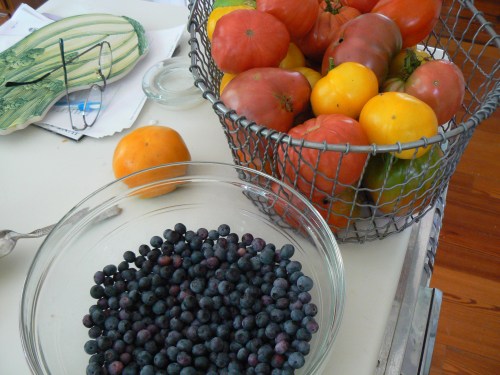
    Heirloom tomatoes…  and blueberries too.                                                                          My husband is an organic gardener and his domain is the potager. There he grows heirloom vegetables.  The resulting harvest is extraordinary, some of the best tasting vegetables, are deposited on the kitchen counter daily                                                                                                                                                                                                                                                                                                                                                                                                            the one caveat…I have to  DO something with all this bounty.

My clematis need weeding, but I will be cooking tomatoes … The viburnums need some pruning, but the blueberries need to be picked…It is time to topdress the hydrangeas… but look at all this squash… and so the summer unfolds… one delightful flavour after another.                                                                                 

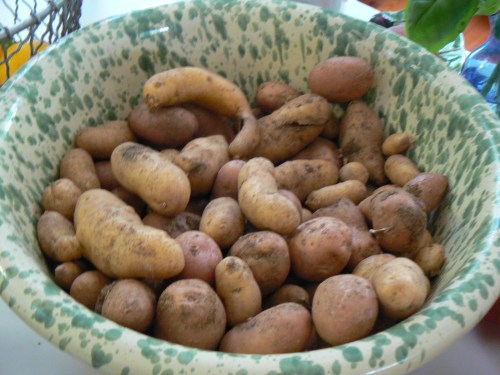
Those fingerling potatoes need to be roasted with olive oil, garlic, salt & pepper,  as the vegetables below.


And for dessert…


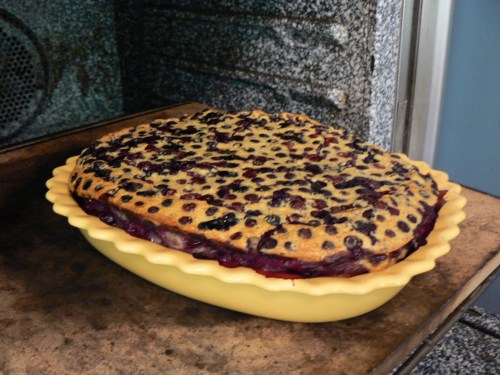
Blueberry Clafoutis. I followed this recipe from Chocolate & Zucchini. Just used the fruit I had on hand. Clafoutis  embraces any fruit beautifully.

©All photos & text 2010
FOR THE BIRDS!

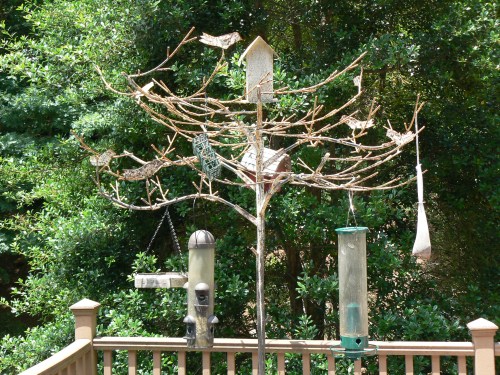
One of the joys of being in the garden is listening to the orchestra of  insects and birds. Here are some ways gardeners have lured them into their sanctuary.                                                                        

A Feeding Tree, opposite a kitchen window to enjoy them from inside as well.


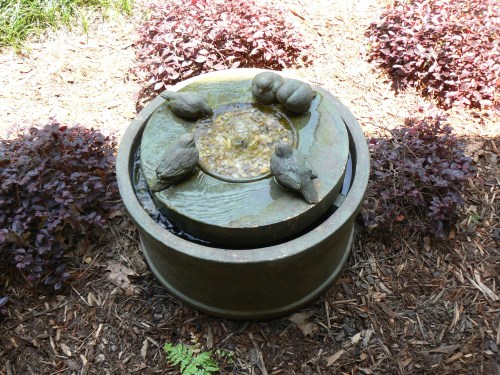
A supply of fresh water is essential, year round…


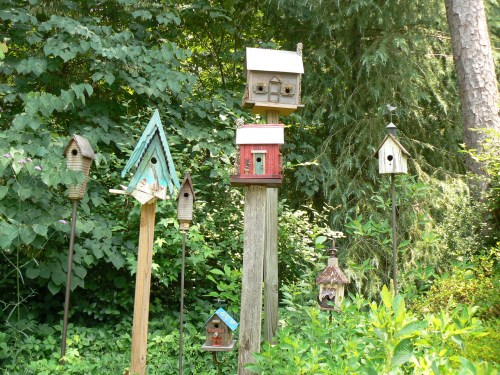
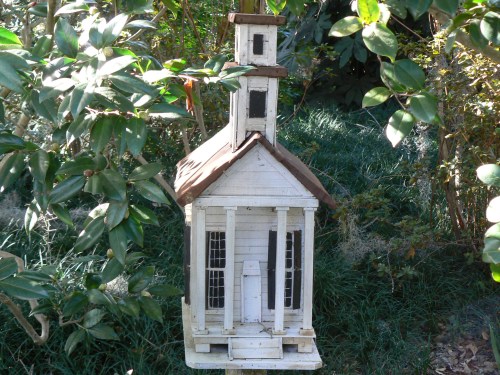
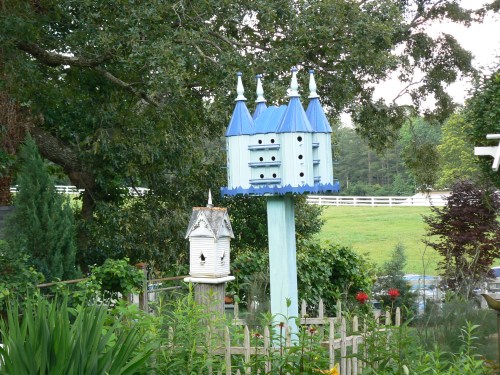
   Cluster housing, for the average family…                                                        


Single residence with plenty of acreage.


For Royalty, a castle. Note servants quarters behind!

Aside from attracting our feathered friends to the garden, these touches of whimsy add character and HEIGHT to a planting, or can serve as nice surprises tucked in the appropriate spot.

© All photos & text 2010
GARDEN TOUR ENGLAND & WALES

Its travel season again.  If my passport does not get here in time, I will  be homebound. I am consoling  myself with  photographs from trips past & exercising a mighty imagination!

with Tara Dillard (left) above, we enjoyed this perennial garden which we entered via. . .

this opened gate, (above) we found. . .

along this wall.

Look at the perfectly edged Vegetable garden below. Can this be real? No mulch, that means constant weeding & cultivating!

Look at these gardens below. The English are masters of the ‘mixed border’.

Notice how the repetition of tall plants gives the  border  below rhythm, while the one above is colour driven.                                                                     

Ancient yews,

some clipped into fantastical shapes,

elegant balustrading punctuated by a pot on every pier. . .                                                              and  the incomparable countryside …                                                                      There must always be time for tea.

and more gardens. . .

featuring hydrangeas!! I know I promised no more … but these  are not mine and I can’t help that others find them as appealing as I do.

© All photos & text 2010
MORE HYDRANGEAS

This hydrangea is most unusual. Also, I do not know which it is. When I bought it it was labeled Hydrangea subsp. sargentiana. Since then, Elizabeth Dean of Wilkerson Mill Gardens (where it originated) was told it was not a true sargentian, the hairs went the wrong way!   Whatever. It is one of the last to bloom and I love it.


This is a large plant,  6′ tall


with large fuzzy leaves,                                                                      

    buds that remind me of cauliflower                                                                    

and lacecap inflorescences.

In her Atlanta garden, Penny McHenry grew several fuzzy leafed hydrangeas and although they all had different names, we could never see many differences.

 Mike Dirr says “The Hydrangea aspera group is a mess, and I don’t know anyone who could reliably identify the middle ground variants between H. aspera and subsp. sargentiana

Just a few more and I promise no more hydrangeas till the paniculata group starts its show.


Above, Hydrangea macrophylla ‘Fuji Waterfall’.   Below,  Hydrangea macrophylla ‘Beaute Vendomoise’ slightly drooping… it is hot!


Hydrangea macrophylla ‘Fasan’  above, aka ‘Pheasant Twilight’  one  of the Teller series.


Hydrangea serrata ‘O amacha’ nishiki above, opens white and slowly turns to red.


Hydrangea serrata ‘Kyosumi’ above, and finally, below, H. serrata Kurenai.

This hydrangea too opened white and turns to red. See it here.