IT’S THE BERRIES!

A sure sign that summer is drawing to a close…
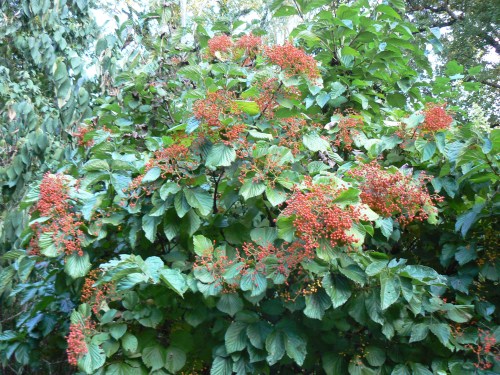
                                                                        

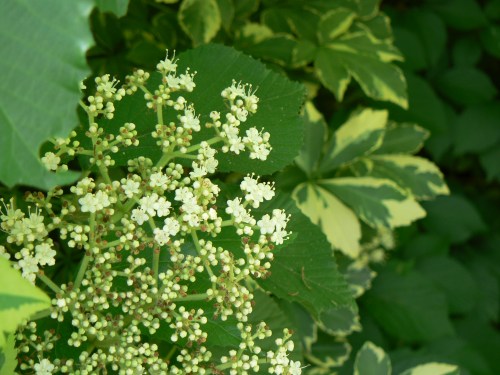
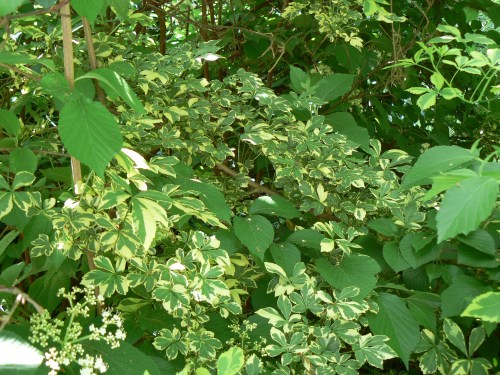
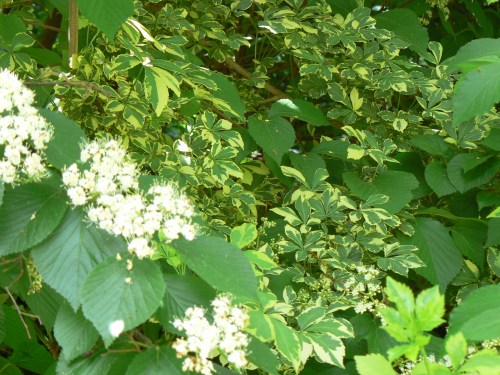
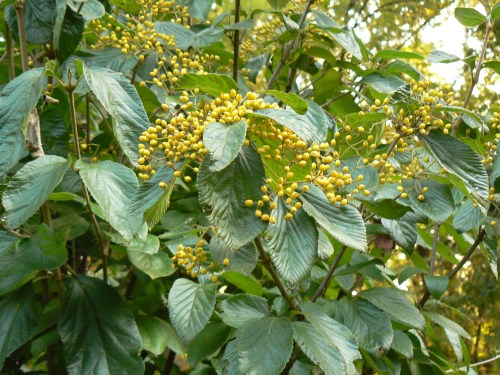
  above, Viburnum dilatatum ‘Erie’.  Below, V. ‘Michael Dodge’                                                                  
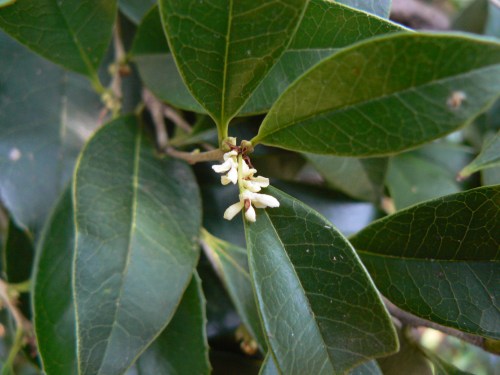
 Today I caught the scent of the Tea Olive (Osmanthus fragrans.) Amazing how a fragrance can stir a memory. More amazing, the HUGE fragrance from such a tiny flower.
                                                                     

Last week at the Atlanta Botanical garden…
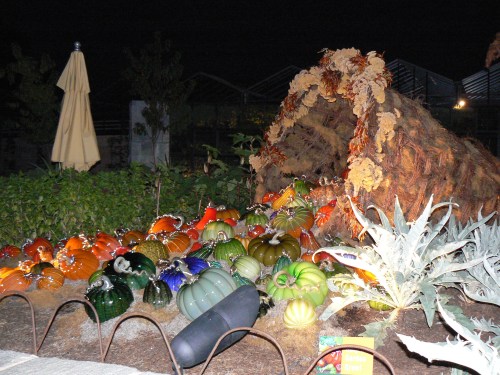
                                                                  

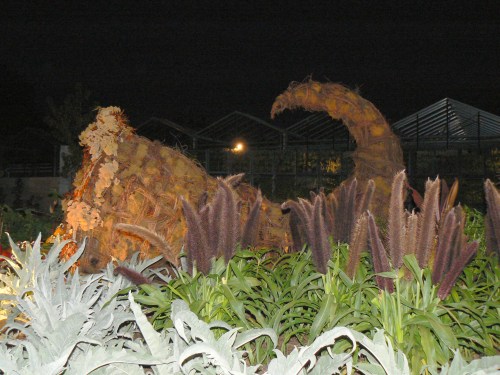
A cornucopia covered with dried flowers…
                                                                  

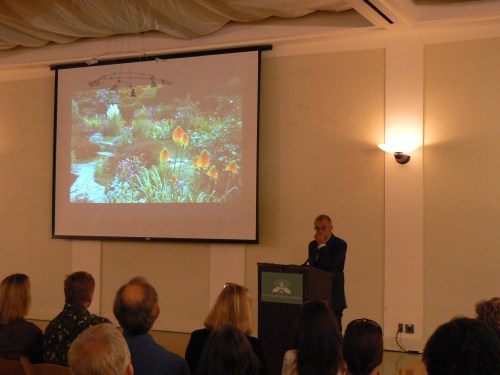
and a lecture by Fergus Garrett; head gardener at Great Dixter. UK
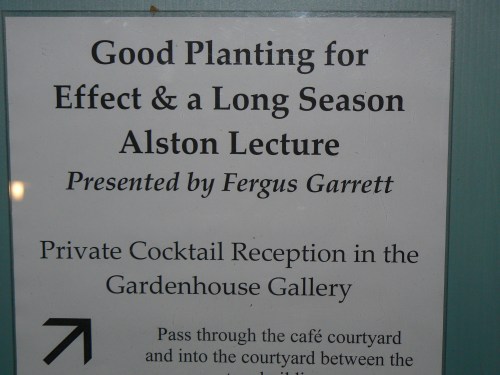


Exciting lecture, GREAT GLASSES!

© All photos & text 2010
Challenge

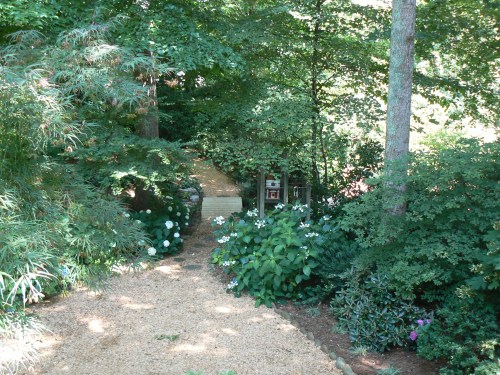
Some sites are not conducive to gardenmaking. It takes great skill and determination to build a garden under such challenging circumstances…… such is the case with the garden that a friend created.


In front, she created a wonderful perennial border with enough evergreen shrubs  & small trees to give structure and interest in winter.

The huge challenge was the back. Like so many homes in the Piedmont, it was built on a slope. A very steep slope.

Here is what she did.

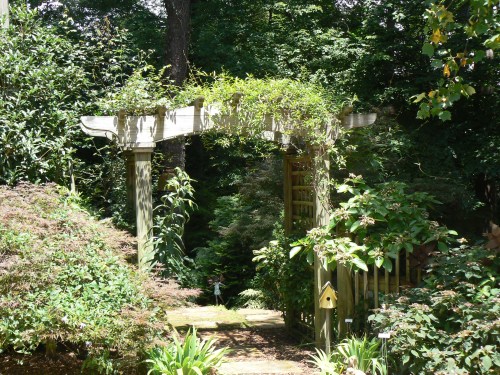
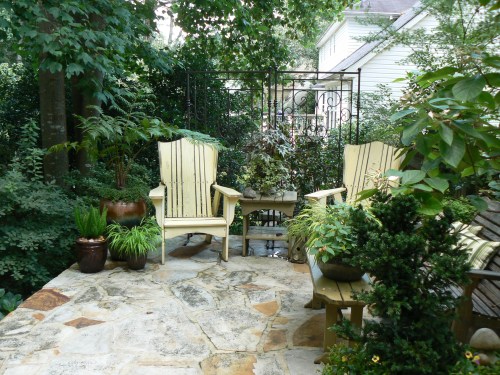
A gracious, inviting entrance abuts a seating area …

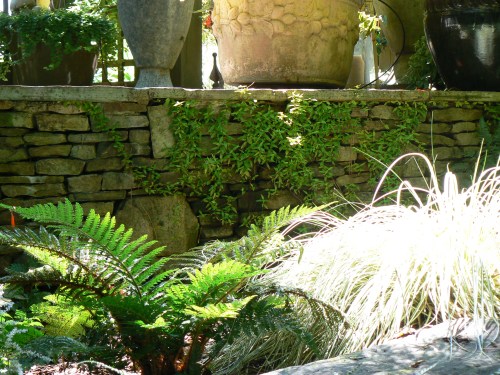
Supported by terraced stone walls…

the lowest of which houses a small pond.  (below)

Below, looking DOWN into the garden.

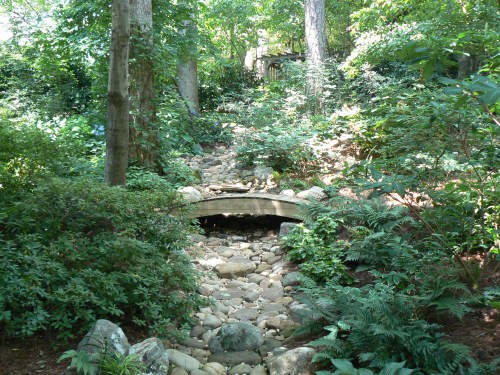
To compound the problem, her house was downhill from her neighbour. Drainage was a nightmare. So…she incorporated  a dry steam into her design to channel the water.

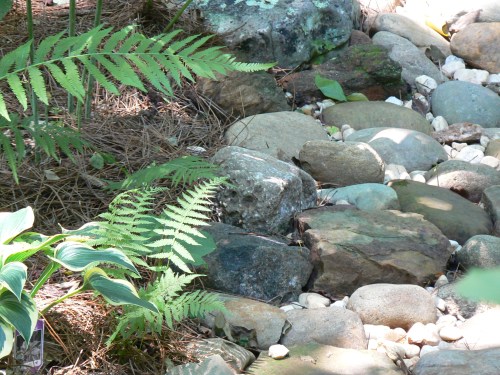
She used river rock for the most natural appearance and the stones are substantial enough not to be moved by the rushing water.

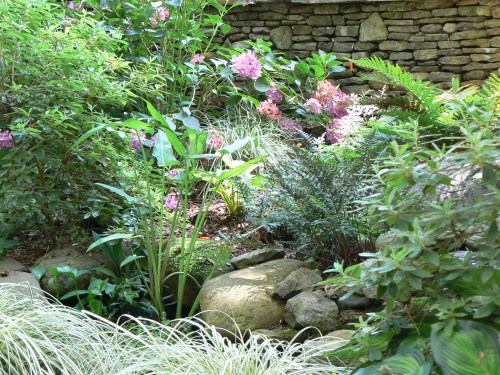
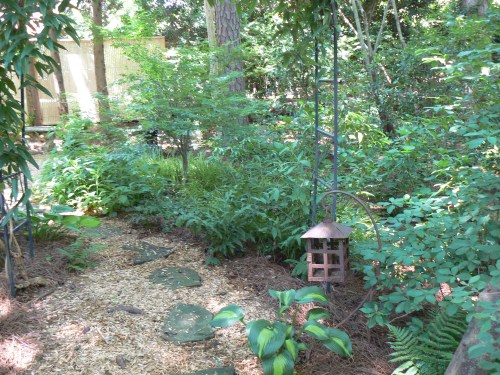
Stepping stones lead the way through inspired plantings …

with touches of whimsy and surprises tucked in when least expected.

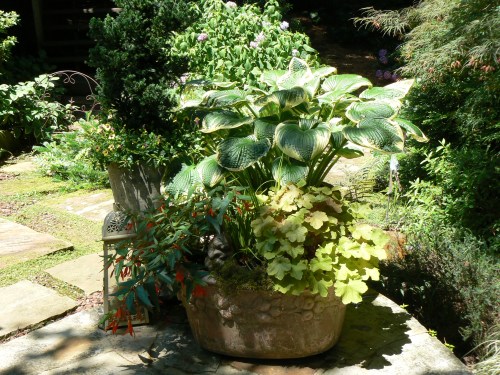
She also has some very good ideas for planting pots…

But that is another post. Thanks for the lovely visit.

© All photos & text 2010
GARDEN TOUR ENGLAND & WALES

Its travel season again.  If my passport does not get here in time, I will  be homebound. I am consoling  myself with  photographs from trips past & exercising a mighty imagination!

with Tara Dillard (left) above, we enjoyed this perennial garden which we entered via. . .

this opened gate, (above) we found. . .

along this wall.

Look at the perfectly edged Vegetable garden below. Can this be real? No mulch, that means constant weeding & cultivating!

Look at these gardens below. The English are masters of the ‘mixed border’.

Notice how the repetition of tall plants gives the  border  below rhythm, while the one above is colour driven.                                                                     

Ancient yews,

some clipped into fantastical shapes,

elegant balustrading punctuated by a pot on every pier. . .                                                              and  the incomparable countryside …                                                                      There must always be time for tea.

and more gardens. . .

featuring hydrangeas!! I know I promised no more … but these  are not mine and I can’t help that others find them as appealing as I do.

© All photos & text 2010

MORE HYDRANGEAS

This hydrangea is most unusual. Also, I do not know which it is. When I bought it it was labeled Hydrangea subsp. sargentiana. Since then, Elizabeth Dean of Wilkerson Mill Gardens (where it originated) was told it was not a true sargentian, the hairs went the wrong way!   Whatever. It is one of the last to bloom and I love it.


This is a large plant,  6′ tall


with large fuzzy leaves,                                                                      

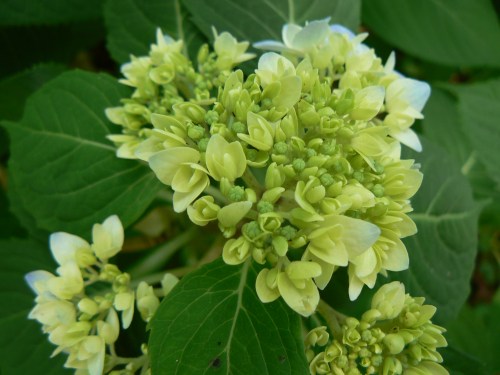
    buds that remind me of cauliflower                                                                    

and lacecap inflorescences.

In her Atlanta garden, Penny McHenry grew several fuzzy leafed hydrangeas and although they all had different names, we could never see many differences.

 Mike Dirr says “The Hydrangea aspera group is a mess, and I don’t know anyone who could reliably identify the middle ground variants between H. aspera and subsp. sargentiana

Just a few more and I promise no more hydrangeas till the paniculata group starts its show.


Above, Hydrangea macrophylla ‘Fuji Waterfall’.   Below,  Hydrangea macrophylla ‘Beaute Vendomoise’ slightly drooping… it is hot!


Hydrangea macrophylla ‘Fasan’  above, aka ‘Pheasant Twilight’  one  of the Teller series.


Hydrangea serrata ‘O amacha’ nishiki above, opens white and slowly turns to red.


Hydrangea serrata ‘Kyosumi’ above, and finally, below, H. serrata Kurenai.

This hydrangea too opened white and turns to red. See it here.

MEANWHILE, back in the garden…

The hydrangeas are at their peak. This year they are particularly beautiful having benefitted from a long cold winter.


                                                                        Hydrangea macrophylla (unknown) on left & Hydrangea macrophylla ‘ Lilacina’    above

                                                                      Hydrangea quercifolia ‘Snowflake’ is non-stop hose in hose flowers.


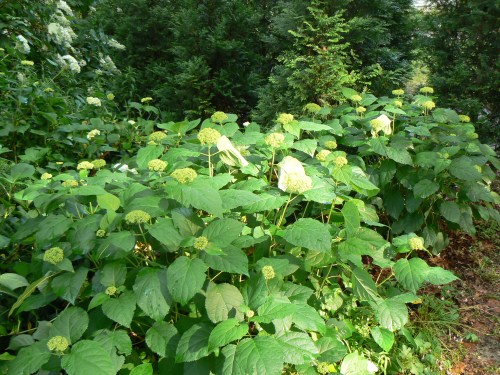
Hydrangea arborescens ‘Annabelle’ on left and Hydrangea macrophylla ‘White Wave’  (above)


Hydrangea arborescens ‘Hayes Starburst’ a variation of the native  found by Hayes Jackson.

As a result of last weeks garden tour, I have added a pot to the Circle of Friends.


Much better.  Someplace for the eye to rest.

PORTRAITS:


 Above Hydrangea macrophylla ‘Jogasaki’  Below, Hydrangea serrata ‘ Beni Gaku’


The stunning  Hydrangea macrophylla ‘Geoffrey Chaudbund’


And the mysterious “From Penny’s back door” If anyone can ID this I would appreciate it.

© All photos and text 2010

NOT A GOOD THING!

I tried to grow some Clematis with Hydrangea paniculata, the late-blooming  panicle hydrangea, (sometimes refered to as ‘Pee Gee’ or ‘Tardiva’.) but this is not successful.


  Clematis Purpurea Plena Elegans In Hydrangea paniculata ‘Pink Diamond’    ( above & below)                                                               

This hydrangea is pruned drastically early spring. When the clematis starts to grow, the branches of the hydrangea are low and bare .  There,  they intertwine. The hydrangea however, keeps on growing, thus  the clematis  blooms deep in the shrub and not in front, where it is wanted.

 Here Clematis texensis ‘Gravetye Beauty’  hidden in  foliage.                                                                   

 Another lesson learned.

HYDRANGEA TIME!!

The very first bloom on ‘Mini-Penny’. (Hydrangea macrophylla ‘Mini-Penny’)


Oakleaf hydrangeas line a path below


leading to more heavenly hydrangeas.


Above, a glorious mix of Hydrangeas. Oakleaf (Hydrangea quercifolia) Annabelle (Hydrangea arborescens ‘Annabelle’) and blue mopheads,(Hydrangea macrophylla) assorted, many of them Penny Macs.


Variegated kerria (Kerria Japonica ‘Pictum’) weaves it way through Hydrangea “Annabelle’ (Hydrangea arborescens ‘Annabelle’) Gold Heart Ivy (Hedera helix “Gold Heart’) climbing the trees.


The ‘Circle of Friends’ consists of camellias and hydrangeas, either gifted to me, or those that arrived via cuttings from friend’s gardens. The identity of some have been lost, they therefore  wear ID tags that read ‘From Penny’s back door’ or ‘Lacecap at Penny’s stream’, indicating where they originated.

The inverted pot served as a plinth for St. Fiacre, but he is temporarily needed elsewhere. (I have a shortage of statuary.)


   Above,’ Penny Mac’ (Hydrangea macrophylla ‘Penny Mac’) Blue, and ‘Madame Emile’ (Hydrangea macrophylla ‘Madame Emile Mouillere’) White.

This show is just starting. I rely on the hydrangeas to carry the ornamental garden through the summer months. As the blossoms age they become papery. They can then be harvested  for winter arrangements.

© All photos & text

HEAVENLY FRAGRANCE

Just in case I needed another reason to love gardening in the south…

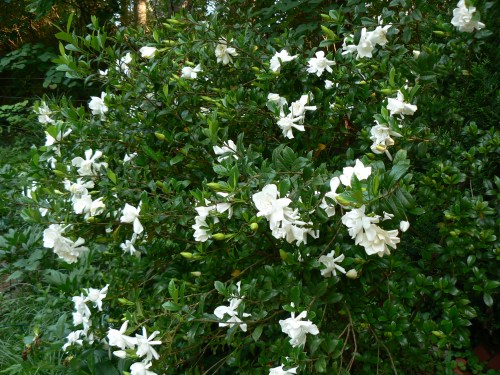
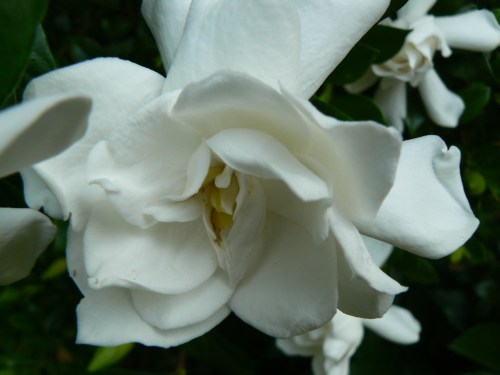
The gardenias are blooming. Wish I could post the fragrance!


Are you getting it?

© All photos & text 2010

GARDEN UPDATE CONTINUED


Plants with a cascading habit,  call attention to the ground plane.  Above, The heavy flowers of  Snowflake Hydrangea (Hydrangea quercifolia ‘Snowflake’),  draw the eye to the  Japanese painted fern (Athyrium nipponicum).


 The flower on ‘Snowflake’  has  double sepals, significantly different from that                                                                    of ‘Amethyst’ above, or ‘Alice’ below.


Hydrangea arborescens ‘Annabelle’   forming it’s  flower heads. This is one hydrangea that SHOULD BE PRUNED early spring. These hydrangeas form flower buds on NEW GROWTH.

UPDATE ON EPHEMERALS:


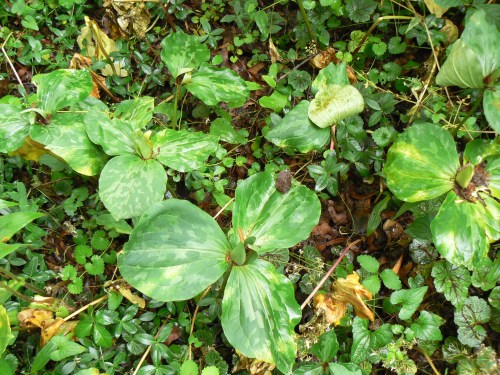
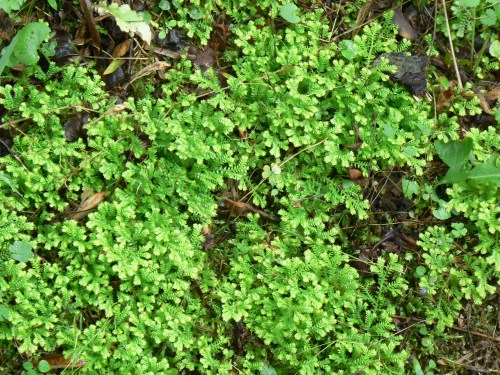
The Trillium are fading, (see yellow foliage). What will clothe the ground now is Vinca. I really tried for Selaginella kraussiana aurea, below


 but it prefers the path so I’m going to stop fighting and let the vinca do its thing.


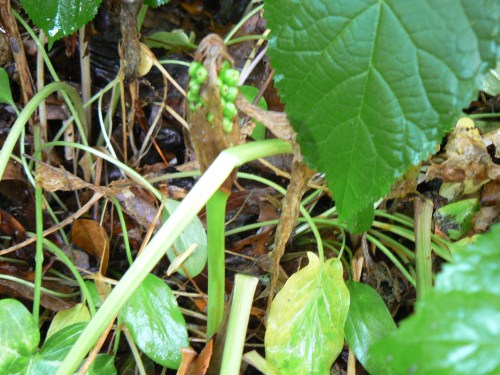
Arum foliage has died down & the berries have formed. They need to ripen, then they will be spread where more are needed. See previous post on Arum.

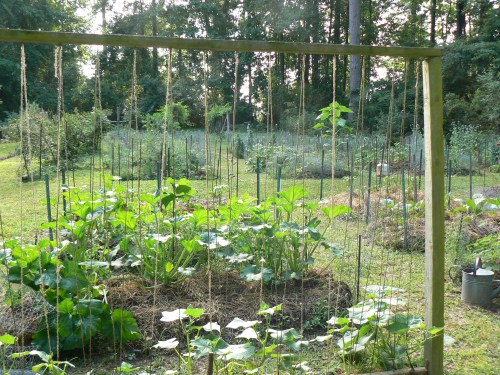
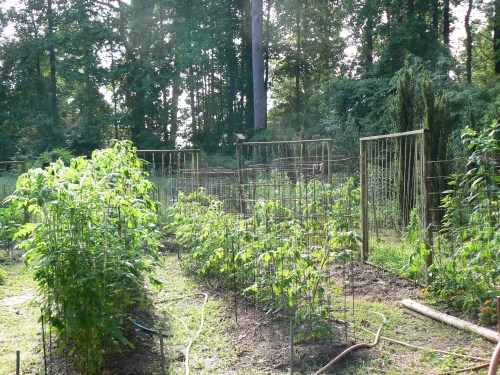
FINALLY THE POTAGER:

 Below squash, peppers, cucumbers, beans, Eggplant                                                                  

  and below, TOMATOES!!                                                                

 Have a great week end!

©All photos and text 2010

CLEMATIS CRUSH

I previously mentioned my Clematis Crush ( here and here ). Beside the beautiful flowers,  the fact is they require only vertical space. That makes them the perfect companion to any shrub or small tree. Most shrubs have a limited bloom time so a well-chosen  flowering vine can really extend the season of beauty. Also, from a design point of view, any element seen at eye level has tremendous impact.

 I thought I would showcase some of the clematis blooming in the garden now.


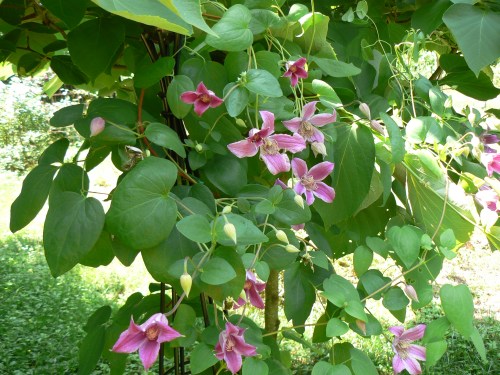
Clematis  viticella ‘Venosa Violacea’ climbing through a viburnum.


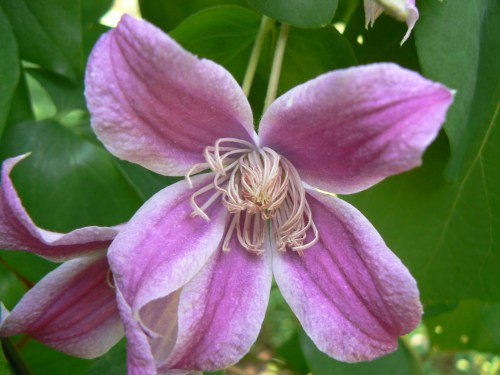
 Clematis texensis ‘Catherine Clanwilliam’ on an obilisk till it reaches into the branches of Styrax obassia. Below, looking up into the flowers.


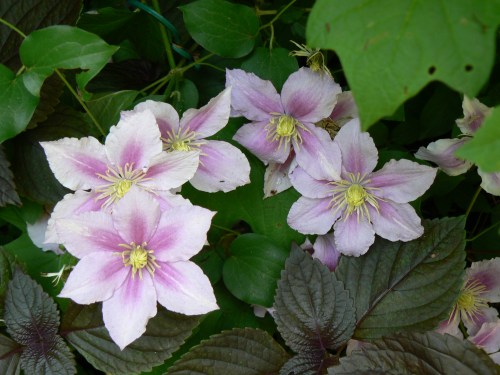
Clematis ‘Piilu’ or sometimes called ‘Little Duckling’, an Estonian hybrid with smaller flowers.

Most of  the above are blooming in viburnums that are passed their peak.  The clematis fill the  gap between bloom time and berries in this part of the garden.

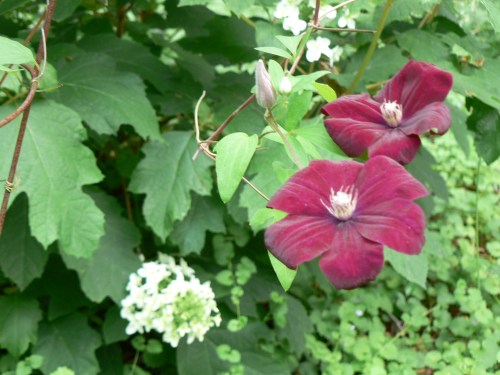
Below, Clematis ‘Rouge Cardinal’ being trained to clothe Hydrangea quercifolia ‘Snowflake’.


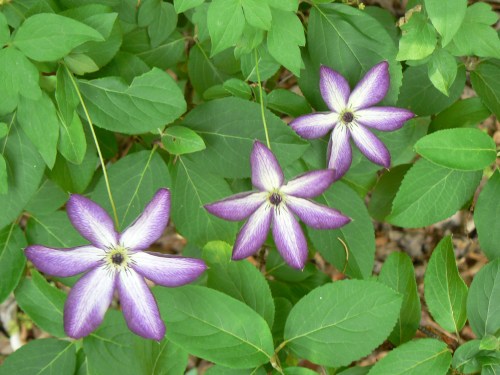
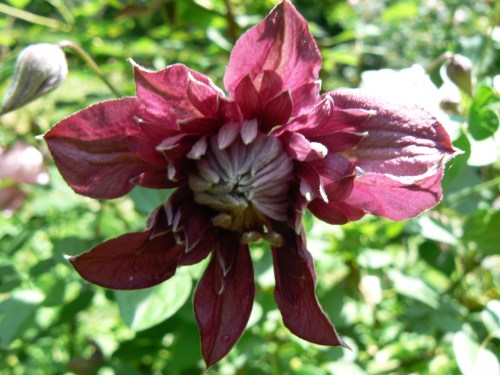
Finally, Clematis purpurea plena elegans, chosen to bloom with the roses. Below.


I hope you consider adding some to your garden.

© All photos & text 2010

TEXTURE

How important is Texture?  Texture can be more pleasing than flowers, and persist longer. In smaller gardens where every design element  is seen up close, it is of particular importance.


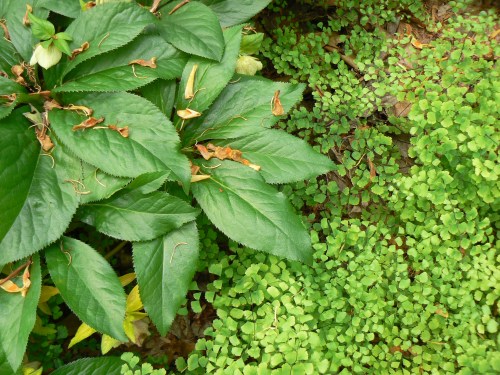
Here the  bold glossy leaves of  Lenten Rose (Helleborus orientalis)  stand in a mass of delicate Maidenhair fern (Adiantum capillus-veneris).

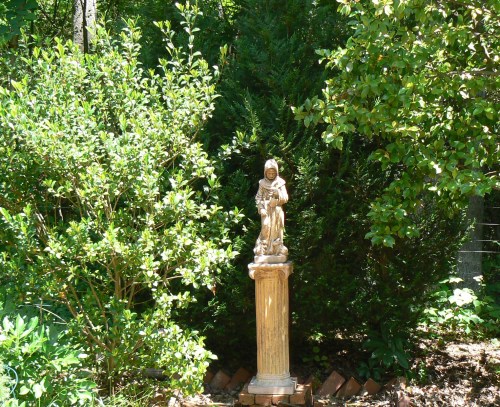
                                                                      Plants used for background need to be fine, dense and matt in order to be a suitable foil for either statuary or flowers. Above St. Fiacre against a matt evergreen Arborvitae (Thuja plicata).  On either side the coarse, shining leaves of Gardenia (Gardenia japonica) and  Banana Shrub (Michelia figo),  reflect too much light to be an effective background.

Contrasting textures apply not only to plant relationships.

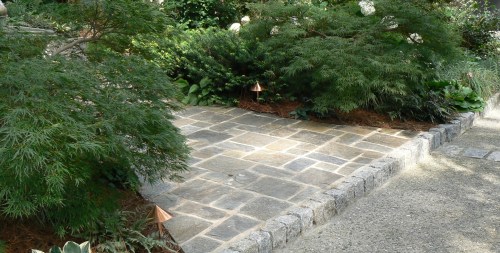
                                                        Here the fine ferny foliage of Japanese Maple ( Acer palmatum) stand out in sharp contrast to the smooth Bluestone walkway.


 The best effects are achieved with simplicity.  Texture = contrast = beauty.

© All photos & text 2010

HYDRANGEAS, HYDRANGEAS!!!

The hydrangeas are coming!

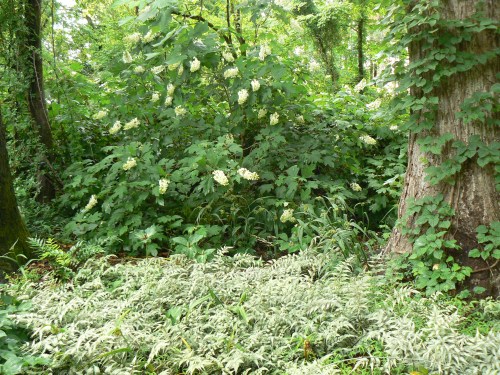
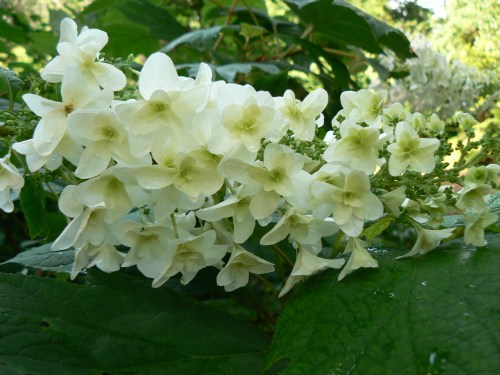
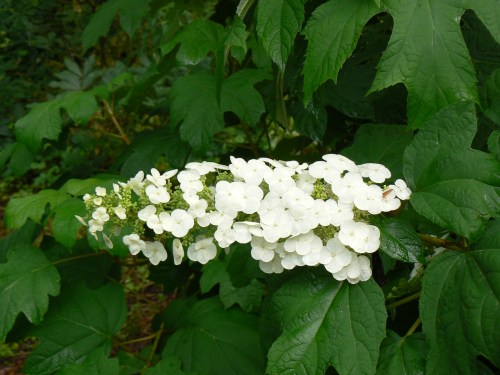
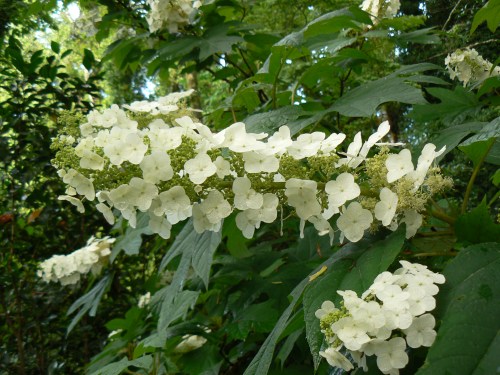
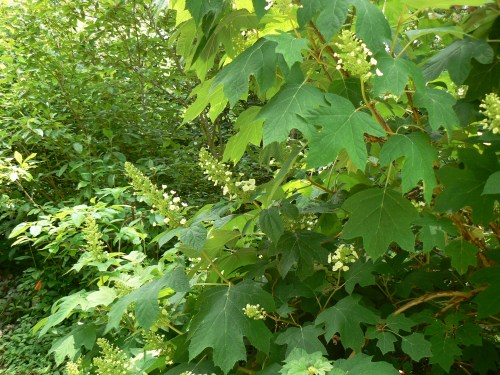
The Oakleaf hydrangea (Hydrangea quercifolia) is just starting. This native has much to recommend it. When it first breaks dormancy, the leaves are silver-grey and fuzzy, the flowering is worthy of a glass of champagne. The handsome foliage turns a wonderful burgundy red in the autumn (almost December here in Georgia) and when the leaves finally fall, the stems look like peeling cinnamon sticks. DO NOT PRUNE this shrub unless it is necessary to keep it in bounds, better yet, just give it plenty of space. If you must prune cut bouquets while it is in bloom. This will assure flowering the following year.

The first of the macrophylla types, ‘Penny Mac’ is showing a bit of color. I rely on this plant to carry the garden through the summer months. This hydrangea was not named for my dear late friend Penny McHenry. It came to be known by this name as it was refered to  as “Penny’s macrophylla” (hence ‘Penny mac’). This was one of the first remontant types that later led to the breeding of  ‘Endless Summer’ and many more reblooming types. There is a new hydrangea, developed by Mike Dirr et al, named for Penny called ‘Mini Penny’ look for it at your local nursery. No pruning here either. See above.

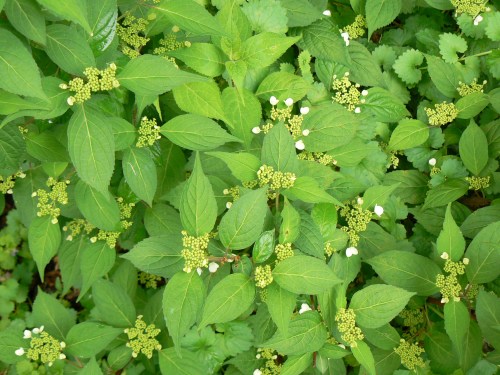
The buds on Hydrangea serrata.

 Typically the serrata group is earlier flowering and lower growing, maintaining a height of 3′ and spreading wider.  This group hails from the mountainous regions of Japan, therefore not so quick to leaf out on the first warm day (usually January here) and then get frozen as the colder temps return. No pruning.

© All photos & text 2010

SOMETIMES

It works just like one imagined!


It has taken some years but finally the Variegated Aralia (Acanthopanax sieboldianus  ‘Variegatus’ now called  Eleutherococcus sieboldianus) is sending it’s graceful arching canes into the Viburnum dilatatum.


Later these viburnum flowers will become clusters of red berries, many will grace the Thanksgiving floral centerpiece.


Somewhere in there is planted a white clematis. It has not been seen yet this season. Although the earlier viburnums have a delicious  fragrance, these do not…

© All photos & text 2010