Groundcovers
AN INDISPENSABLE PERENNIAL
I am not a huge proponent of perennials. I find they require too much maintenance for a very short show and then, even the foliage disappears for the winter. There are of course exceptions. Peonies for example are worth whatever effort is required for even one day of bloom but of course they do last 10 days to 2 weeks in the garden and are stunning in a vase (see Reggie Darling on the pronunciation). The foliage too is quite handsome for most of the summer and useful in arrangements with other flowers as well.
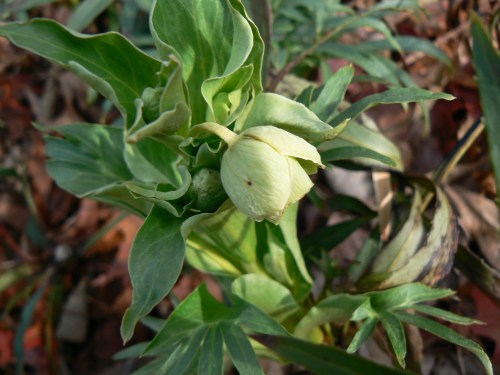
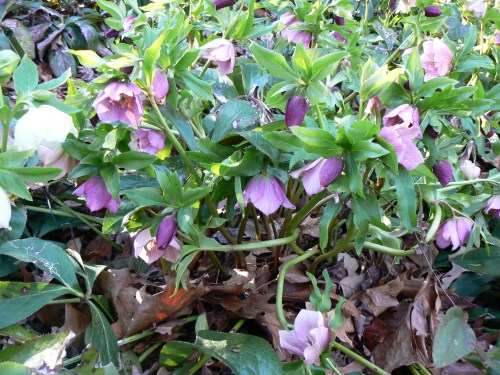
The perennials I consider indispensable are those that have evergreen foliage. Perhaps the best of these are the Hellebores (Helleborus species).
They exhibit handsome leathery foliage, appreciate shade, and furnish the garden with much-needed greenery when it is most welcome .
I particularly like them planted at the feet of deciduous shrubs…
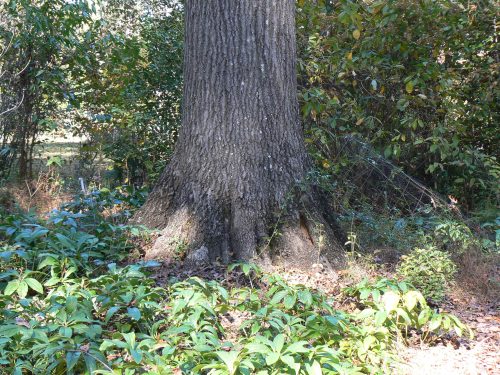
and at the base of large trees where not much else will grow.
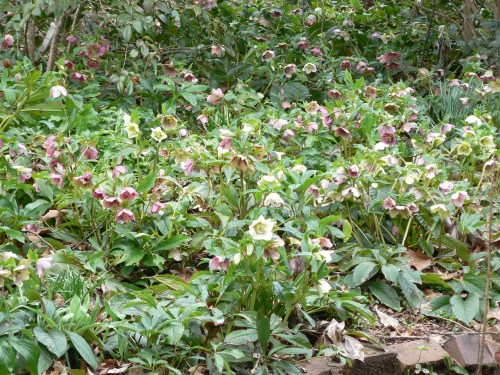
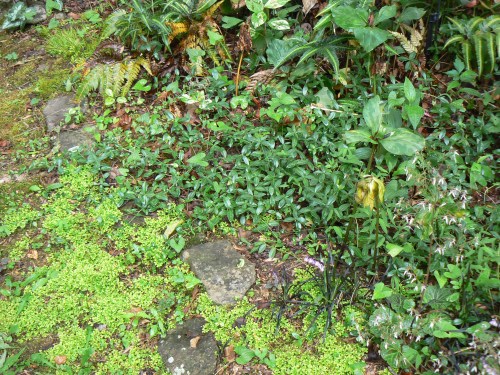
Planted in masses, they make an effective ground cover.
Even in northern climates where there is snow cover for most of the winter, their flowers popping up through the melting snow is a sight to behold.
I do hope you include some in your landscape.
© All photos & text 2011
PROJECT MOURNING BENCH
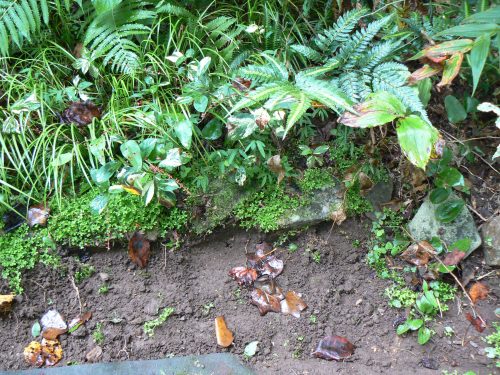
For this area, the Vinca has too much movement & energy; the glossy leaves reflect so much light one can hardly make out the ‘star plants’…
So out it went (to a friend’s garden).
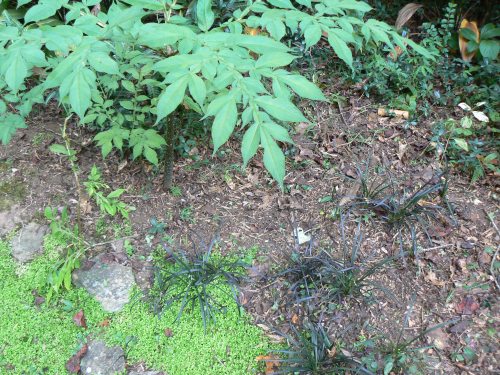
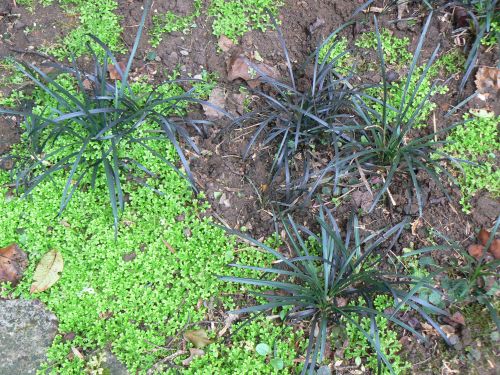
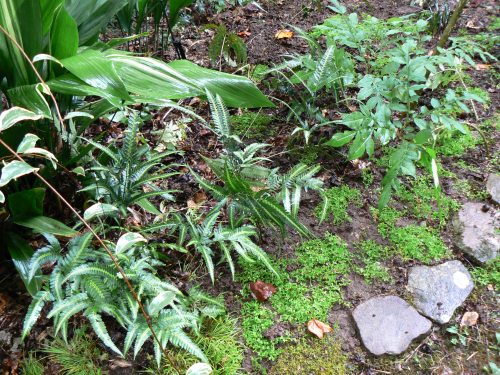
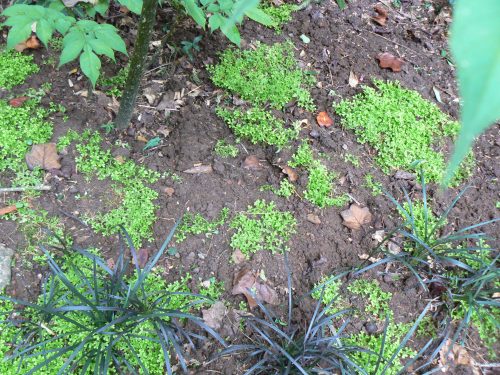
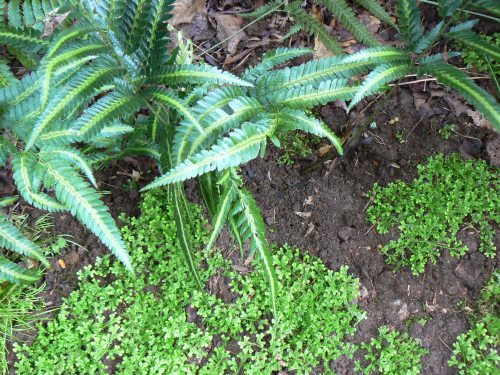
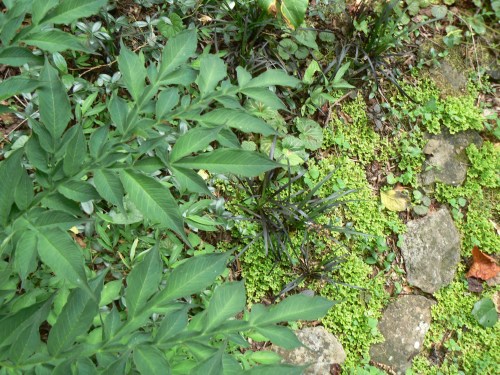
The golden club Moss,(Selaginella kraussiana ‘Aurea’) on the other hand, has a matt texture & absorbs the light. It makes a much calmer background which allows the ‘stars’ to shine..
This is so much better. I first added a wheelbarrow of rabbit manure & raked it over the ground. No digging is done here because there are Trillium rhizomes underground. Then I dug up the Selaginella from the path on the other side…
And transplanted it. While I tried for whole ‘sheets ‘ of the moss, it falls apart, so little pieces with roots are pushed into the ground. They will shortly spread to form the carpet needed for this area. All the while… 
Cleome supervised.
This type of gardening is really painting beautiful pictures with plants…but the one element the other arts do not have to deal with is TIME. If I was using paints or pencils…it would already be coloured in.
The Star plants are:-
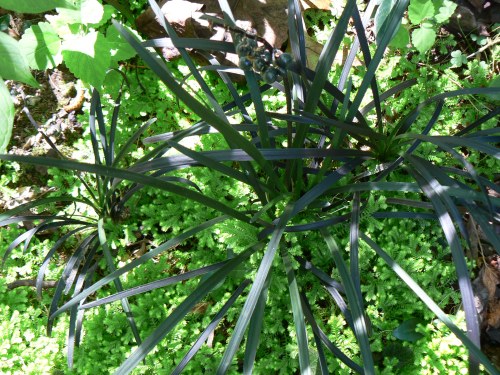
Black Mondo Grass (Ophiopogon planiscapus ‘Nigrescens’)
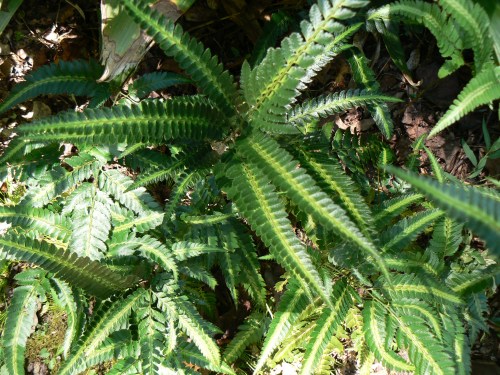
East Indian Holly Fern (Polystichum acrostichoides) and…
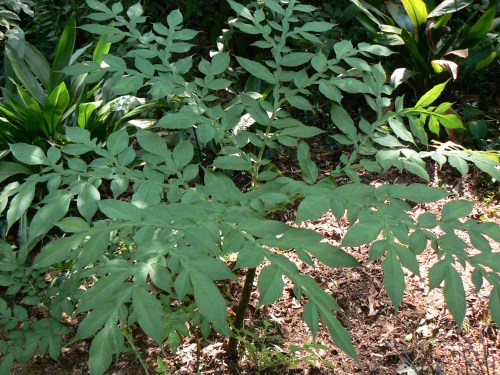
Amorphophallus rivieri, a type of voodoo Lilly.. all improved by changing their background.
A good days work all in all, and part of another project started.
“Success depends on simplicity, one plant supplying the quiet background, while the other stands out clearly against it.” – Sylvia Crowe*
*Sylvia Crowe, distinguished British Landscape architect.
© All photos & text 2010
WHAT WAS I THINKING?
Never one to work on just one project, I am now looking into another area of the garden I may not have discussed before; that would be the Mourning Bench.
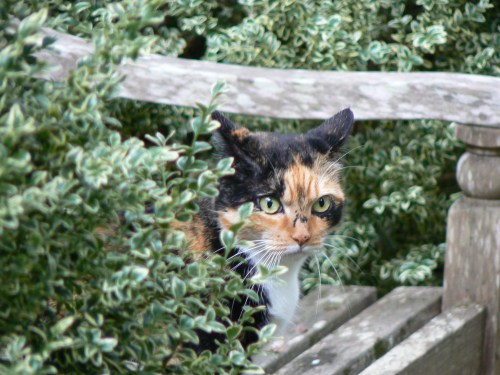
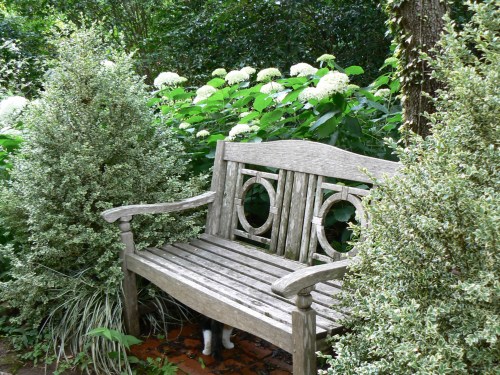
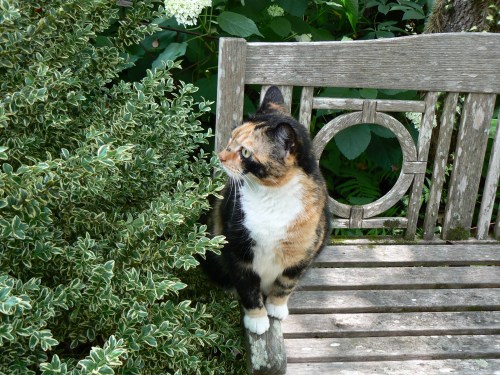
Located down the walk from the Circle of friends, just past the intersecting path that leads to the Potager and compost, sits the Mourning Bench. Flanked by two variegated Boxwood (Buxus sempervirens ‘variegata’), it is recessed into the border and one can pass it without noticing.
I spent a lot of time here, both having morning coffee and finding shelter from the sun when working in the Potager. Opposite the bench were planted perennials, a tapestry. Quite lovely for several years, then…
the Vinca appeared. Above, it is pushing the Golden Club Moss (Selaginella krausiana ‘Aurea’) into the path. Earlier in the season I thought I would let the Vinca take over….but It looks terrible!
WHAT WAS I THINKING?
So, while I recruit an extra pair of hands to help with the landscape fabric, then locate the right colour pea gravel for the Circle of Friends… this is what I will be working on.
© All photos & text 2010
GOOD BONES
Last week I was in the vicinity of a garden I had designed 8 years ago. I had recently heard that the property was for sale and had been sitting empty since my client had moved out-of-state to caretake elderly parents. Driven by curiosity I stopped by. Much to my surprise this little garden has held up!
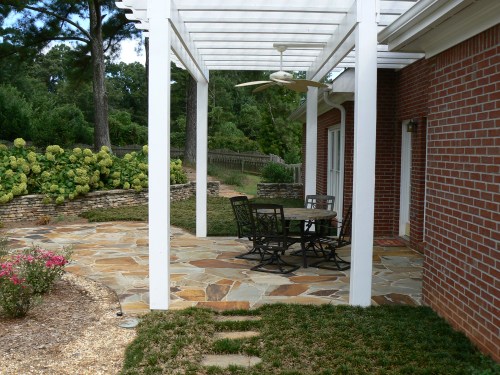
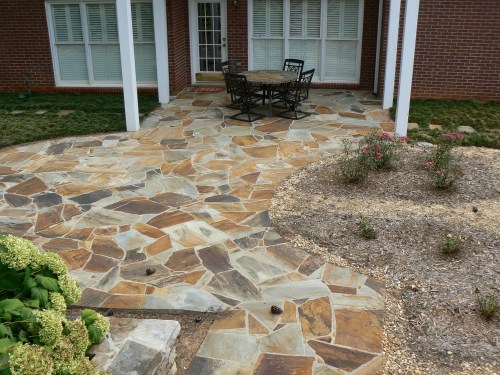
Retaining walls were built to hold the bank after we excavated for the patio. Originally the slope started just 10 feet from the back door. Not usable, nor a great view from both living room and eating area off the kitchen.
A shade structure allows for comfortable dinning out-of-doors. ( I noticed the climbing plants are no longer on the wall.)
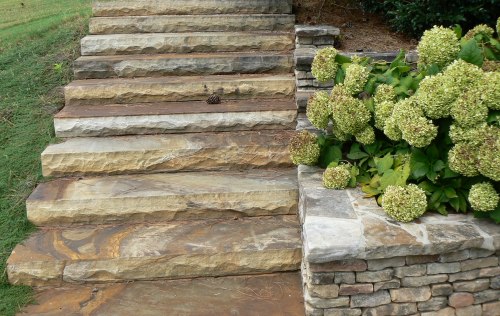
Single slab Crab Orchard stone steps lead to the upper level, alongside which there is supposed to be a waterfall terminating in a small pond…
where presently there are the remains of a temporary Rose Garden .
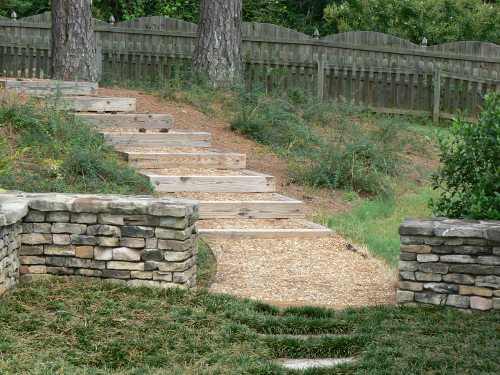
Utilitarian steps to the compost, pea gravel & lumber are fine for this area.
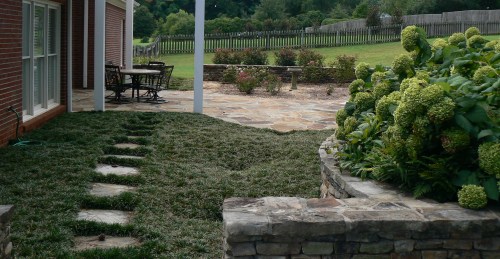
And finally for ease of maintenance, stepping-stones set into dwarf mondo. Never needs mowing.
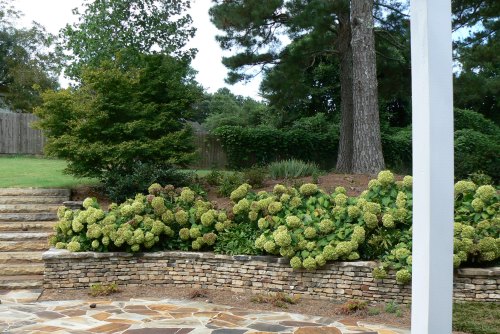
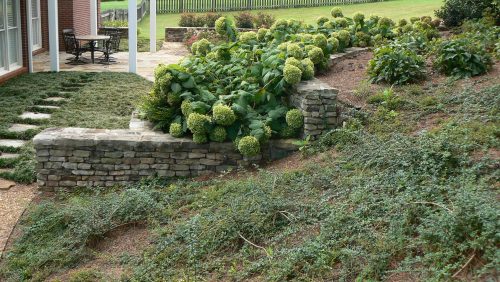
Because of the height of the hill, two short walls were erected. One would have looked too much like a fortress.
Without any care at all in this very long, hot, Georgia summer the Annabelle hydrangeas are holding up. They are underplanted with evergreen ferns & Lenten Roses (Helleborus orientalis) for winter interest.
The stone was selected to blend with the colours of the interior. Rich browns & muted terra-cotta, with pops of orange and yellow.
I hope someone buys this soon, and I hope the rest of my design gets installed or repurposed for another.
© All photos & text 2010
What I wanted… what I got.
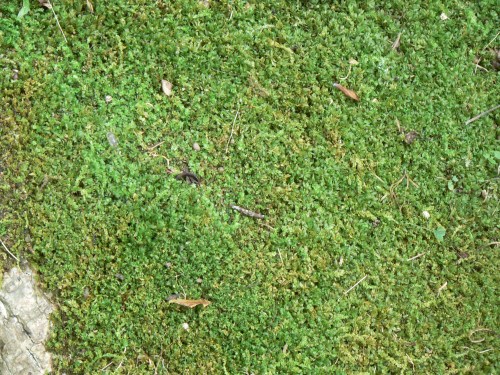
I envisioned a soft carpet of moss beneath my feet as I walked through the garden… 
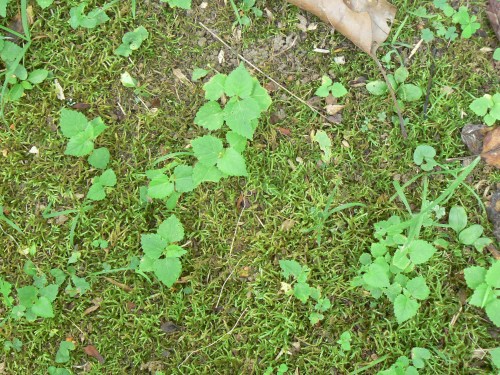
and then the weeds came.
So now not only do the beds require weeding, so do the paths! YIKES!
I have been resisting the pea gravel alternative. When I am alone in the garden the crunch of the gravel is delightful but when accompanied, it is so distracting it is difficult to have a conversation.
GARDEN UPDATE CONTINUED
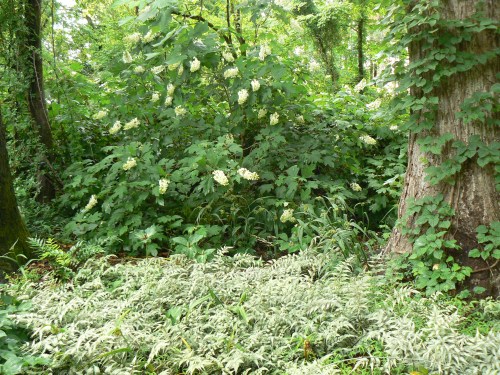
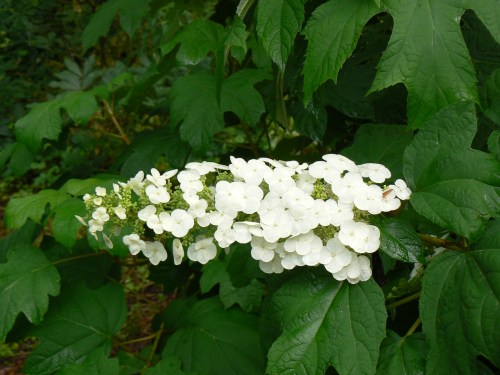
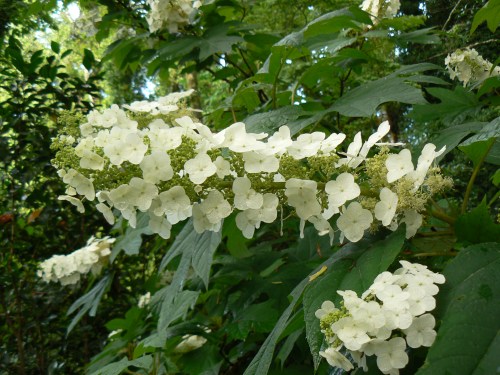
Plants with a cascading habit, call attention to the ground plane. Above, The heavy flowers of Snowflake Hydrangea (Hydrangea quercifolia ‘Snowflake’), draw the eye to the Japanese painted fern (Athyrium nipponicum).
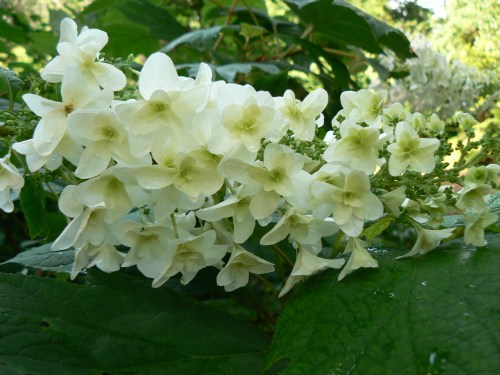
The flower on ‘Snowflake’ has double sepals, significantly different from that
of ‘Amethyst’ above, or ‘Alice’ below.
Hydrangea arborescens ‘Annabelle’ forming it’s flower heads. This is one hydrangea that SHOULD BE PRUNED early spring. These hydrangeas form flower buds on NEW GROWTH.
UPDATE ON EPHEMERALS:
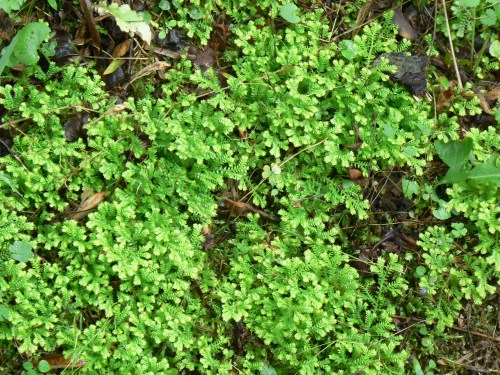
The Trillium are fading, (see yellow foliage). What will clothe the ground now is Vinca. I really tried for Selaginella kraussiana aurea, below
but it prefers the path so I’m going to stop fighting and let the vinca do its thing.
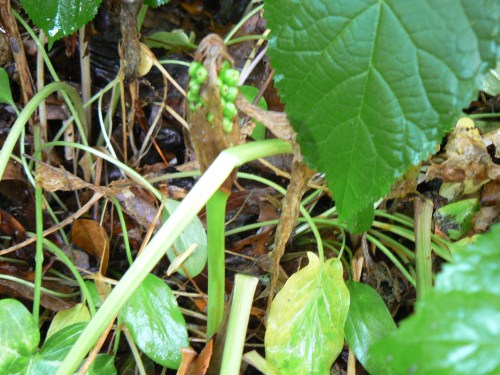
Arum foliage has died down & the berries have formed. They need to ripen, then they will be spread where more are needed. See previous post on Arum.
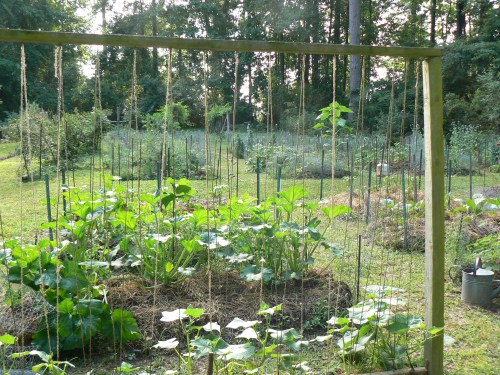
FINALLY THE POTAGER:
Below squash, peppers, cucumbers, beans, Eggplant 
Have a great week end!
©All photos and text 2010
TEXTURE
How important is Texture? Texture can be more pleasing than flowers, and persist longer. In smaller gardens where every design element is seen up close, it is of particular importance.
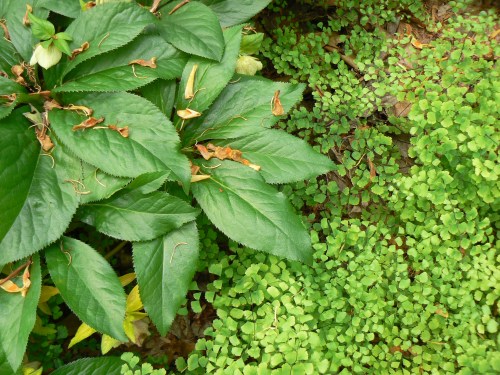
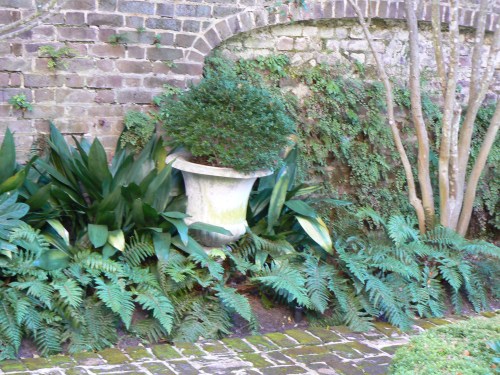
Here the bold glossy leaves of Lenten Rose (Helleborus orientalis) stand in a mass of delicate Maidenhair fern (Adiantum capillus-veneris).
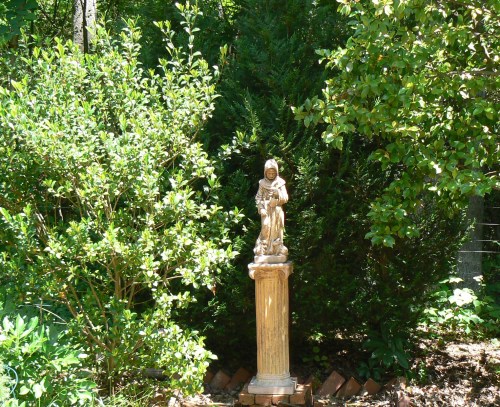
Plants used for background need to be fine, dense and matt in order to be a suitable foil for either statuary or flowers. Above St. Fiacre against a matt evergreen Arborvitae (Thuja plicata). On either side the coarse, shining leaves of Gardenia (Gardenia japonica) and Banana Shrub (Michelia figo), reflect too much light to be an effective background.
Contrasting textures apply not only to plant relationships.
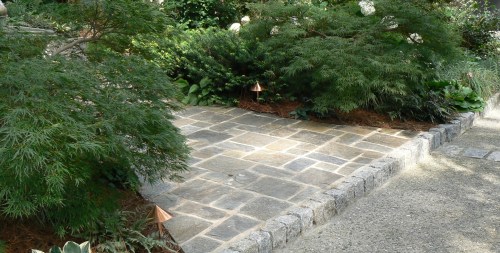
Here the fine ferny foliage of Japanese Maple ( Acer palmatum) stand out in sharp contrast to the smooth Bluestone walkway.
The best effects are achieved with simplicity. Texture = contrast = beauty.
© All photos & text 2010
GROUNDCOVER IDEA
Every gardener/designer has their own ideas on groundcovers. I thought I would share what I do with my hydrangea.
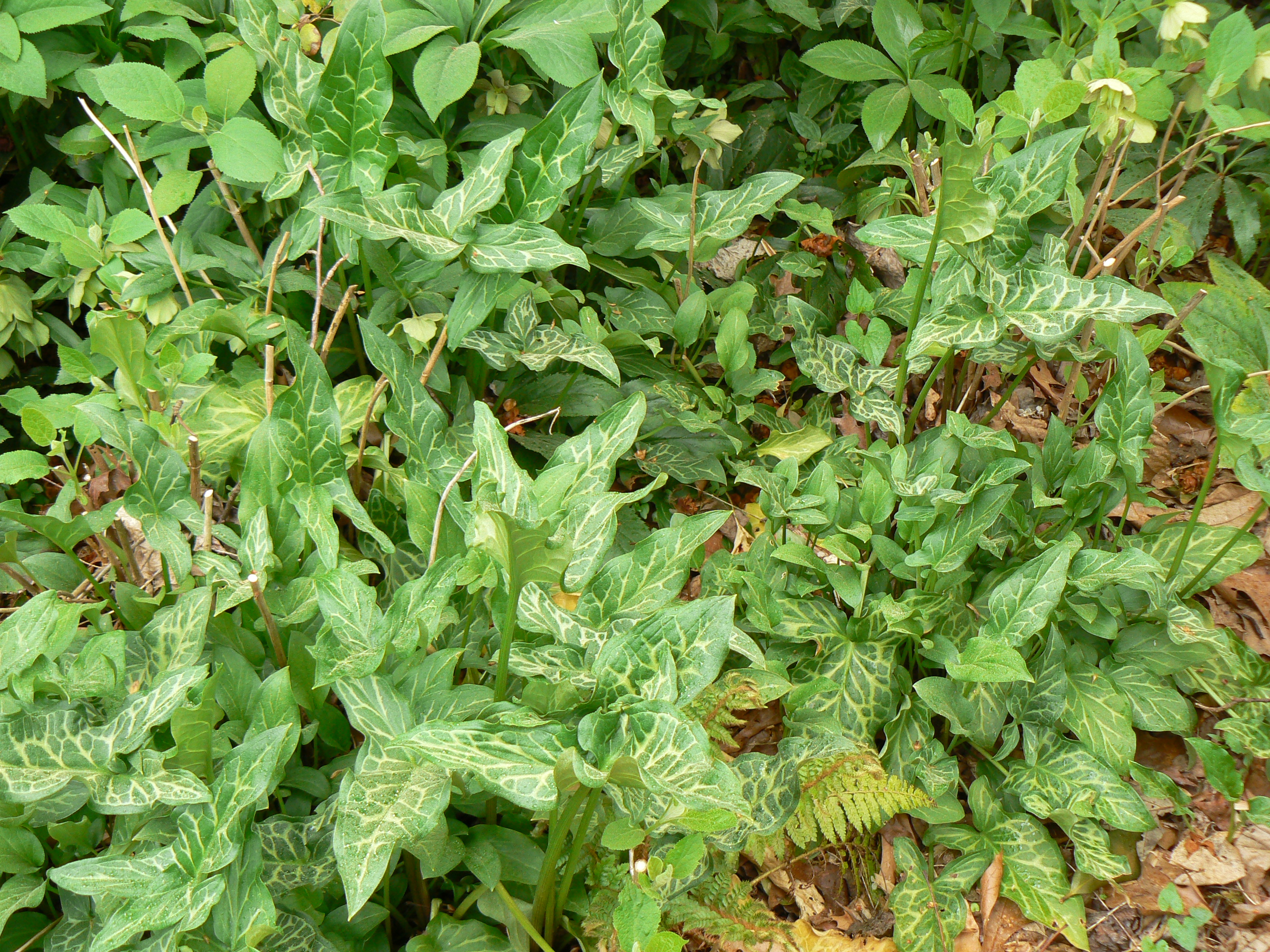
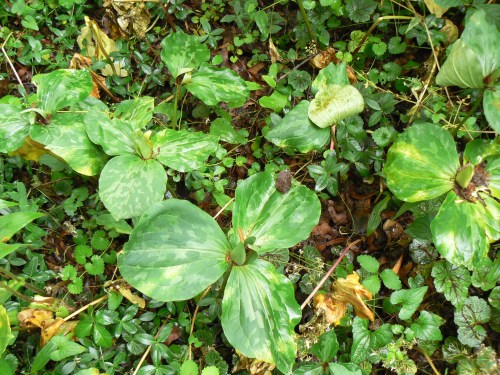
At the base of the shrubs, and forming a nice ‘sweep’, I plant the small tubers of Arum italicum ‘Pictum’. This delightful little plant is the ideal workhorse groundcover for any shrub that looses its leaves in winter. It does not appear till October/November, the handsome foliage persists all winter, and disappears in mid spring, just as the shrubs leaf out.
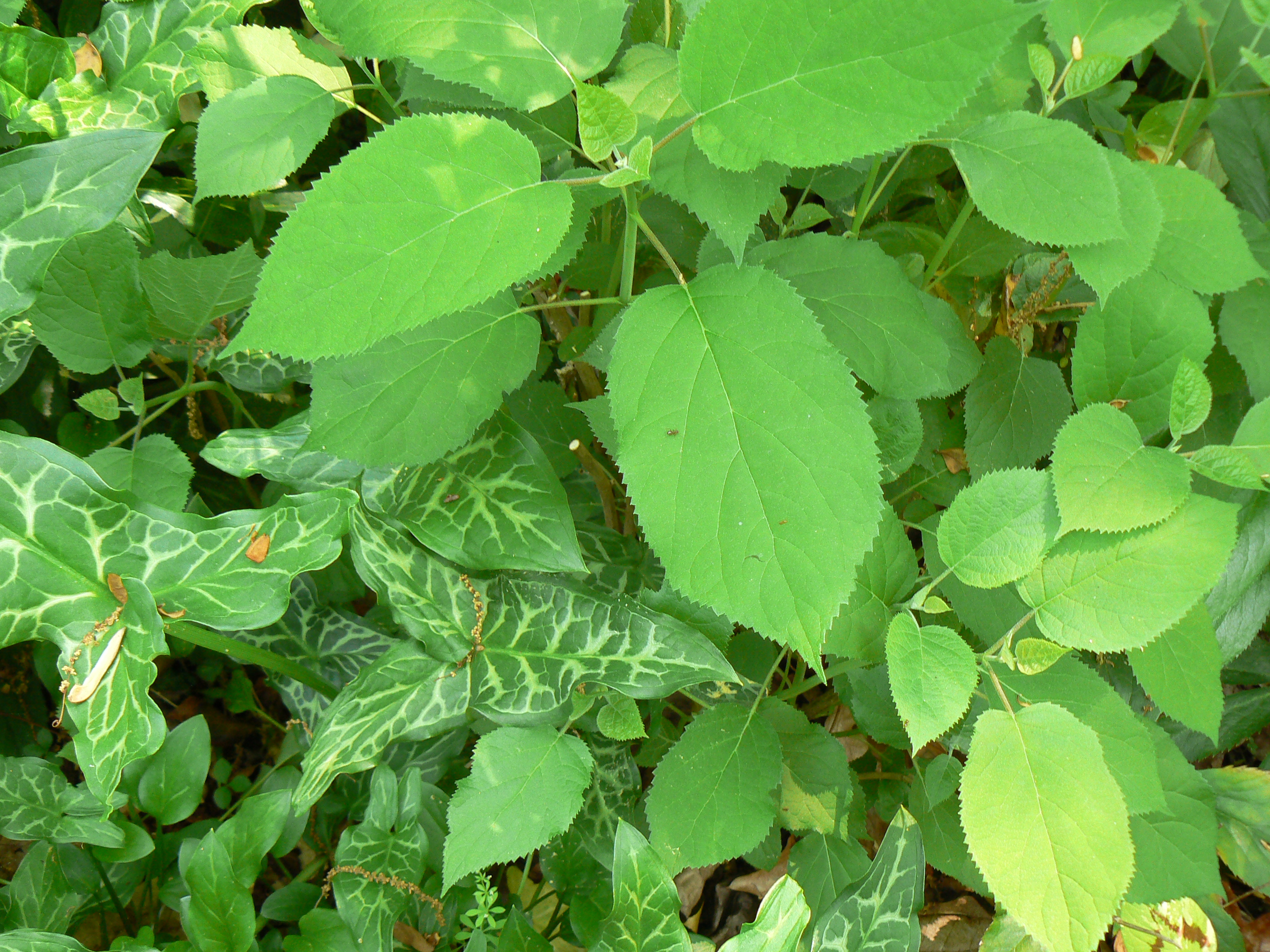
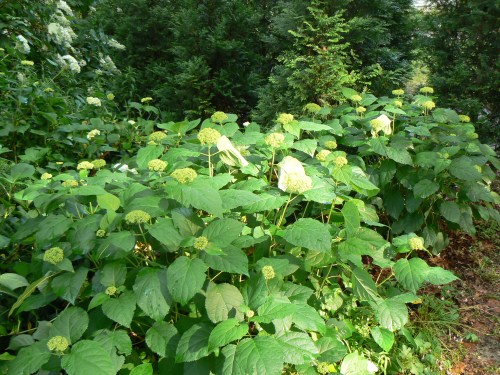
Here the Arum covers what would be bare earth as the Annabelle hydrangea (Hydrangea arborescens ‘Annabelle’) is cut back early spring. (See the stems peeking out?)
Weeks later, the Annabelle starts to fill in. By the time the Arum foliage dies back the hydrangea will shade the ground.
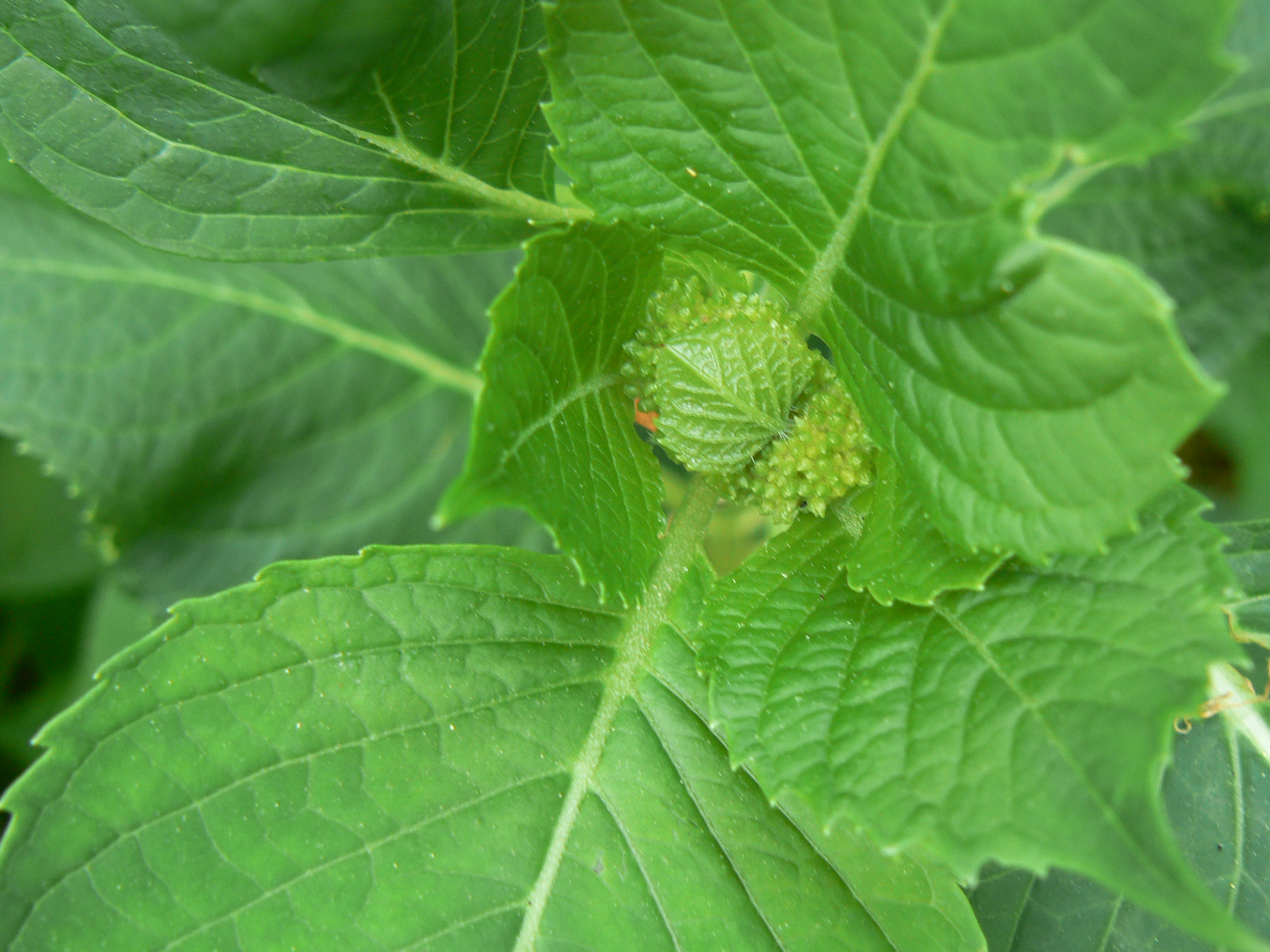
PLEASE NOTE: do not prune all your hydrangeas. The macrophylla type hydrangeas (big blue or pink mophead or lacecap flowers) formed their flower buds last year. If you prune them, there will be no blooms this year.
ANTICIPATION!
The flower buds on Hydrangea macrophylla .