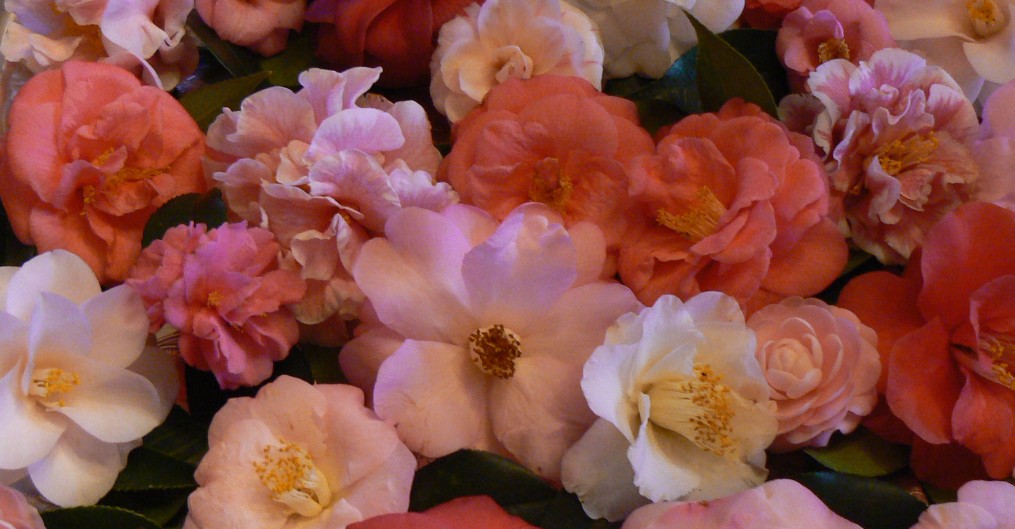
TEXTURE

How important is Texture?  Texture can be more pleasing than flowers, and persist longer. In smaller gardens where every design element  is seen up close, it is of particular importance.
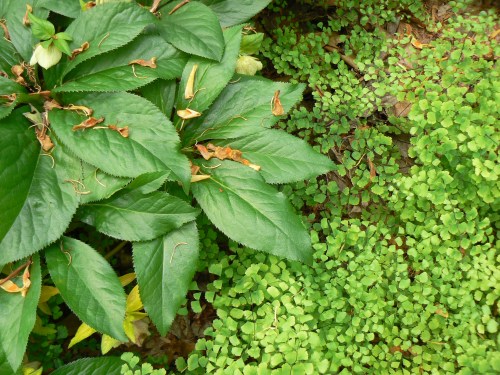
                                                                    

Here the  bold glossy leaves of  Lenten Rose (Helleborus orientalis)  stand in a mass of delicate Maidenhair fern (Adiantum capillus-veneris).
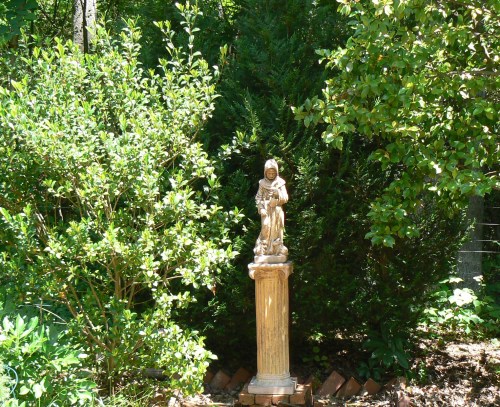
                                                                      Plants used for background need to be fine, dense and matt in order to be a suitable foil for either statuary or flowers. Above St. Fiacre against a matt evergreen Arborvitae (Thuja plicata).  On either side the coarse, shining leaves of Gardenia (Gardenia japonica) and  Banana Shrub (Michelia figo),  reflect too much light to be an effective background.

Contrasting textures apply not only to plant relationships.
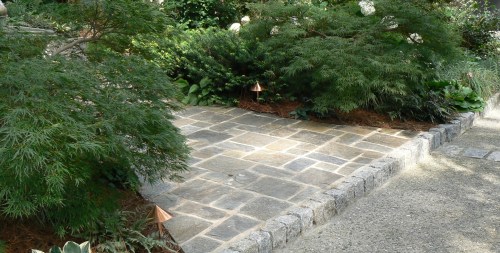
                                                        Here the fine ferny foliage of Japanese Maple ( Acer palmatum) stand out in sharp contrast to the smooth Bluestone walkway.
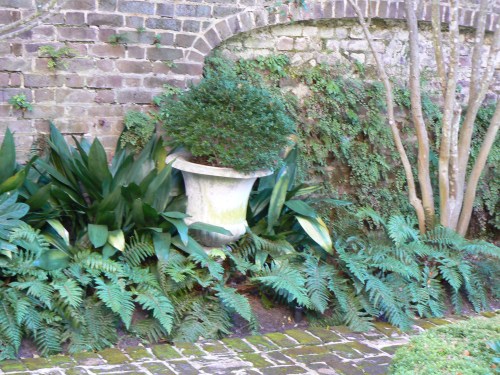
                                                                      

 The best effects are achieved with simplicity.  Texture = contrast = beauty.

© All photos & text 2010
HOLD THE PRUNERS


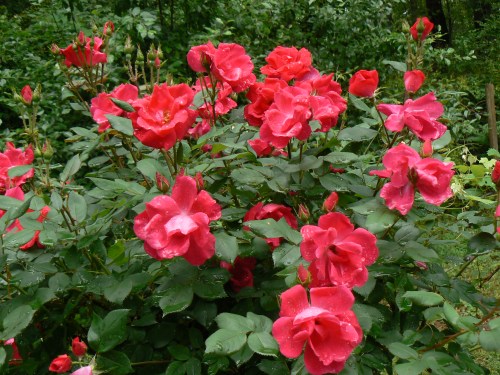
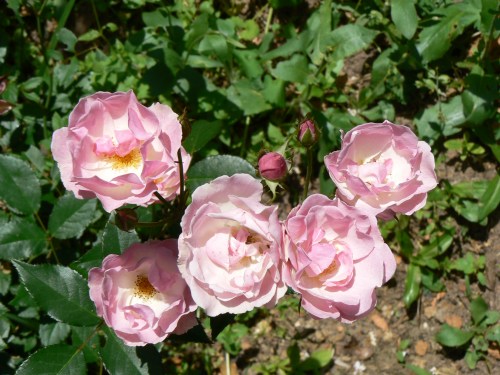
I have for several years grown the ‘Knockout Roses’. They had so much good PR, I was sold. Since it promised a long season of color,( something clients inevitable ask me for) I thought I needed to try them. Well, they did indeed bloom all summer long and stopped only around Christmas but they were far from ‘maintenance free’.


Why I started pruning them I’m not sure, but I was advised by several gardeners that one ‘had to’. This year I did not, well not all. I did start out cutting them back some but stopped when I was reminded of Vita Sackville West’s* plea to just trim roses lightly. So I did. She is/was after all, one of my first mentors.(I read everything I could on her, and everything she wrote that I could access.)


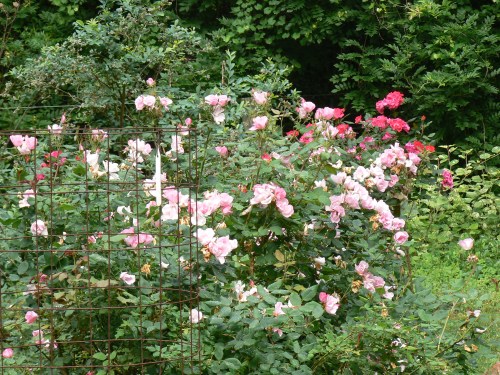
It worked! While I had complained before of their stiff habit; I now see  they can be a  graceful cascading plant. What will happen during the summer? I’ll keep you posted.

 Now, what to do about their lack of  fragrance?

NOTE: the wire cage in front is protecting a newly planted antique rose from the deer.

*Vita Sackville West was the planting genius behind the garden at Sissinghurst Castle, Kent England.

© All photos & text 2010
HYDRANGEAS, HYDRANGEAS!!!

The hydrangeas are coming!

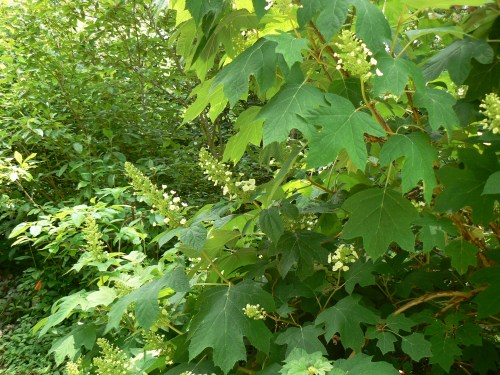
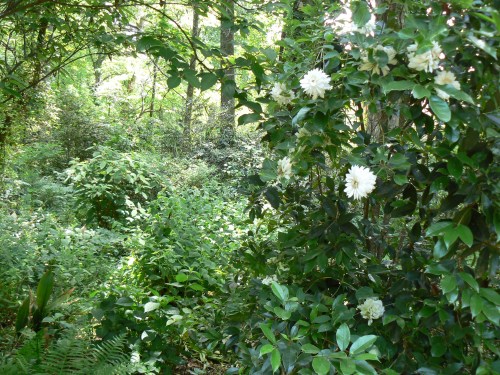
The Oakleaf hydrangea (Hydrangea quercifolia) is just starting. This native has much to recommend it. When it first breaks dormancy, the leaves are silver-grey and fuzzy, the flowering is worthy of a glass of champagne. The handsome foliage turns a wonderful burgundy red in the autumn (almost December here in Georgia) and when the leaves finally fall, the stems look like peeling cinnamon sticks. DO NOT PRUNE this shrub unless it is necessary to keep it in bounds, better yet, just give it plenty of space. If you must prune cut bouquets while it is in bloom. This will assure flowering the following year.

The first of the macrophylla types, ‘Penny Mac’ is showing a bit of color. I rely on this plant to carry the garden through the summer months. This hydrangea was not named for my dear late friend Penny McHenry. It came to be known by this name as it was refered to  as “Penny’s macrophylla” (hence ‘Penny mac’). This was one of the first remontant types that later led to the breeding of  ‘Endless Summer’ and many more reblooming types. There is a new hydrangea, developed by Mike Dirr et al, named for Penny called ‘Mini Penny’ look for it at your local nursery. No pruning here either. See above.

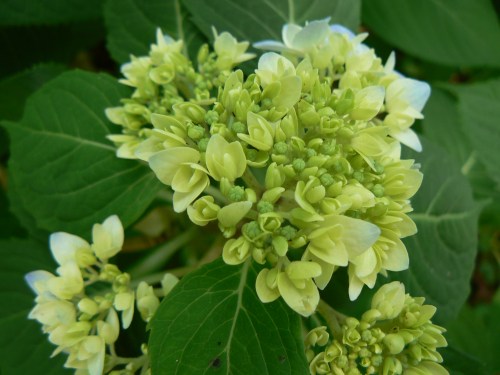
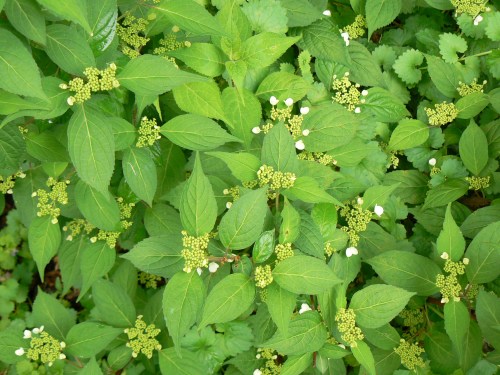
The buds on Hydrangea serrata.

 Typically the serrata group is earlier flowering and lower growing, maintaining a height of 3′ and spreading wider.  This group hails from the mountainous regions of Japan, therefore not so quick to leaf out on the first warm day (usually January here) and then get frozen as the colder temps return. No pruning.

© All photos & text 2010
SOMETIMES

It works just like one imagined!


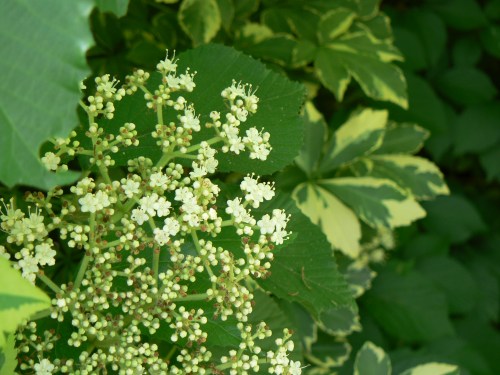
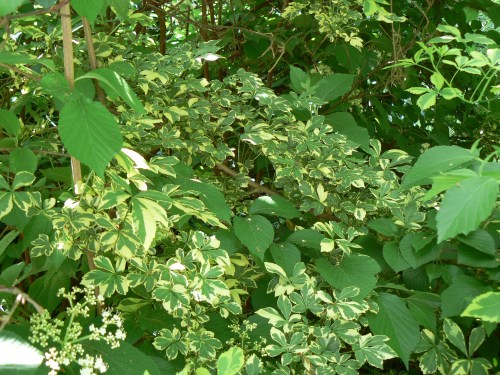
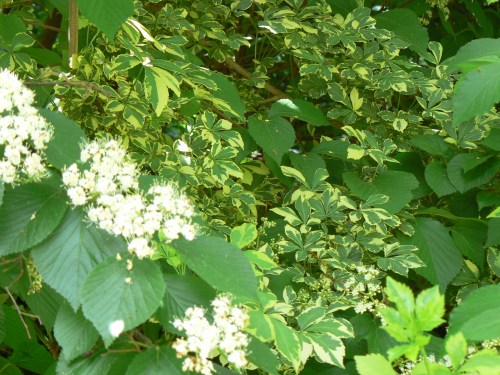
It has taken some years but finally the Variegated Aralia (Acanthopanax sieboldianus  ‘Variegatus’ now called  Eleutherococcus sieboldianus) is sending it’s graceful arching canes into the Viburnum dilatatum.


Later these viburnum flowers will become clusters of red berries, many will grace the Thanksgiving floral centerpiece.


Somewhere in there is planted a white clematis. It has not been seen yet this season. Although the earlier viburnums have a delicious  fragrance, these do not…

© All photos & text 2010
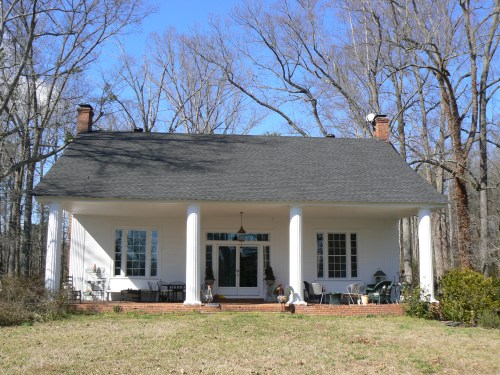
AN INVITATION

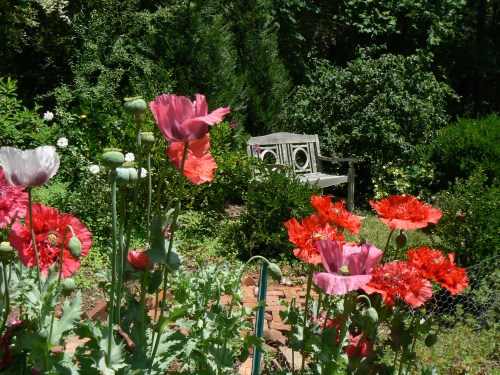
To a peek through parts of my garden. Nothing is styled here, this is real-time. Hoses snaking around beds and weeds.


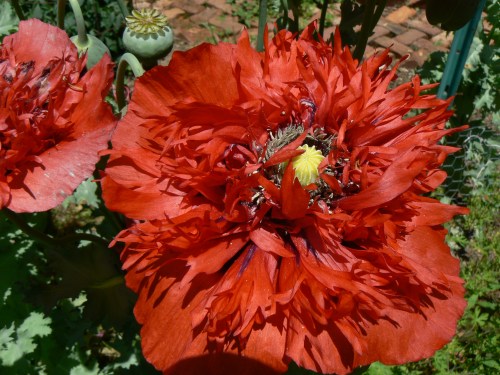
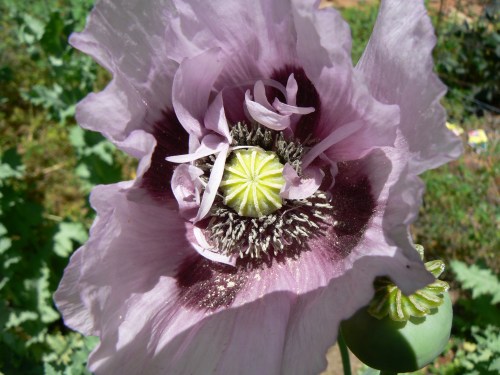
Poppies, from a dear friend who acquired them from a 90-year-old gardener 40 years ago. End of this month we will celebrate her 94th birthday.


 some semi double, some single,  all stunning.


I spread the poppy seed on cultivated soil in the late fall, after a rain. These seeds need light to germinate. If they were scattered in cultivated dry soil & then watered the soil would cover the seed, excluding the light.

I always allow the seed pods to ripen. After extracting the seed to be used in bread making and saving some for the garden, the pods are used in  dry arrangements. This is an annual show.

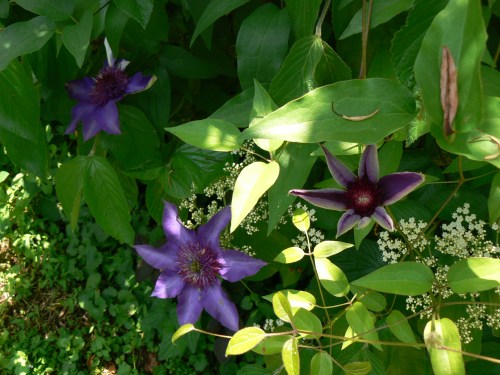
And there are more Clematis.


This  Clematis is ‘Multi-Blue’,  the Viburnum  is ‘Michael Dodge’.  The viburnum  flowers will turn to clusters of  yellow berries in the fall when HOPEFULLY, the clematis will bloom again.


Another clematis, ‘Duchess of Edinburgh’ cascading through a Tea Olive (Osmanthus fragrans).

And finally,


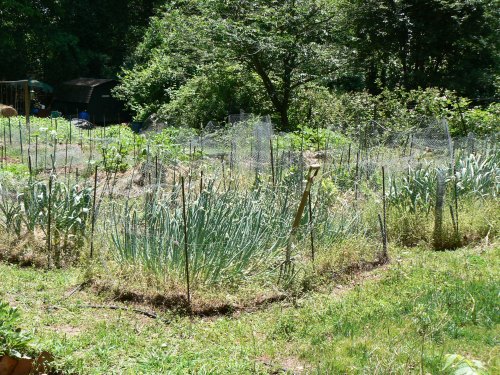
The Potager. Growing now, Onions, Leeks and garlic. All the beds are enclosed with wire to keep the rabbits out.

© All photos & text 2010
CONFESSION

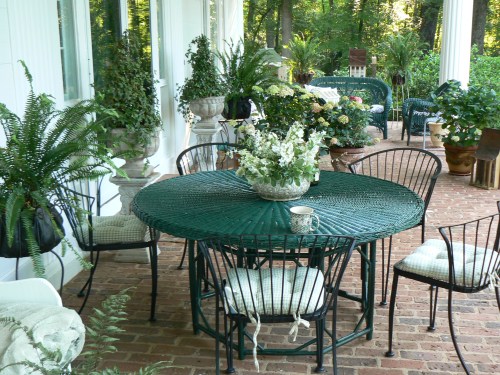
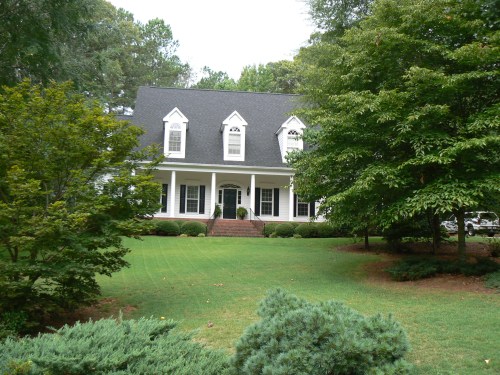
That was not the front of my house in the last post. This is, below, taken in winter so there is no wonderful green lawn sweeping up to it and the trees are bare.

I thought the other photo was a better illustration of  my point.

 FYI, it was a  client’s house ‘before’. There is no longer a foundation planting of tidy pruned ‘meatball’ shrubs there anymore.

© All photos & text 2010
TRANSITION SPACES

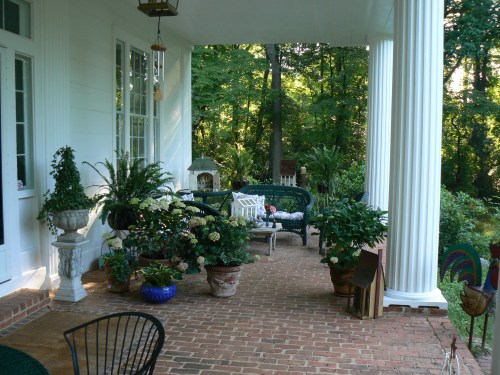
There are several types of transition spaces. The first would be the porch or veranda. Here the veranda unites both indoors and out, creating a continuous living space.


My veranda outfitted for a long hot summer of outdoor living. (above & below)


Below, the sweeping  lawn and the trees on either side anchor the house to the landscape, strengthening the relationship between architecture and site.

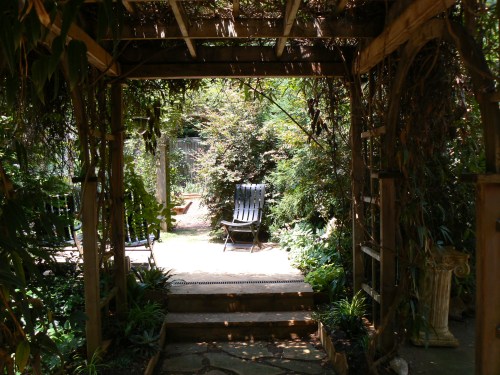
                                                                       Other transition spaces that create interest in the garden are pergolas, trellised walkways  or arbors.


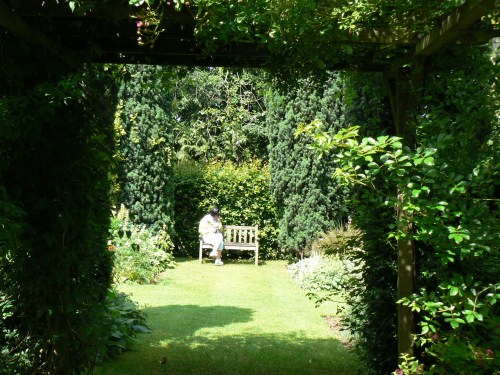
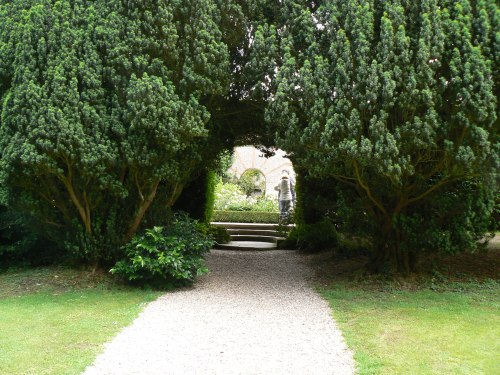
Here one passes through a dark shaded area into a pool of sunlight.


The above arbor was created using only plants. No Money? No excuse!

© All photos & text 2010
GARDENER TO THE RESCUE

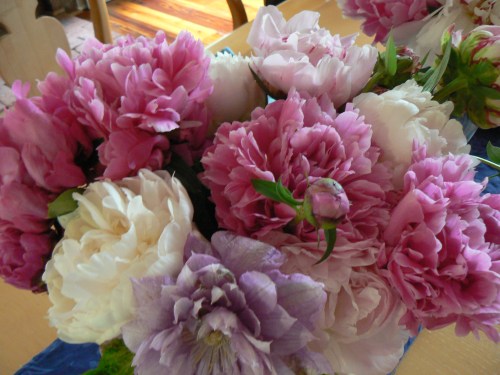
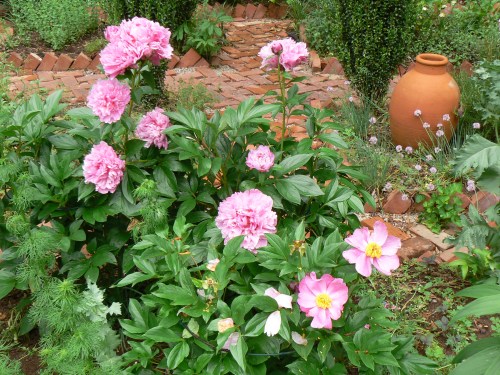
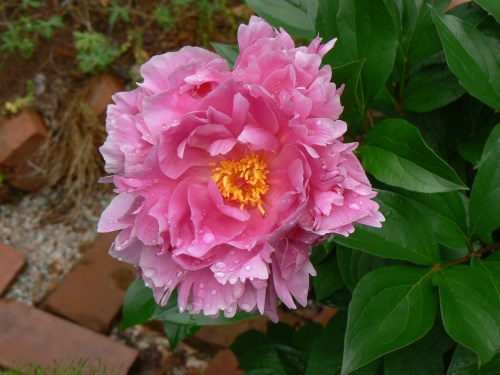
Another vase of peonies.


Went into the garden to rescue the peonies from the torrential downpour we had on Sunday. Fortunately not many were past the bud stage so there will still be plenty in the garden. I find that  peony hoops  are ineffective in this type of weather.


I was surprised that many survived the storm.

 Have I mentioned that before the clematis love, there were peonies…roses…hydrangeas……? Brings to mind the lyrics  “when I am not near the one I love… I love the one I’m near!”

PLANT CRUSH OF THE MONTH

My latest plant crush is with Clematis. I have planted many at the feet of shrubs & trees and to my delight they make wonderful companions in the vase with Peonies.


Not all Clematis have large showy flowers. Some, like Betty Corning (below) have nodding bell-shaped blooms & fabulous fragrance.


Some, like ‘Josephine’ (below).  

    And ‘Belle of  Woking’ are fully double.


These plants may take several seasons to make a great show. Be patient, you will be richly rewarded.

PLANTING GONE AWRY

Sometime, no matter how much thought goes into companion planting, It just does not give the results anticipated.

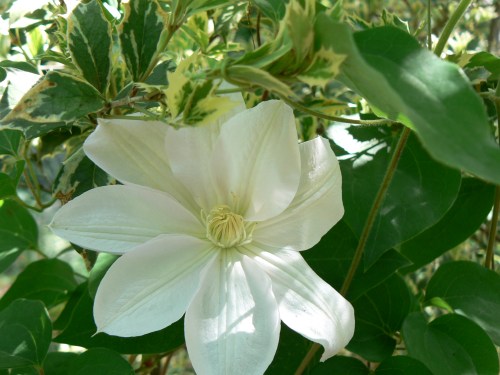
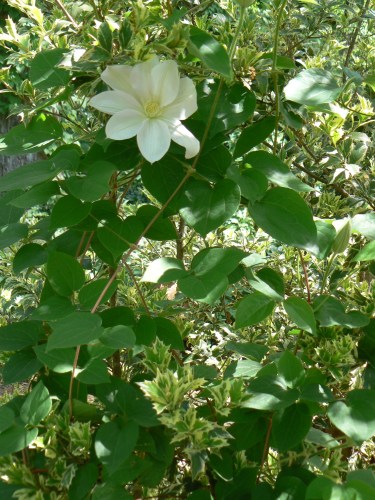
On a Variegated Tea Olive (Osmanthus heterophyllus ‘Variegatus’) I planned a creamy white Clematis to peek through Tea Olive’s foliage.


 I did not plan on the green foliage of the Clematis!


So… variegated leaves peek through clematis foliage to pick up the creamy white flower!

Not exactly what I had expected. Pretty still.

© All photos & text

DOWN THE GARDEN PATH

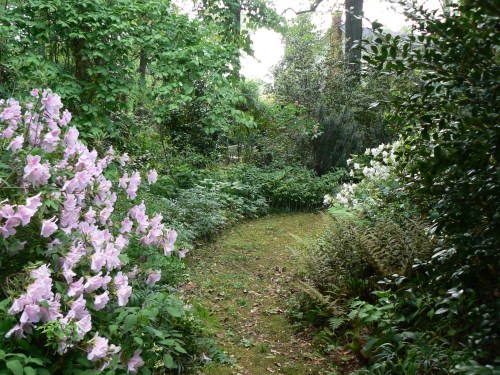
Curved paths create mystery. They take us to places we cannot see.


On the way to the compost bin,  I am greeted by Southern azaleas  (Rhododendron indica).  ‘George L. Tabor (pink) on one side and ‘G.G. Gerbing’ (white) on the other.

MONDAY MUSINGS

After the last post I got to thinking about how fortunate we are to have the  paintings that record the gardens of a vanished age and lifestyle.

As Lanning Roper* so elquently stated, “Gardens are so personal and poetic in their conception that their spirit dies with the owner.”

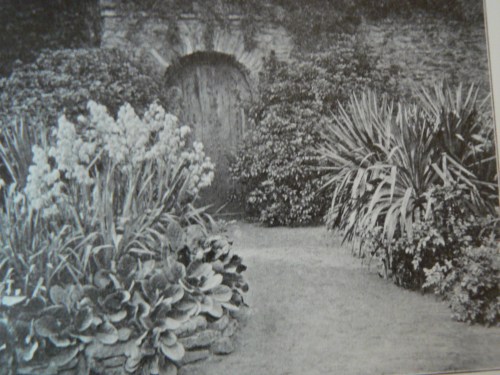
Jeklly recorded her gardens in the medium of the day. That new fangled invention… the camera.

Below, Jekyll’s photograph of the break in the flower border punctuated by Yuccas.

*Lanning Roper was an American landscape architect, commisioned by HRH Price Charles to help with the design of  Highgrove, the Prince’s garden in the Cotswolds.

GERTRUDE JEKYLL & GARDEN ROOMS

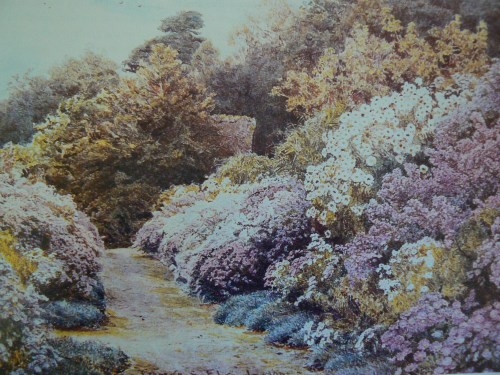
Probably one of the most influential garden designers of the early 20th century, Gertrude Jekyll, was a proponent of separating the garden into separate enclosed areas,  each devoted to a season, or a single plant.  She believed no garden could possibly be kept at it’s best for the entire season.

Below, her Autumn garden of Michaelmas Daisies. Painted by George Samuel Elgood.

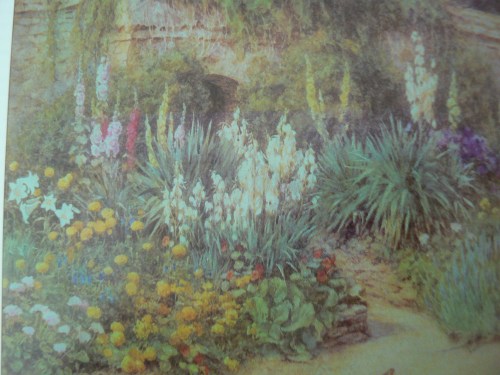
Another view, painted by Helen Allingham.

Allingham also painted a break in the main flower border. Notice how Jekyll used masses of yuccas as  punctuation points on both sides of the path.

These watercolors illustrate her lush planting style and skillful use of color.

GROUNDCOVER IDEA

Every gardener/designer has their own ideas on groundcovers. I thought I would share what I do with my hydrangea.

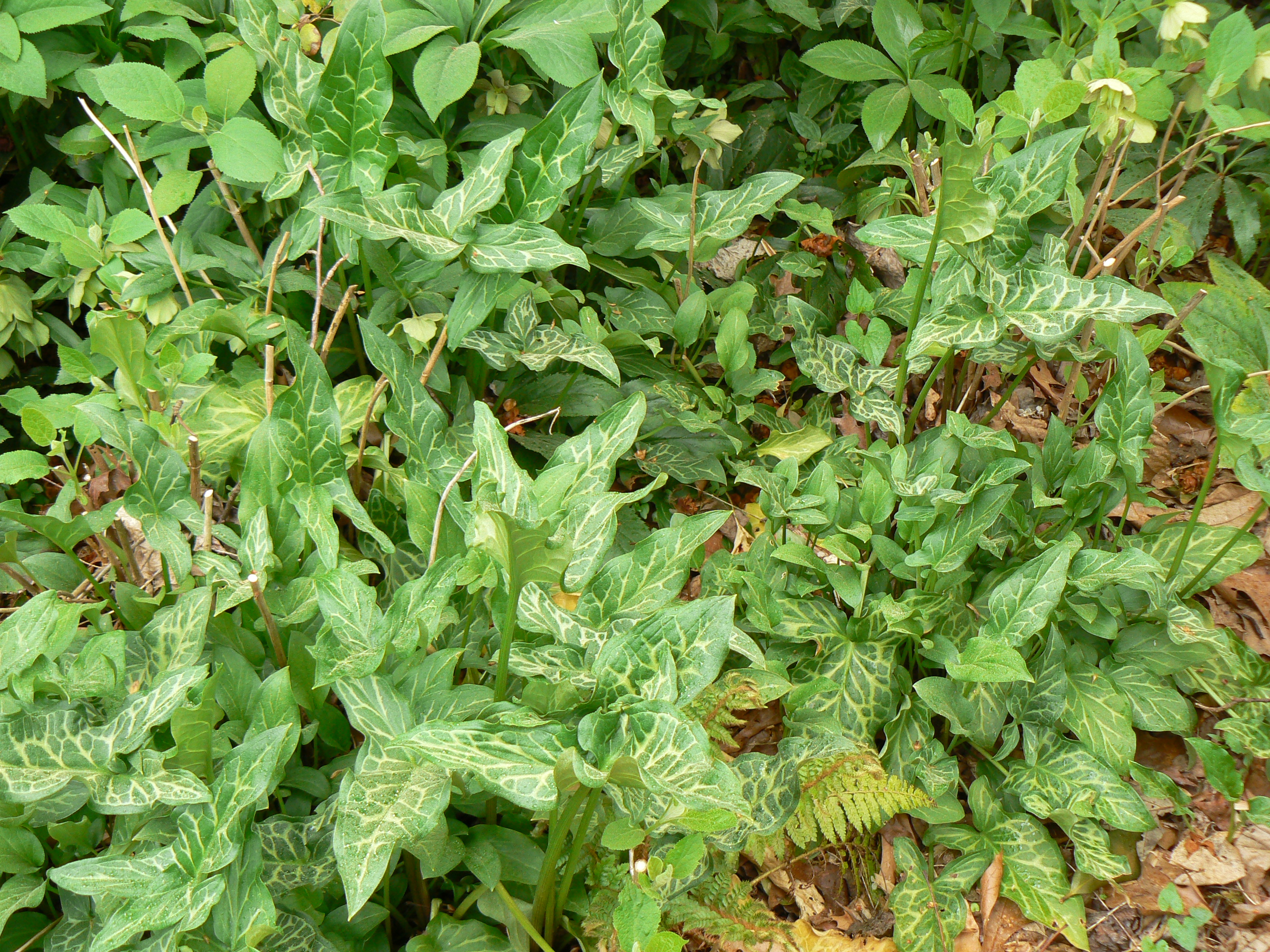
At the base of  the shrubs, and forming a nice ‘sweep’, I plant the small tubers of Arum italicum ‘Pictum’. This delightful little plant  is the ideal workhorse groundcover for any shrub that looses its leaves in winter. It does not appear till October/November, the handsome foliage persists all winter, and disappears in mid spring,  just as the shrubs leaf out.

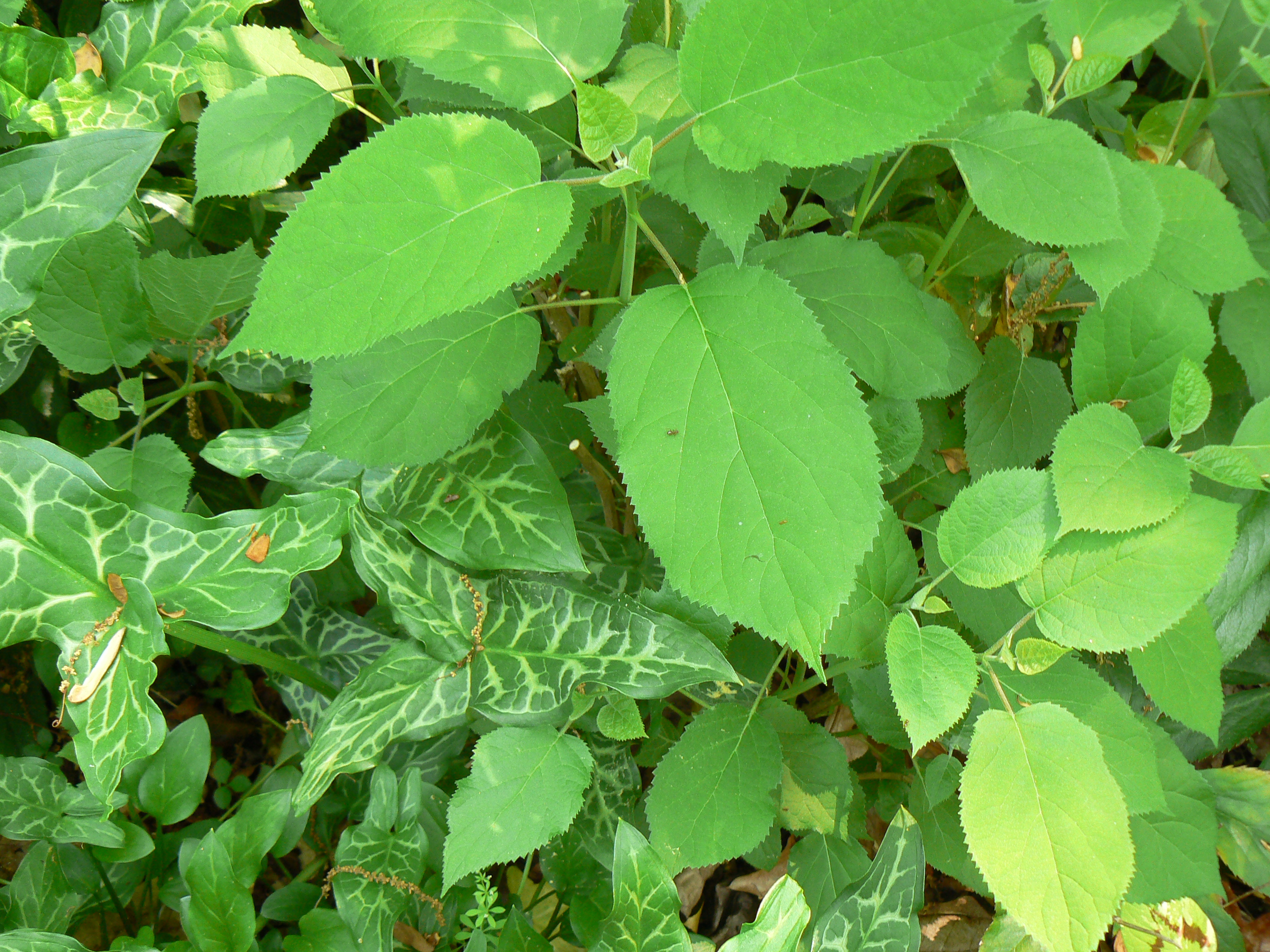
Here  the Arum covers what would be bare earth as the Annabelle hydrangea (Hydrangea arborescens ‘Annabelle’) is cut back early spring.  (See the stems peeking out?)

Weeks later,  the Annabelle  starts to fill in. By the time the Arum foliage dies back the hydrangea will shade the ground.

PLEASE NOTE: do not prune all your hydrangeas. The macrophylla type hydrangeas (big blue or pink mophead or lacecap flowers) formed their flower buds last year. If you prune them, there will be no blooms this year.

ANTICIPATION!

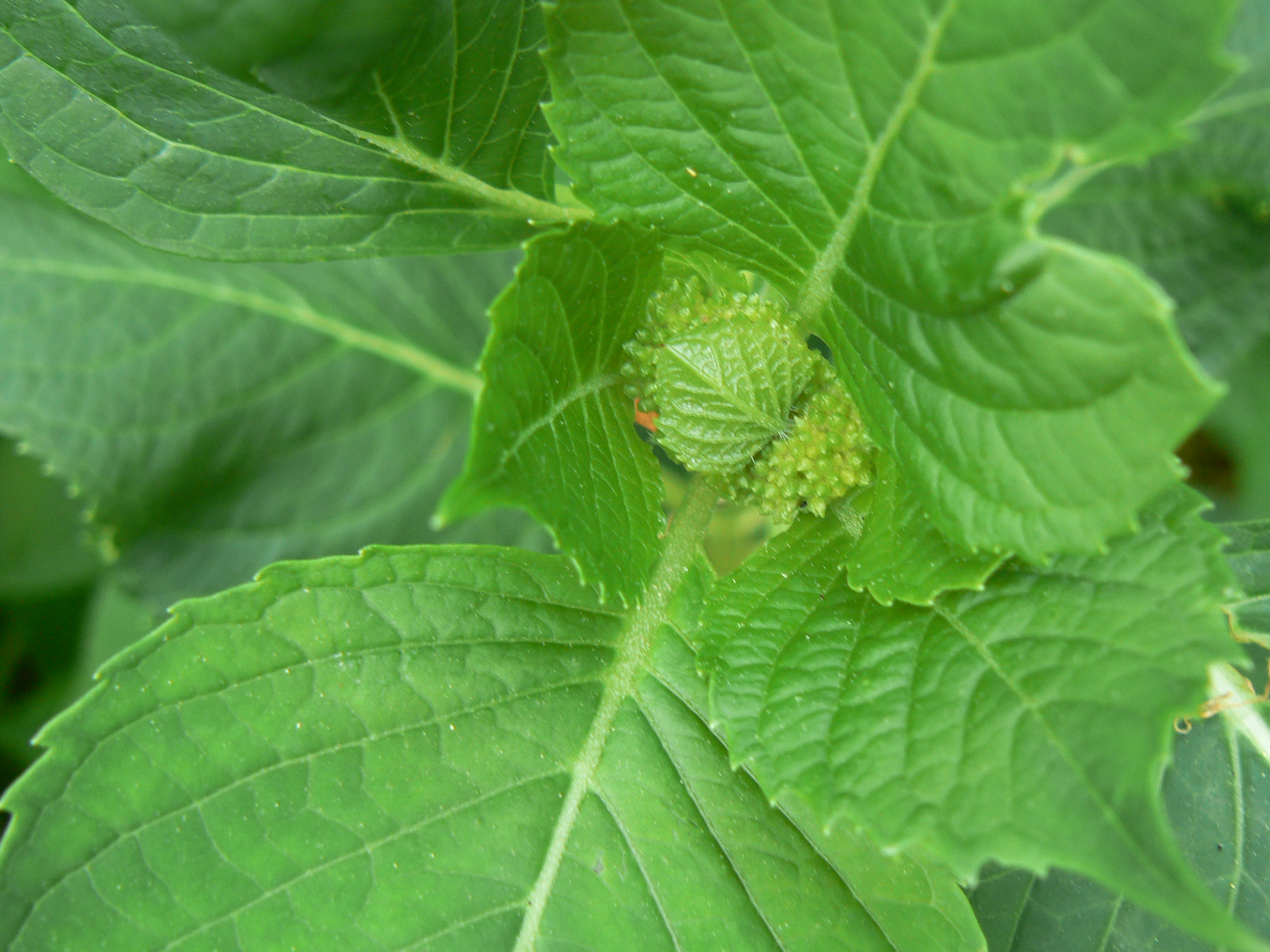
The flower buds on Hydrangea macrophylla .


Secrets of Companion Planting

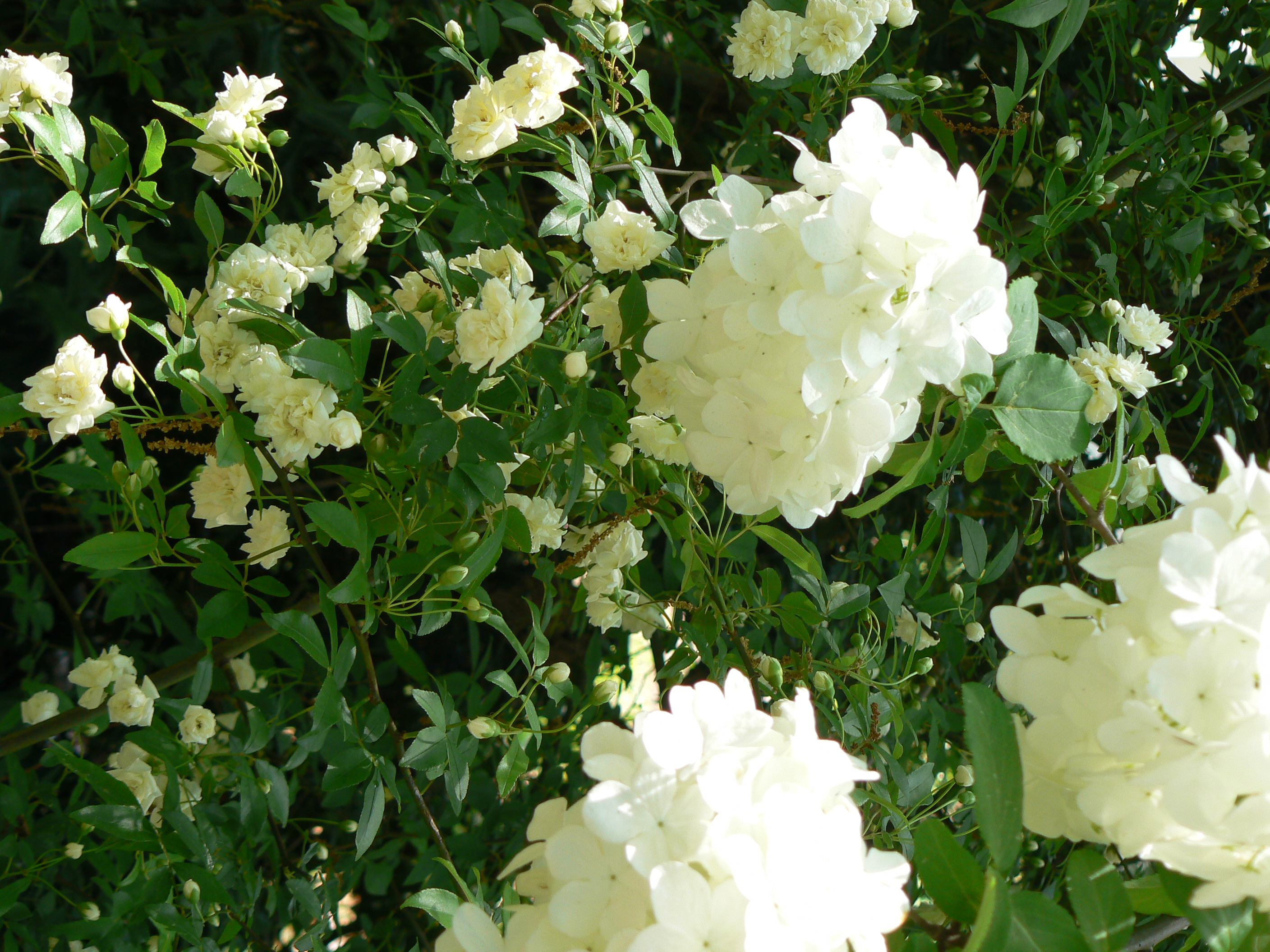
“The best associations are between plants which have one element in common and another contrasted.”     – Dame Sylvia Crowe  (Distinguished British Landscape Architect)

Here the common element is the color white, while the contrasting element is size.

Large blossoms compliments of the Chinese Snowball (Viburnum macrocephalum); small blossoms are the white Lady Banks Rose (Rosa banksiae ‘Alboplena’).