HOLD THE PRUNERS


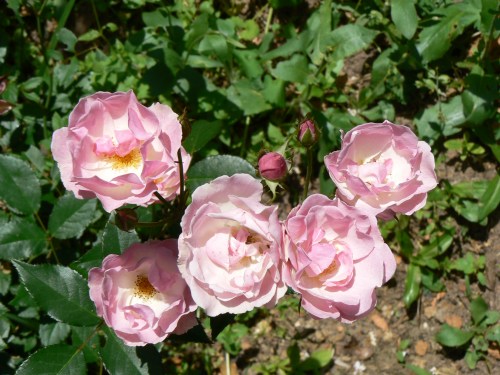
I have for several years grown the ‘Knockout Roses’. They had so much good PR, I was sold. Since it promised a long season of color,( something clients inevitable ask me for) I thought I needed to try them. Well, they did indeed bloom all summer long and stopped only around Christmas but they were far from ‘maintenance free’.
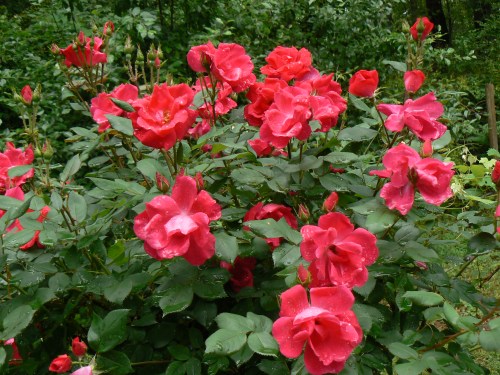
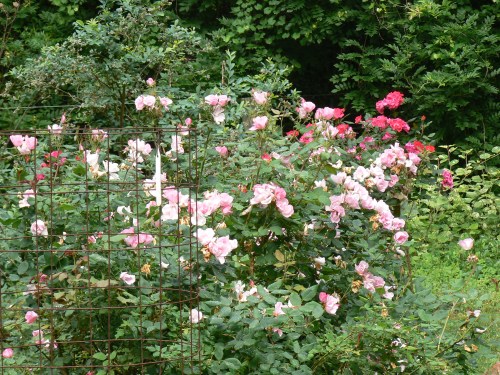
                                                                      

Why I started pruning them I’m not sure, but I was advised by several gardeners that one ‘had to’. This year I did not, well not all. I did start out cutting them back some but stopped when I was reminded of Vita Sackville West’s* plea to just trim roses lightly. So I did. She is/was after all, one of my first mentors.(I read everything I could on her, and everything she wrote that I could access.)


It worked! While I had complained before of their stiff habit; I now see  they can be a  graceful cascading plant. What will happen during the summer? I’ll keep you posted.

 Now, what to do about their lack of  fragrance?

NOTE: the wire cage in front is protecting a newly planted antique rose from the deer.

*Vita Sackville West was the planting genius behind the garden at Sissinghurst Castle, Kent England.

© All photos & text 2010
HYDRANGEAS, HYDRANGEAS!!!

The hydrangeas are coming!

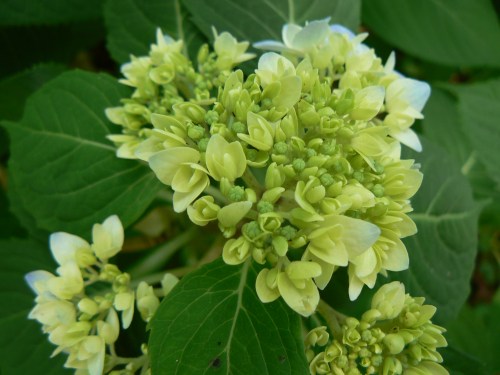
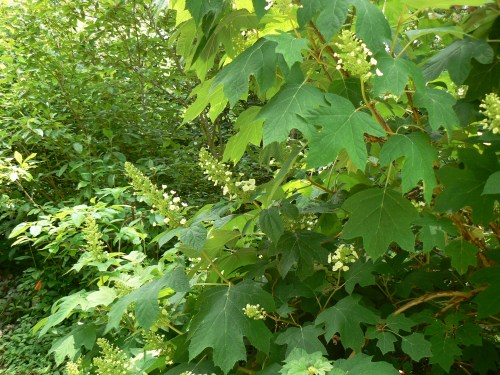
The Oakleaf hydrangea (Hydrangea quercifolia) is just starting. This native has much to recommend it. When it first breaks dormancy, the leaves are silver-grey and fuzzy, the flowering is worthy of a glass of champagne. The handsome foliage turns a wonderful burgundy red in the autumn (almost December here in Georgia) and when the leaves finally fall, the stems look like peeling cinnamon sticks. DO NOT PRUNE this shrub unless it is necessary to keep it in bounds, better yet, just give it plenty of space. If you must prune cut bouquets while it is in bloom. This will assure flowering the following year.

The first of the macrophylla types, ‘Penny Mac’ is showing a bit of color. I rely on this plant to carry the garden through the summer months. This hydrangea was not named for my dear late friend Penny McHenry. It came to be known by this name as it was refered to  as “Penny’s macrophylla” (hence ‘Penny mac’). This was one of the first remontant types that later led to the breeding of  ‘Endless Summer’ and many more reblooming types. There is a new hydrangea, developed by Mike Dirr et al, named for Penny called ‘Mini Penny’ look for it at your local nursery. No pruning here either. See above.

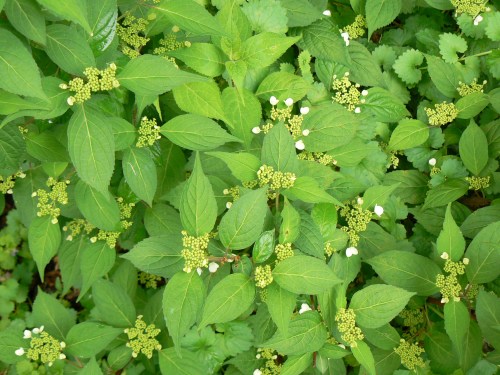
The buds on Hydrangea serrata.

 Typically the serrata group is earlier flowering and lower growing, maintaining a height of 3′ and spreading wider.  This group hails from the mountainous regions of Japan, therefore not so quick to leaf out on the first warm day (usually January here) and then get frozen as the colder temps return. No pruning.

© All photos & text 2010

DOWN THE GARDEN PATH

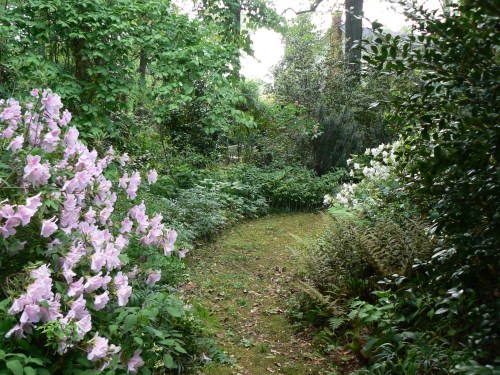
Curved paths create mystery. They take us to places we cannot see.


On the way to the compost bin,  I am greeted by Southern azaleas  (Rhododendron indica).  ‘George L. Tabor (pink) on one side and ‘G.G. Gerbing’ (white) on the other.