CLEMATIS CRUSH

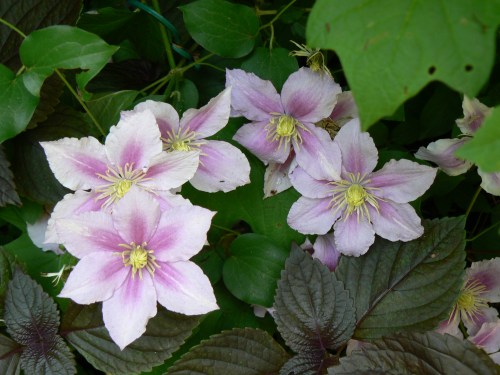
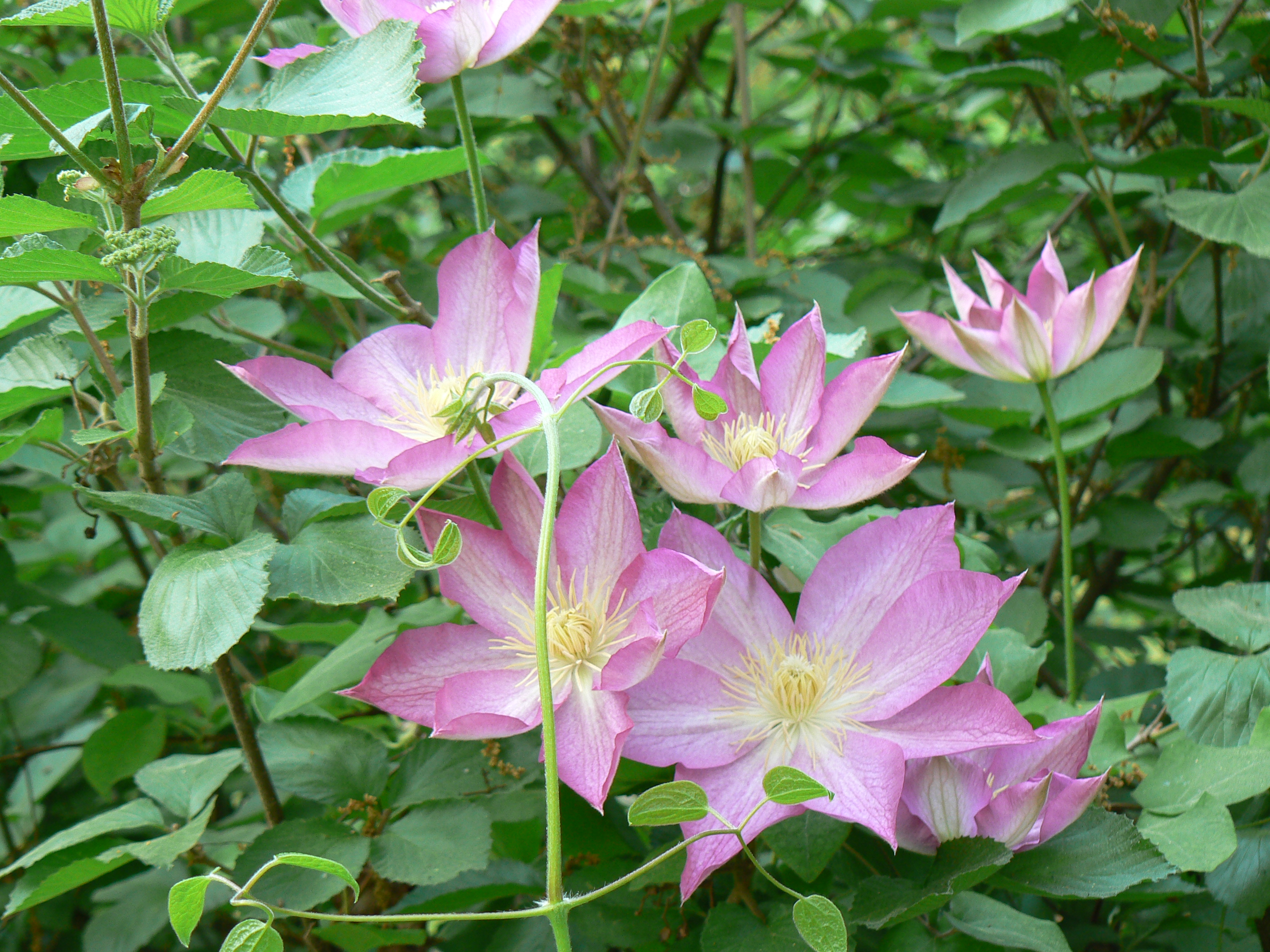
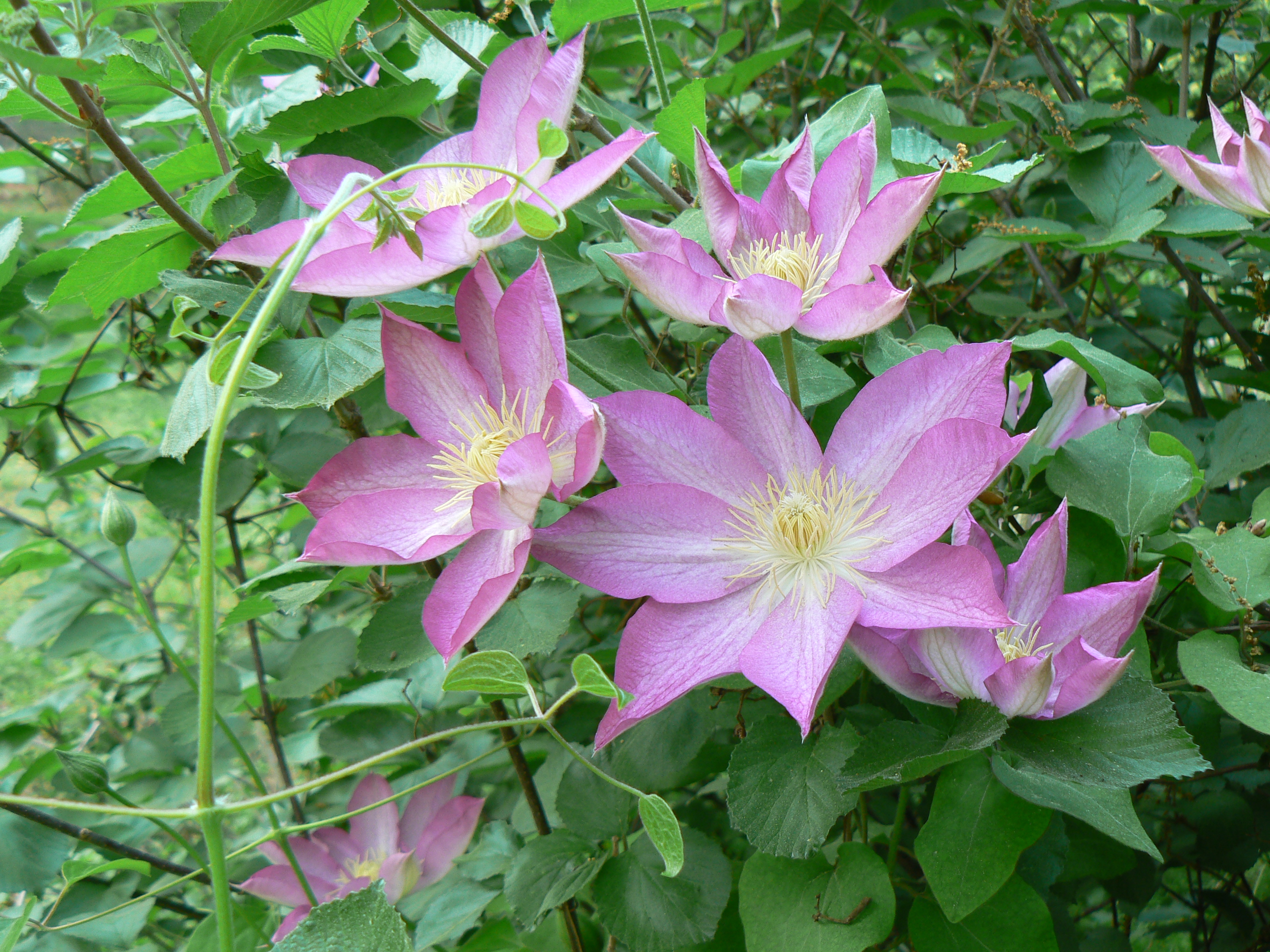
I previously mentioned my Clematis Crush ( here and here ). Beside the beautiful flowers,  the fact is they require only vertical space. That makes them the perfect companion to any shrub or small tree. Most shrubs have a limited bloom time so a well-chosen  flowering vine can really extend the season of beauty. Also, from a design point of view, any element seen at eye level has tremendous impact.

 I thought I would showcase some of the clematis blooming in the garden now.
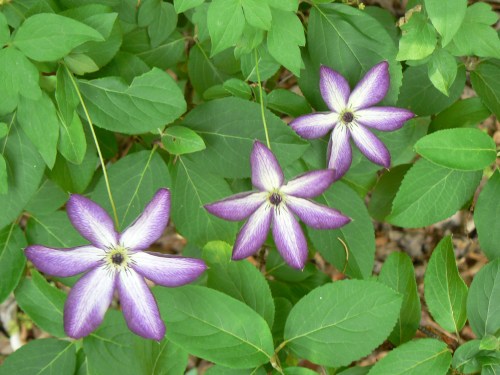
                                                                         

Clematis  viticella ‘Venosa Violacea’ climbing through a viburnum.
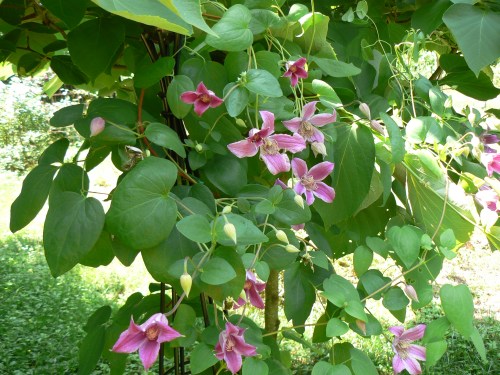
                                                                     

 Clematis texensis ‘Catherine Clanwilliam’ on an obilisk till it reaches into the branches of Styrax obassia. Below, looking up into the flowers.
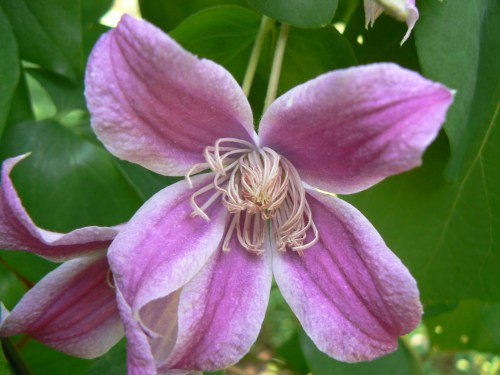


Clematis ‘Piilu’ or sometimes called ‘Little Duckling’, an Estonian hybrid with smaller flowers.

Most of  the above are blooming in viburnums that are passed their peak.  The clematis fill the  gap between bloom time and berries in this part of the garden.

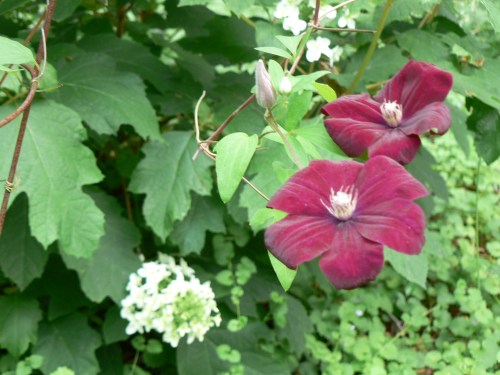
Below, Clematis ‘Rouge Cardinal’ being trained to clothe Hydrangea quercifolia ‘Snowflake’.
                                                                     

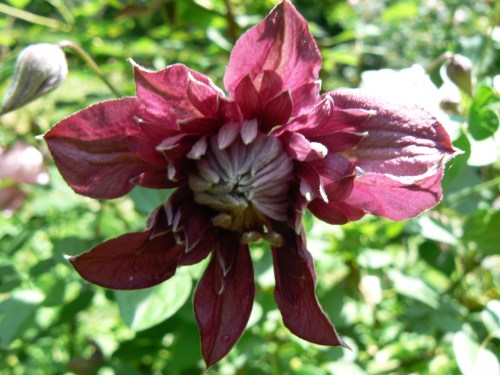
Finally, Clematis purpurea plena elegans, chosen to bloom with the roses. Below.
                                                                     

I hope you consider adding some to your garden.

© All photos & text 2010
TEXTURE

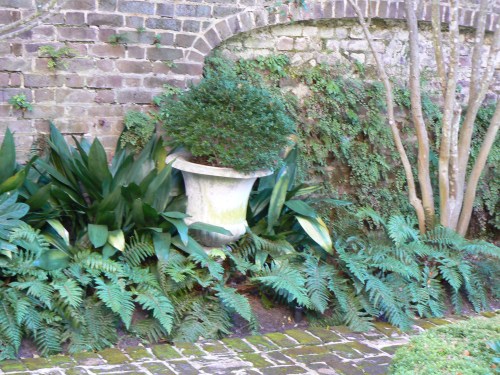
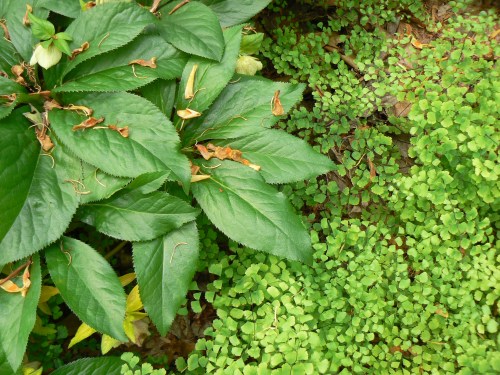
How important is Texture?  Texture can be more pleasing than flowers, and persist longer. In smaller gardens where every design element  is seen up close, it is of particular importance.


Here the  bold glossy leaves of  Lenten Rose (Helleborus orientalis)  stand in a mass of delicate Maidenhair fern (Adiantum capillus-veneris).

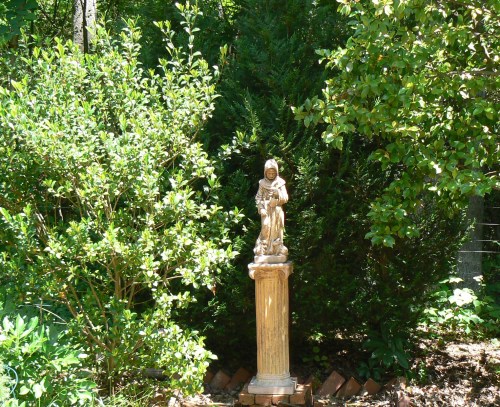
                                                                      Plants used for background need to be fine, dense and matt in order to be a suitable foil for either statuary or flowers. Above St. Fiacre against a matt evergreen Arborvitae (Thuja plicata).  On either side the coarse, shining leaves of Gardenia (Gardenia japonica) and  Banana Shrub (Michelia figo),  reflect too much light to be an effective background.

Contrasting textures apply not only to plant relationships.

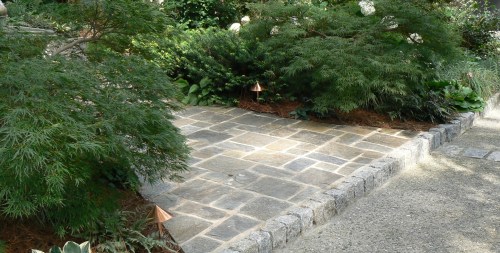
                                                        Here the fine ferny foliage of Japanese Maple ( Acer palmatum) stand out in sharp contrast to the smooth Bluestone walkway.


 The best effects are achieved with simplicity.  Texture = contrast = beauty.

© All photos & text 2010
SOMETIMES

It works just like one imagined!


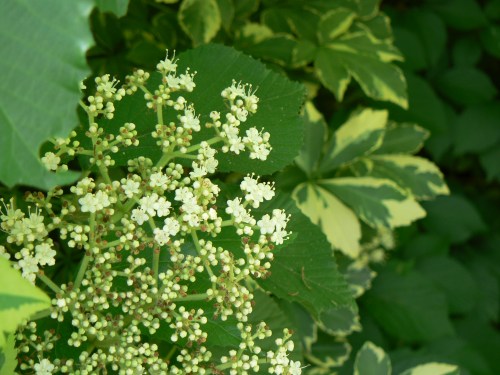
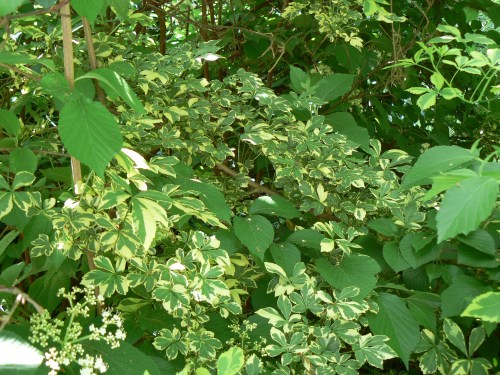
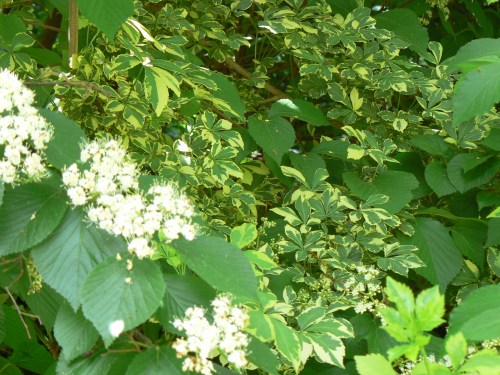
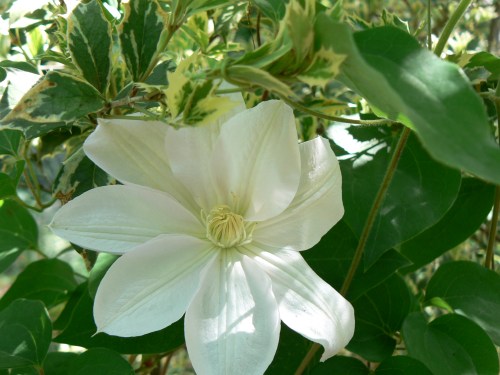
It has taken some years but finally the Variegated Aralia (Acanthopanax sieboldianus  ‘Variegatus’ now called  Eleutherococcus sieboldianus) is sending it’s graceful arching canes into the Viburnum dilatatum.


Later these viburnum flowers will become clusters of red berries, many will grace the Thanksgiving floral centerpiece.


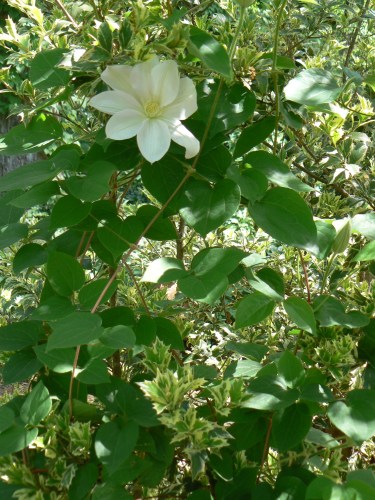
Somewhere in there is planted a white clematis. It has not been seen yet this season. Although the earlier viburnums have a delicious  fragrance, these do not…

© All photos & text 2010
AN INVITATION

To a peek through parts of my garden. Nothing is styled here, this is real-time. Hoses snaking around beds and weeds.


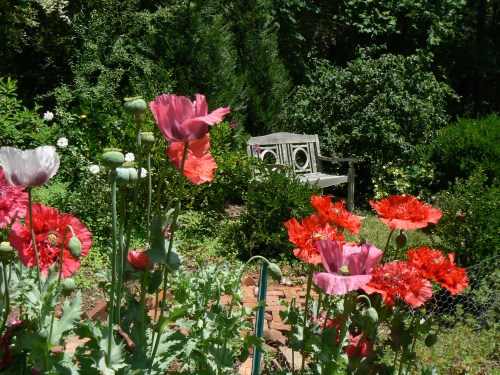
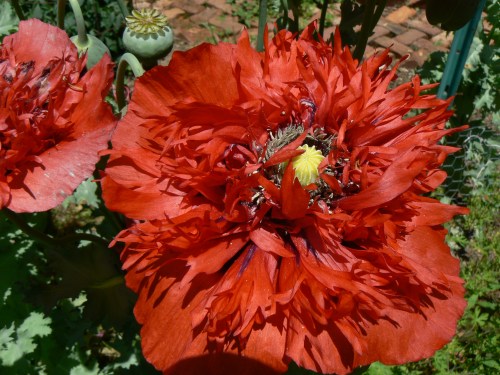
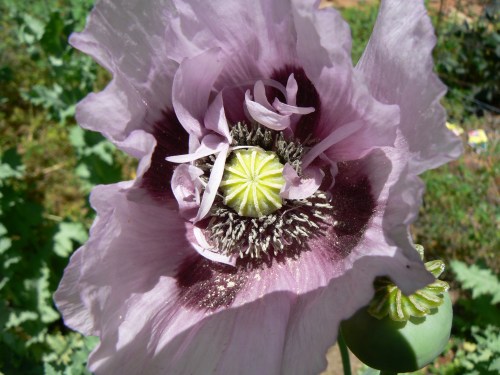
Poppies, from a dear friend who acquired them from a 90-year-old gardener 40 years ago. End of this month we will celebrate her 94th birthday.


 some semi double, some single,  all stunning.


I spread the poppy seed on cultivated soil in the late fall, after a rain. These seeds need light to germinate. If they were scattered in cultivated dry soil & then watered the soil would cover the seed, excluding the light.

I always allow the seed pods to ripen. After extracting the seed to be used in bread making and saving some for the garden, the pods are used in  dry arrangements. This is an annual show.

And there are more Clematis.


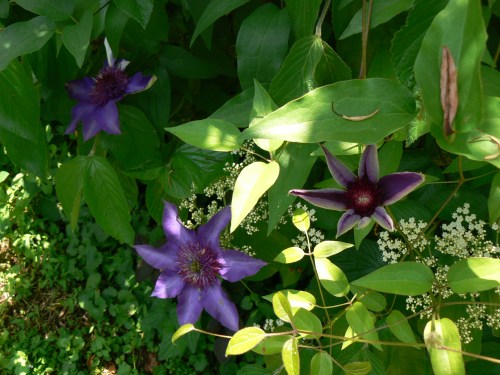
This  Clematis is ‘Multi-Blue’,  the Viburnum  is ‘Michael Dodge’.  The viburnum  flowers will turn to clusters of  yellow berries in the fall when HOPEFULLY, the clematis will bloom again.


Another clematis, ‘Duchess of Edinburgh’ cascading through a Tea Olive (Osmanthus fragrans).

And finally,


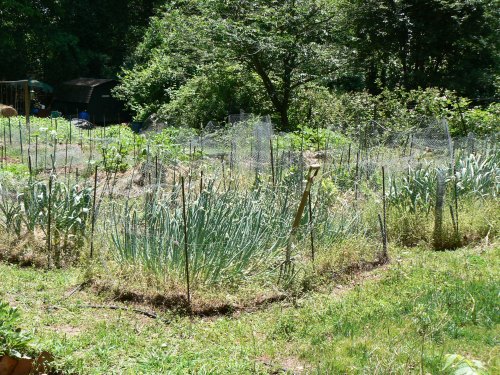
The Potager. Growing now, Onions, Leeks and garlic. All the beds are enclosed with wire to keep the rabbits out.

© All photos & text 2010
PLANTING GONE AWRY

Sometime, no matter how much thought goes into companion planting, It just does not give the results anticipated.

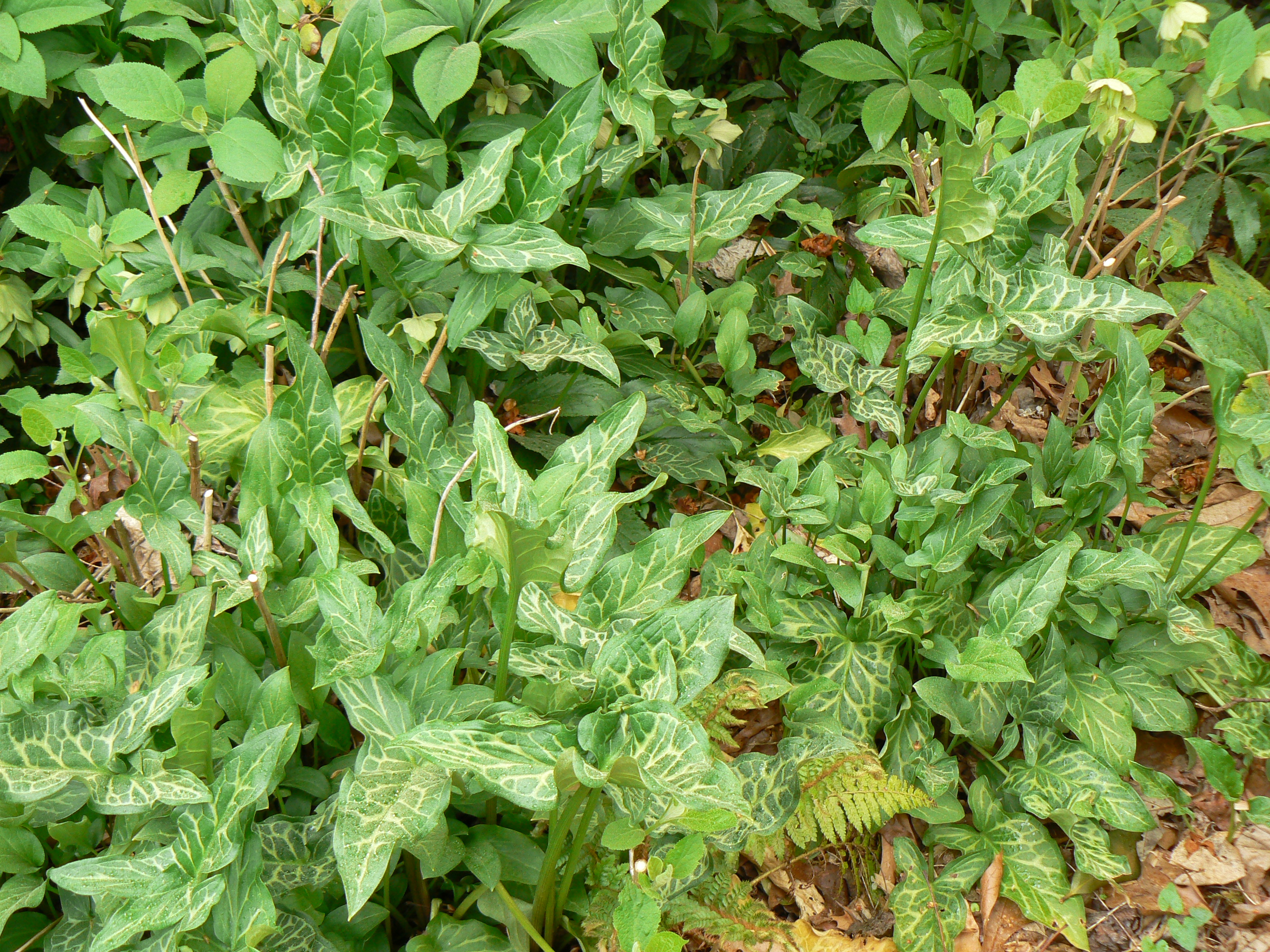
On a Variegated Tea Olive (Osmanthus heterophyllus ‘Variegatus’) I planned a creamy white Clematis to peek through Tea Olive’s foliage.


 I did not plan on the green foliage of the Clematis!


So… variegated leaves peek through clematis foliage to pick up the creamy white flower!

Not exactly what I had expected. Pretty still.

© All photos & text

GROUNDCOVER IDEA

Every gardener/designer has their own ideas on groundcovers. I thought I would share what I do with my hydrangea.

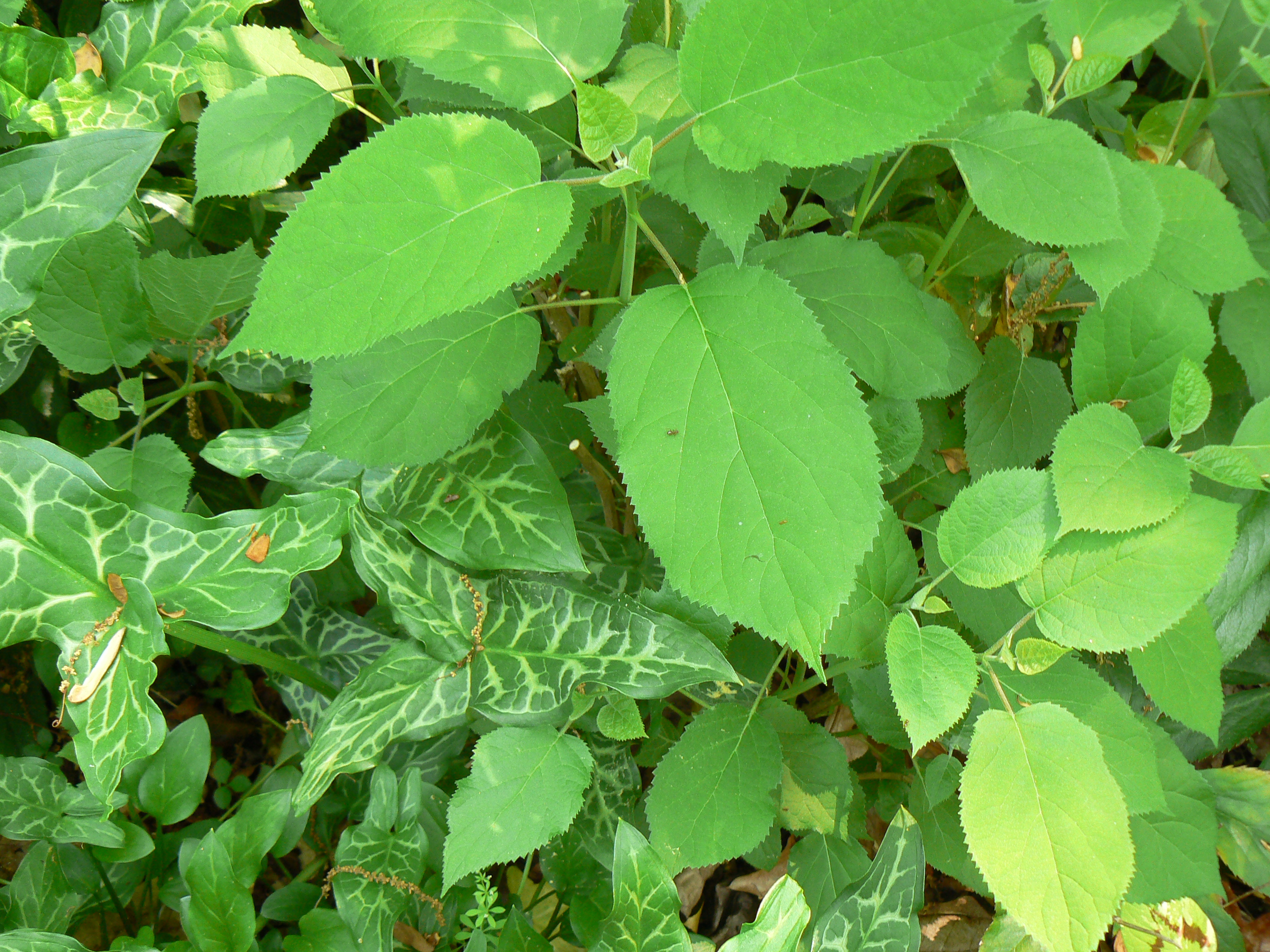
At the base of  the shrubs, and forming a nice ‘sweep’, I plant the small tubers of Arum italicum ‘Pictum’. This delightful little plant  is the ideal workhorse groundcover for any shrub that looses its leaves in winter. It does not appear till October/November, the handsome foliage persists all winter, and disappears in mid spring,  just as the shrubs leaf out.

Here  the Arum covers what would be bare earth as the Annabelle hydrangea (Hydrangea arborescens ‘Annabelle’) is cut back early spring.  (See the stems peeking out?)

Weeks later,  the Annabelle  starts to fill in. By the time the Arum foliage dies back the hydrangea will shade the ground.

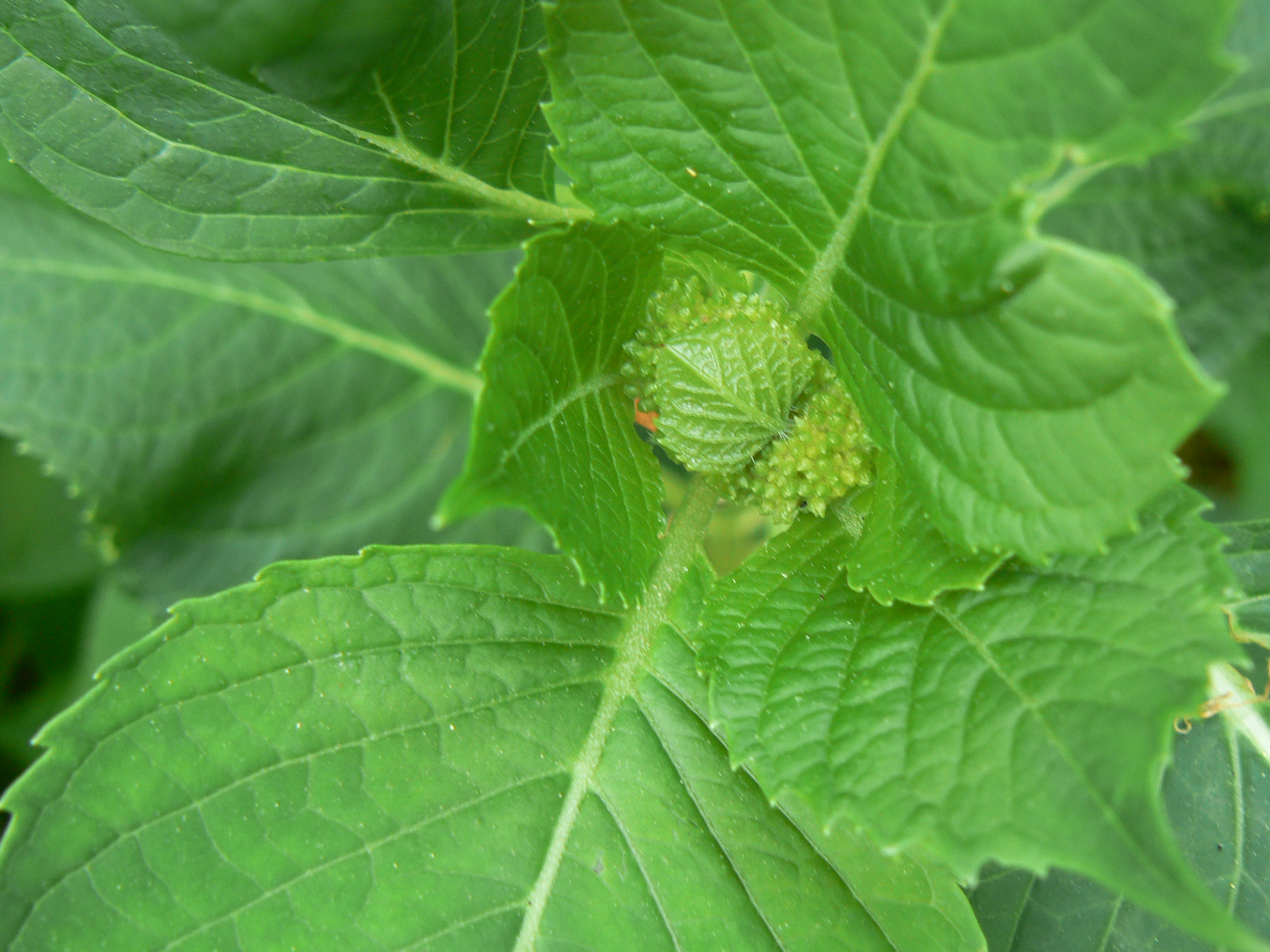
PLEASE NOTE: do not prune all your hydrangeas. The macrophylla type hydrangeas (big blue or pink mophead or lacecap flowers) formed their flower buds last year. If you prune them, there will be no blooms this year.

ANTICIPATION!

The flower buds on Hydrangea macrophylla .


Secrets of Companion Planting

“The best associations are between plants which have one element in common and another contrasted.”     – Dame Sylvia Crowe  (Distinguished British Landscape Architect)

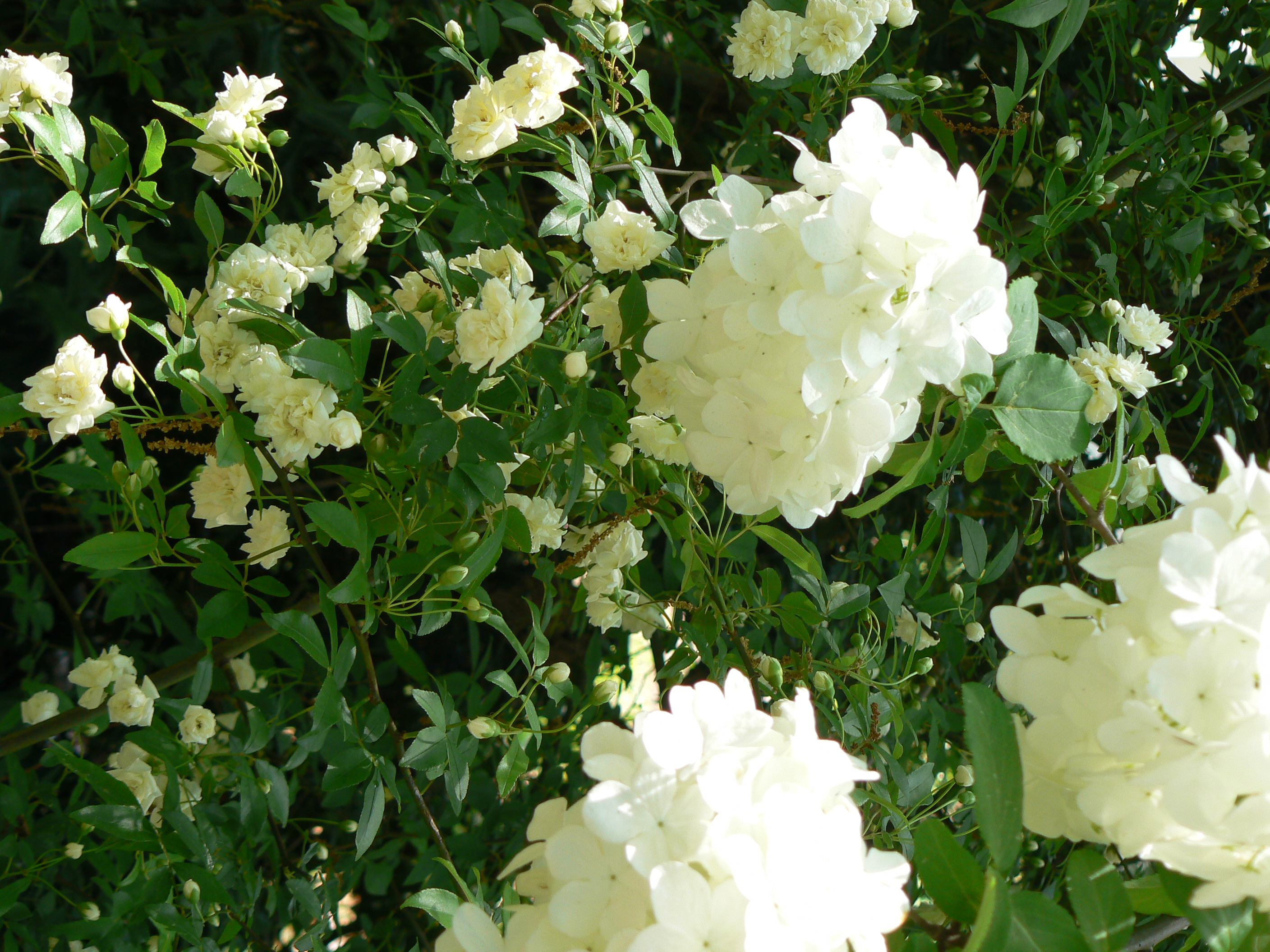
Here the common element is the color white, while the contrasting element is size.

Large blossoms compliments of the Chinese Snowball (Viburnum macrocephalum); small blossoms are the white Lady Banks Rose (Rosa banksiae ‘Alboplena’).

Versatile Climbers

Clematis ‘Asao’ made its appearance this week. Raised in Japan, this beauty graces the shrub Viburnum dilatatum ‘Michael Dodge.’  The Viburnum will bloom later and so will Asao, thus extending the show in this area of the garden.

In their native habitat, Clematis climb through shrubs & trees without hurting the host plant. They lift themselves by twisting their leaf stalk gently around the nearest support. I like to go along with nature. She knows what she is doing.

Imagine more of your shrubs doing double duty.